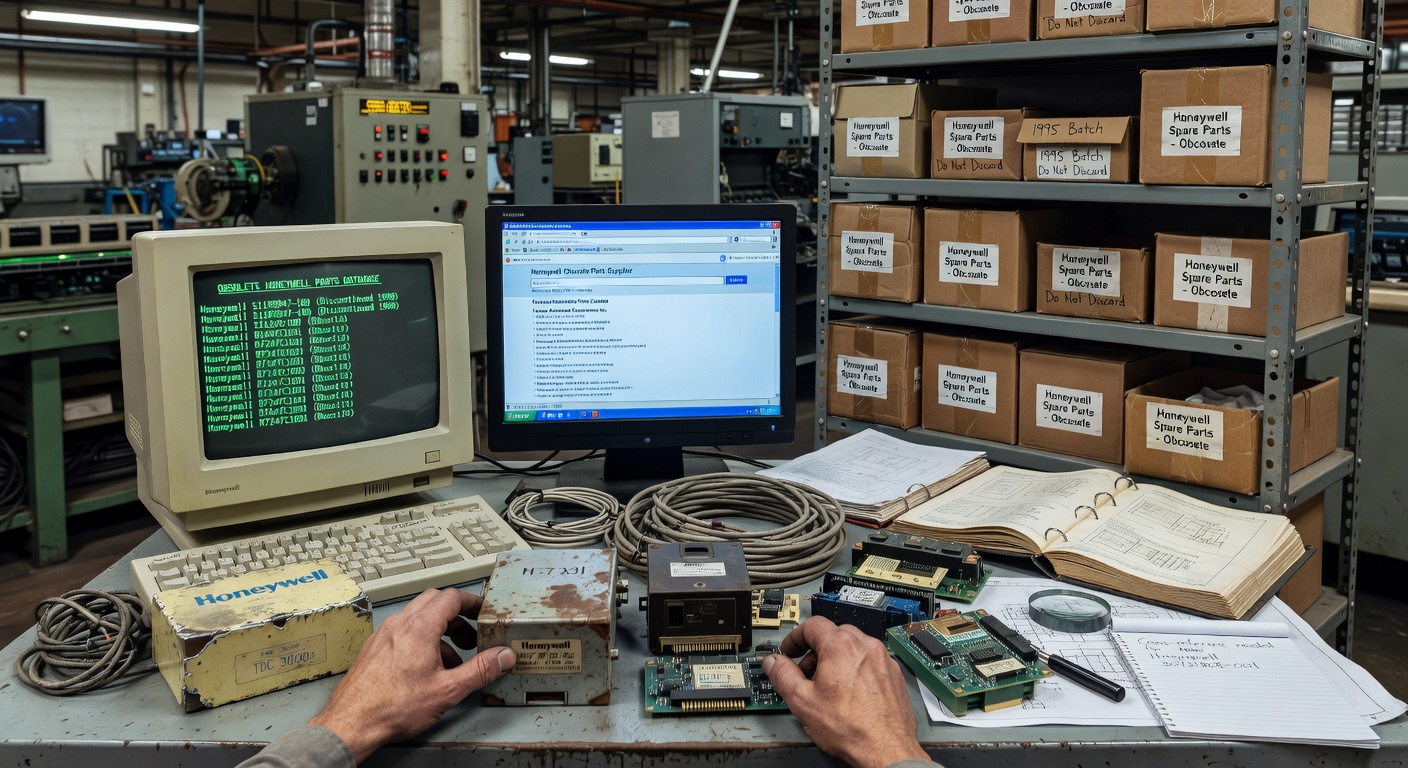
A single failed component in an aging automation system can bring an entire production line to a standstill — costing thousands of dollars per hour in lost output. For automation technicians managing Honeywell control systems installed years or even decades ago, this scenario is not hypothetical. It’s a recurring reality that demands immediate, reliable solutions.
As Honeywell continuously evolves its product lineup, older components inevitably reach end-of-life status, leaving technicians scrambling to locate replacements that no longer appear in standard catalogs. The challenge isn’t just finding the part — it’s finding the right part quickly, verifying its authenticity, and integrating it without compromising system integrity.
This article addresses that challenge head-on. Whether you’re dealing with a discontinued controller, an obsolete drive, or a legacy sensor module, you’ll find practical, field-tested strategies for locating hard-to-find Honeywell components, executing smooth upgrades, and building long-term maintenance practices that prevent future disruptions. The goal is simple: keep your automation systems running efficiently, even when the original parts are no longer in production.
Understanding the Impact of Obsolete Honeywell Parts on Automation Systems
Obsolete Honeywell automated parts are components that the manufacturer no longer produces, supports, or supplies through standard distribution channels. This status typically triggers a cascade of operational risks that extend well beyond simple unavailability. When a critical module fails and no direct replacement exists, technicians face extended downtime, improvised workarounds, and mounting pressure from operations management. Maintenance costs spike as labor hours increase searching for alternatives, and the longer a system runs with degraded components, the higher the probability of secondary failures affecting adjacent equipment.

The financial exposure is significant. Unplanned downtime in industrial environments routinely costs between $10,000 and $250,000 per hour depending on the sector. Beyond immediate losses, running systems on aging, unsupported hardware creates compliance risks, as many industries require documented, certified components for regulatory audits. Insurance coverage can also become complicated when systems rely on parts outside manufacturer support windows.
Proactive strategies matter precisely because reactive sourcing under emergency conditions forces poor decisions — overpaying for unverified parts, accepting incompatible substitutes, or rushing installations that compromise safety protocols.
Why Control System Components Become Obsolete
Component obsolescence follows predictable drivers: semiconductor manufacturers discontinue chips embedded in older modules, updated communication protocols render legacy hardware incompatible, and Honeywell’s own product roadmap prioritizes next-generation platforms over sustaining engineering for older lines. A DCS controller installed in 2005, for example, may rely on processors and memory chips that silicon foundries stopped fabricating years ago. For automation technicians, understanding these root causes transforms obsolescence from an unexpected crisis into a manageable, foreseeable maintenance challenge.
Proven Strategies for Sourcing Hard-to-Find Honeywell Components
Locating discontinued Honeywell parts requires a multi-channel approach rather than relying on a single source. The most effective technicians treat sourcing as a structured process: identify the exact part number from system documentation, cross-reference it against known supersession lists, then systematically work through available channels from most to least reliable. Throughout every channel, authenticity verification is non-negotiable — counterfeit industrial components create safety hazards and accelerate system failures. Always request certificates of conformance, traceability documentation, and test reports before committing to a purchase, especially from non-OEM sources.

Exploring Online Marketplaces and Specialized Suppliers
Industrial surplus platforms such as eBay Industrial, IronPlanet, and Radwell International regularly list discontinued Honeywell modules, drives, and controllers sourced from decommissioned facilities. Specialized automation parts suppliers — including Automation24, DXP Enterprises, and Global Industrial — often maintain legacy inventory not visible in standard catalogs. Suppliers like Apter Power have also become a practical reference point for technicians seeking hard-to-find industrial components, particularly when standard distribution channels come up empty. When evaluating any listing, check seller feedback scores, return policies, and whether the supplier offers functional testing. Cross-reference part numbers against multiple listings to establish a realistic market price, which also helps identify suspiciously cheap offers that may indicate refurbished or counterfeit units. Prioritize suppliers who provide photographs of actual stock rather than generic catalog images, and confirm warranty terms in writing before purchasing.
Leveraging OEM Channels and Aftermarket Networks
Honeywell’s own obsolescence support programs are often underutilized. Contacting Honeywell Process Solutions or Honeywell Building Technologies directly — rather than standard distribution — can surface last-time-buy inventory, repair services, or factory-refurbished units that aren’t publicly advertised. Authorized distributors like Grainger and Allied Electronics sometimes hold legacy stock allocated for long-term service contracts. When OEM channels are exhausted, aftermarket manufacturers such as Absolute Process Instruments and third-party repair specialists can provide functionally equivalent replacements with documented testing. These alternatives typically cost 40–60% less than original parts while maintaining compatibility, making them practical for budget-constrained maintenance operations. Always confirm firmware and hardware revision compatibility before finalizing any aftermarket selection.
Step-by-Step Guide to Upgrading Obsolete Control System Components
Upgrading obsolete components isn’t simply a matter of swapping parts — it’s a structured engineering process that demands careful planning, compatibility verification, and disciplined execution. Rushing any phase introduces risk: an incompatible firmware revision can corrupt configuration data, and an improperly grounded module can damage adjacent hardware worth far more than the replacement itself. The following process gives technicians a repeatable framework for managing upgrades safely and efficiently, regardless of whether they’re replacing a single I/O card or overhauling an entire controller chassis.
Assessing System Needs and Inventory Management
Begin with a complete system audit before touching any hardware. Pull all current documentation — wiring diagrams, configuration backups, hardware revision records, and maintenance logs — and cross-reference them against Honeywell’s published end-of-life notices to identify every at-risk component, not just the one currently failing. Prioritize replacements by criticality: components controlling safety interlocks or primary process loops rank above secondary monitoring modules. Catalog each identified part with its full part number, hardware revision, and firmware version. This inventory becomes your sourcing roadmap and prevents duplicate research during future failures.
Selecting and Integrating Honeywell Drives and Replacement Parts
Compatibility verification is the most technically demanding step. When selecting replacement drives or controller modules, confirm that hardware revision levels align with your existing chassis and backplane specifications — a newer board revision sometimes introduces pin assignments or power requirements incompatible with older infrastructure. For Honeywell drives specifically, verify motor nameplate data against drive input ratings and confirm communication protocol versions match your supervisory control layer. Where direct replacements are unavailable, consult Honeywell’s migration guides, which map legacy part numbers to current equivalents and document any configuration changes required. Before procurement is finalized, validate that replacement firmware supports your existing function blocks and control strategies without modification. Request pre-tested, pre-configured units from suppliers when possible to reduce on-site commissioning time.
Implementation, Testing, and Validation Procedures
Schedule installations during planned maintenance windows rather than reactive emergency repairs whenever possible. Before removing the failed component, capture a full configuration backup and photograph all wiring connections. Install the replacement following Honeywell’s torque specifications and grounding requirements, then restore configuration from backup rather than manually re-entering parameters. Conduct loop checks on every signal connected to the new module before returning the system to automatic control. Document the completed installation with photographs, revision records, and test results — this validation package satisfies regulatory audit requirements and provides a reference baseline for the next maintenance cycle.
Best Practices for Long-Term Maintenance with Honeywell Automation Parts
Preventing obsolescence crises is fundamentally more cost-effective than managing them reactively. The most resilient maintenance operations build systems that anticipate component end-of-life rather than respond to it. This starts with monitoring Honeywell’s product lifecycle announcements — the company typically provides 12 to 24 months of advance notice before discontinuing major product lines, giving maintenance teams a window to source last-time-buy inventory or plan controlled upgrades. Establish a formal obsolescence review as part of your annual maintenance planning cycle, cross-referencing installed hardware against current support status. When components approach end-of-life, evaluate whether stocking spares, sourcing refurbished units, or migrating to current platforms offers the best long-term value. Using only quality, verified parts — whether OEM or certified aftermarket — directly reduces failure rates and extends mean time between repairs, compounding savings over multi-year maintenance cycles.
Proactive Inventory and Supplier Relationship Management
Maintaining a strategic spare parts inventory for your highest-criticality Honeywell components eliminates the scramble that drives poor sourcing decisions. Identify the top ten components whose failure would cause immediate production stoppage, then stock at least one verified spare for each. Simultaneously, cultivate relationships with two or three reliable suppliers before you need them urgently — negotiating preferred pricing and priority fulfillment agreements when you’re not under pressure yields far better terms. Regular communication with suppliers also provides early intelligence on market availability shifts, giving you lead time to adjust inventory positions before shortages develop.
Ensuring System Reliability with Updated Components
Schedule semi-annual system audits to assess hardware condition, firmware currency, and compatibility with any network or software updates introduced since the last review. During these audits, test backup configurations to confirm they remain restorable on current hardware. Invest in technician training on Honeywell’s current platform generations — familiarity with migration paths reduces commissioning time when upgrades become necessary. Documenting every component change, firmware update, and test result creates an institutional knowledge base that supports both day-to-day troubleshooting and long-term capital planning, keeping your automation systems reliable well beyond original design lifespans.
Keeping Honeywell Automation Systems Running Beyond End-of-Life
Managing obsolete Honeywell parts doesn’t have to mean accepting costly downtime or compromising system integrity. The strategies covered in this article give automation technicians a practical roadmap: understand why components become obsolete, source replacements through a structured multi-channel approach, execute upgrades with disciplined compatibility verification and testing, and build long-term maintenance practices that stay ahead of the obsolescence curve.
The common thread running through every recommendation is preparation. Technicians who audit their systems proactively, cultivate supplier relationships before emergencies arise, and maintain verified spare inventory consistently outperform those who source reactively under pressure. The difference shows up in faster recovery times, lower part costs, and fewer secondary failures caused by rushed installations.
Honeywell automation systems are built for longevity, and with the right maintenance approach, they can deliver reliable performance well beyond their original design lifecycles. Start by identifying your highest-risk components today, cross-reference them against current support status, and take one concrete step — whether that’s stocking a critical spare or contacting a specialized supplier. Small, consistent actions compound into a maintenance operation that keeps production running no matter what the parts catalog says.