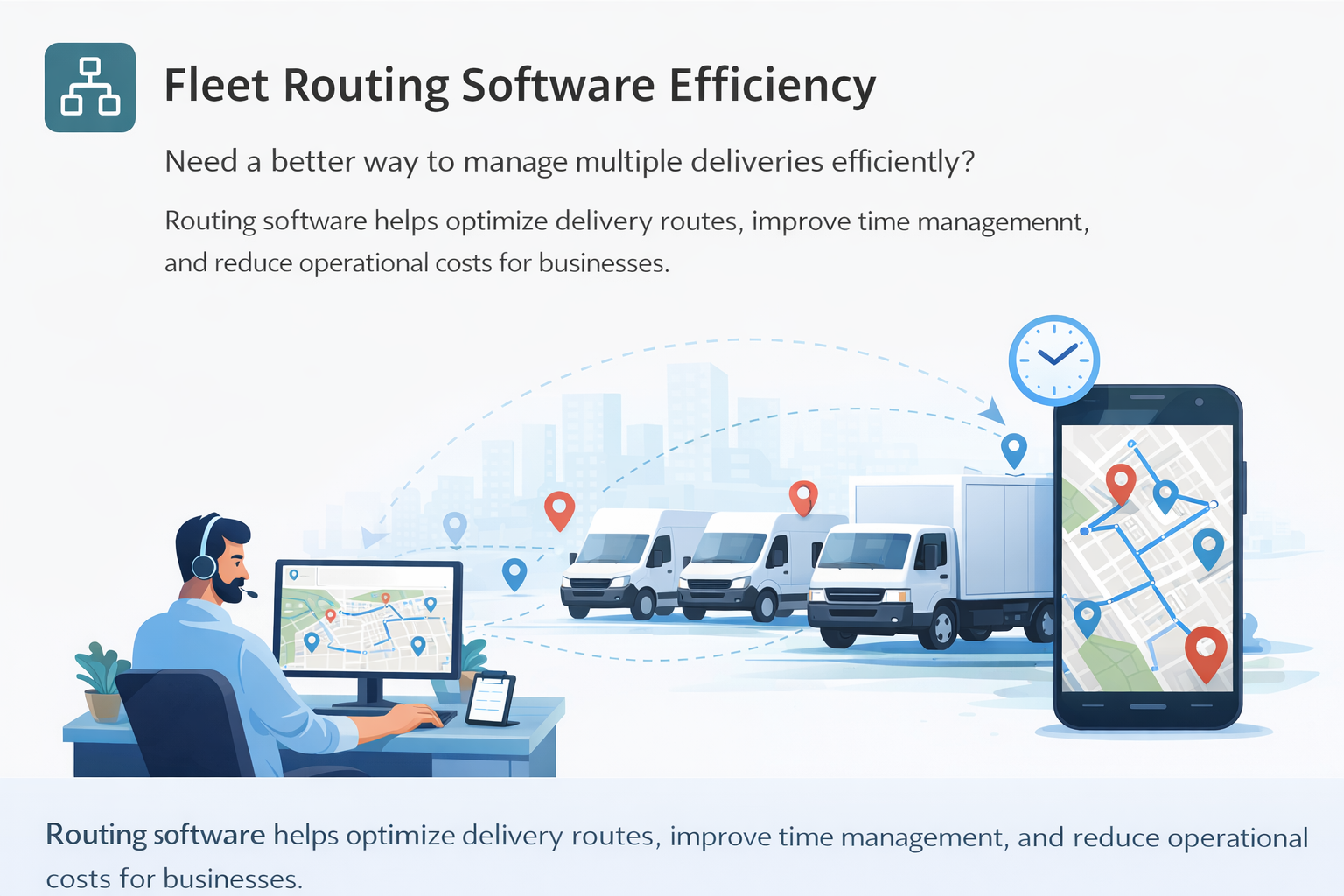
In logistics network, the difference between efficient operations and rising delivery costs often comes down to how intelligently routes are planned and executed. E-commerce growth, same-day delivery expectations, and complex last-mile operations have made routing far more challenging than it once was. In fact, the last mile has become the most expensive and operationally complex part of logistics networks.
Yet many logistics teams still treat routing as a fixed daily plan instead of a real-time operational system. Leading organizations are changing that. They are deploying fleet routing software to dynamically orchestrate deliveries, improve fleet utilization, and reduce cost per delivery.
Read on to see how routing intelligence is becoming the backbone of efficient logistics networks.
The Evolution of Fleet Routing Software from Traditional Planning to Intelligent Orchestration
Route planning once relied heavily on human dispatchers and fixed route lists. Planners would manually sequence stops, estimate travel times, and assign drivers based on experience rather than data.
That approach worked when delivery networks were smaller and more predictable. It breaks down quickly in modern distribution environments. Today’s delivery networks involve:
- Hundreds or thousands of daily delivery stops
- Strict delivery time windows
- Multiple vehicle types and capacities
- Dynamic order inflows
- Traffic congestion and urban restrictions
Managing these variables manually is nearly impossible at scale. Modern fleet routing software uses optimization algorithms to evaluate thousands or even millions of potential route combinations. These systems consider factors such as traffic conditions, delivery time windows, vehicle capacity, and driver schedules to generate the most efficient routes for each delivery cycle.
The role of routing software has therefore evolved significantly. Instead of simply calculating the shortest path between addresses, modern platforms orchestrate:
- Multi-stop route sequencing
- Dynamic dispatch allocation
- Hybrid fleet management
- Real-time route adjustments
In essence, routing software has moved from map-based planning to operational orchestration.
Why Fleet Routing Software Has Become the Control Tower of Logistics Operations
Transportation operations are deeply interconnected systems. A single routing decision can affect fuel consumption, driver utilization, delivery reliability, and customer satisfaction. Fleet routing software brings these variables together into one operational layer.
This technology acts as a control tower for delivery networks, integrating operational data from order management systems, warehouse platforms, and telematics devices to coordinate delivery execution.
When routing intelligence is embedded into logistics operations, organizations gain the ability to:
- Dynamically allocate delivery orders
- Optimize fleet capacity utilization
- Monitor real-time vehicle movement
- Anticipate delays before they occur
These capabilities transform routing from a tactical planning step into a strategic decision engine.
Core Capabilities That Make Fleet Routing Software Mission Critical
Enterprise logistics teams rely on a set of advanced capabilities within modern routing platforms. These capabilities extend far beyond simple navigation.
- Dynamic Route Optimization
Dynamic routing is the foundation of modern route optimization software. Instead of generating fixed routes at the beginning of the day, the system continuously recalculates routes as conditions change.
Variables that influence route optimization include:
- Traffic congestion
- Road closures
- Weather disruptions
- Order changes
- Driver availability
With real-time routing intelligence, delivery routes adjust instantly to maintain operational efficiency and service reliability.
- Automated Dispatch and Delivery Allocation
Manual dispatching slows logistics operations and often creates uneven workloads across drivers. Fleet routing platforms automate dispatch allocation by analyzing geography, delivery priority, and vehicle capacity.
Orders are automatically assigned to the most appropriate driver, eliminating guesswork and significantly reducing idle time in delivery operations. Automated dispatch ensures that delivery assignments remain balanced across fleets, improving overall network productivity.
- Multi-constraint Routing Intelligence
Enterprise routing is rarely simple. Every delivery operation contains multiple operational constraints that influence routing decisions. Advanced route planning software analyzes constraints such as:
- Delivery time windows
- Vehicle size restrictions
- Service time per stop
- Driver shift limits
- Cargo requirements
By processing these constraints simultaneously, fleet routing software generates routes that are both efficient and operationally feasible.
- Real-time Fleet Visibility and Predictive Alerts
Visibility is essential for modern delivery operations. Fleet routing software integrates GPS tracking and telematics data to provide real-time insight into vehicle movement and delivery progress.
Operations teams can monitor:
- Driver locations
- Route adherence
- Estimated arrival times
- Delivery delays
Predictive alerts notify dispatchers before a delivery failure occurs, allowing them to intervene early and maintain service commitments.
- AI-driven Service Time Prediction
One of the most overlooked challenges in route planning is inaccurate service time estimates. Delivery stops vary significantly depending on location, building type, and customer interaction requirements.
Modern fleet routing software uses machine learning models to analyze historical delivery patterns and predict service times more accurately. Improved service time predictions reduce the gap between planned routes and actual execution, improving route reliability and driver productivity.
How Fleet Routing Software Drives Network-level Efficiency
The impact of routing software extends across the entire logistics network. When implemented correctly, route optimization software improves several critical performance metrics.
- Maximizing Fleet Capacity Utilization
Many logistics fleets operate below optimal capacity due to inefficient route planning. Fleet routing software solves this problem by intelligently grouping deliveries and matching them with available vehicle capacity.
This approach reduces empty miles and increases the number of deliveries completed per route. Efficient load balancing allows companies to serve higher delivery volumes without expanding fleet size.
- Increasing On-time Delivery Performance
Delivery reliability is one of the most important logistics performance indicators. AI-driven route optimization improves service levels by sequencing stops intelligently and adjusting routes in real time.
Organizations implementing routing technology often report improvement in on-time deliveries due to better route planning and real-time data integration. Consistent on-time performance strengthens customer trust and reduces costly delivery failures.
- Reducing Transportation and Fuel Costs
Transportation expenses represent one of the largest cost centers in supply chains. Routing optimization reduces unnecessary mileage and idle time, lowering fuel consumption and vehicle wear.
In many logistics networks, optimized routing can significantly reduce fleet mileage, lowering operational costs. These savings compound across large fleets, making routing technology a high-impact operational investment.
- Improving Driver Productivity
Driver time is one of the most valuable resources in logistics operations. Routing software improves driver utilization by ensuring that each route maximizes productive delivery time.
Drivers benefit from:
- Optimized stop sequences
- Clear navigation guidance
- Fewer manual instructions from dispatch
The result is more deliveries per shift and fewer overtime hours.
What Leading Logistics Teams Do Differently
The most advanced logistics organizations treat routing as a continuous decision process rather than a daily planning exercise. Their approach is built around three operational principles.
- Treat Routing as a Real-time Decision Engine
Leading delivery networks use fleet routing software that continuously analyzes operational data and updates delivery plans dynamically. This allows organizations to respond instantly to disruptions such as traffic congestion, new orders, or driver delays. Routing becomes a real-time operational capability rather than a fixed morning activity.
- Measure Planned Versus Actual Performance Daily
High-performing logistics teams continuously compare planned routes with actual route execution. This analysis reveals gaps between route assumptions and real-world delivery conditions. By analyzing deviations in travel time, service duration, and route completion rates, organizations refine their routing models and improve accuracy over time.
- Design Routes Around Constraints First, Not Distance Alone
The shortest route is rarely the most efficient route. Leading routing strategies prioritize operational constraints such as delivery windows, driver hours, vehicle capacity, and customer preferences. Once these constraints are accounted for, route optimization algorithms determine the most efficient delivery sequence. This constraint-first approach produces routes that are realistic, scalable, and aligned with operational requirements.
Building Intelligent Logistics Networks with Fleet Routing Software
Logistics networks are becoming more complex, more dynamic, and more customer-centric than ever before. Organizations that rely on manual planning systems struggle to keep up with these demands.
Fleet routing software provides the intelligence required to orchestrate modern delivery networks. With capabilities such as dynamic route optimization, automated dispatching, predictive ETAs, and real-time fleet visibility, routing platforms allow logistics leaders to balance efficiency, service levels, and operational resilience.
Platforms like FarEye illustrate how routing technology is evolving beyond simple route planning. By combining dynamic routing, AI-driven service time prediction, carrier orchestration, and delivery analytics, organizations can transform fragmented delivery processes into intelligent, scalable logistics networks.