DJI Osmo Pocket 4 Review: The Best Vlogging Camera Available in 2026
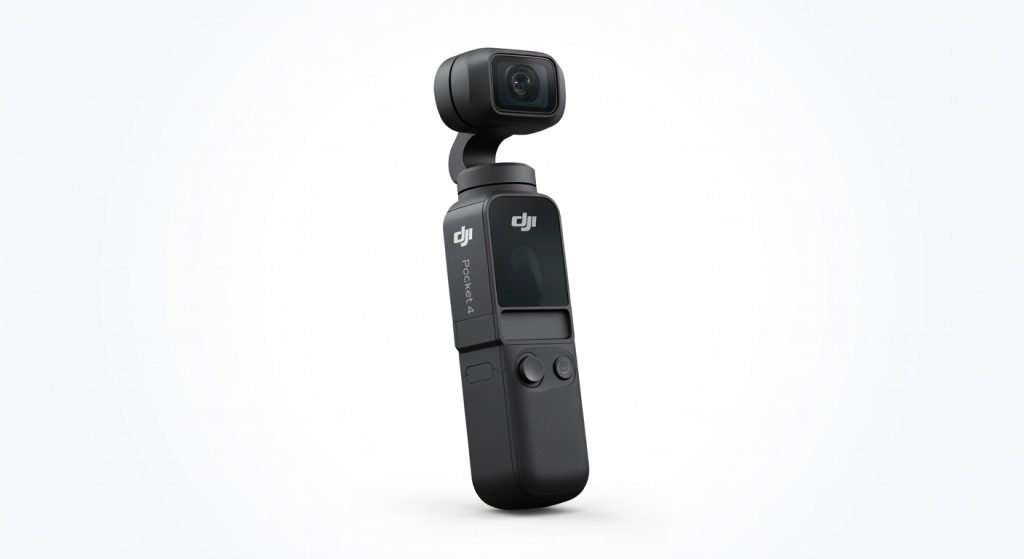
The DJI Osmo Pocket 4 is the most capable handheld gimbal camera DJI has ever made. The 1-inch CMOS sensor, 4K at 240fps slow motion, 14-stop dynamic range, and 107 GB of built-in high-speed storage address every major criticism of the Pocket 3. Removing the microSD slot is a genuine trade-off rather than an oversight — defensible for most creators, a constraint for multi-day shooters without laptop access. The most significant concern for many buyers is availability: the Pocket 4 is not sold through official US retail channels due to DJI's FCC Covered List designation. International buyers face no such restriction. ---
Four Problems Fixed
The DJI Osmo Pocket 4 launched on April 16, 2026, timed deliberately to NAB Show week. After more than two years, it addresses the four most consistent criticisms of the Pocket 3 from professional creators.
Slow motion doubled: The Pocket 3 topped out at 4K/120fps. The DJI Osmo Pocket 4 delivers 4K/240fps and adds 1080p/480fps for extreme slow-motion effects. For standard 4K/60fps and 4K/120fps recordings, the 3-axis mechanical gimbal delivers the smooth stabilised footage the Pocket series is known for.
Storage redesigned: DJI removed the microSD card slot and replaced it with 107 GB of fixed internal storage at 800 MB/s. At 4K/30fps, 107 GB holds approximately 8 to 10 hours of footage. At 4K/240fps slow motion, approximately 2 to 3 hours. At 800 MB/s via USB 3.1, an hour of footage offloads faster than it took to shoot. For day-trip shooting, adequate. For five-day remote expeditions without laptop access, a genuine constraint.
Battery enlarged: The 1,545 mAh cell is 18.8% larger than the Pocket 3’s battery. Rated runtime is approximately 240 minutes of continuous recording.
Wireless upgraded: Wi-Fi 6 replaces the slower wireless standard of earlier Pocket models, making large file transfers significantly faster.
Sensor, Dynamic Range, and Image Quality
The DJI Osmo Pocket 4 1-inch CMOS sensor delivers 14 stops of dynamic range. In practice this means handling extremely challenging high-contrast scenes — bright sky alongside deep shadows — without blown highlights or crushed blacks that limited earlier compact cameras. The 10-bit D-Log M colour profile captures maximum colour information for post-production grading and pairs naturally with DaVinci Resolve 21 for colour grading workflows.
Engadget scored the Pocket 4 93/100. Digital Camera World called it the best vlogging camera perfected. Multiple creators with hands-on footage noted low-light performance as a step change from the Pocket 3.
ActiveTrack 7.0 and Solo Creators
For solo creators filming themselves, gimbal tracking determines daily usability more than any specification. ActiveTrack 7.0 is the most responsive version DJI has shipped. Subject lock is fast, re-acquisition after obstruction is quicker than previous versions, and the gimbal maintains centred framing on a walking subject consistently.
OsmoAudio 4-channel captures front, rear, left, and right audio spatially. For a vlogger working without an external microphone, the improvement over the Pocket 3 is meaningful. For professional interviews, pairing with a DJI Mic 3 — included in the Creator Combo — remains recommended.
US Availability: The Key Limitation
DJI was placed on the FCC Covered List in December 2025, preventing new unregistered DJI products from being sold through US retail. The standard Pocket 4 filed FCC certification before that designation, but US retailers including B&H Photo, Adorama, Amazon, and Best Buy did not have it in stock at launch. DJI is legally challenging the FCC designation. Grey-market imports from European retailers are technically possible but void warranty coverage and carry customs risk.
For buyers in the UK, Europe, Australia, and Asia: the Pocket 4 is available normally at GBP 445 standard or GBP 549 Creator Combo.
Pocket 4 Pro: Coming Later
A dual-lens Pocket 4 Pro with wide-angle and telephoto lens configuration is confirmed for summer 2026, expected at approximately EUR 709 based on Chinese retail pricing of 4,999 RMB. The Pro has no FCC certification and will not reach official US retail channels. International buyers should watch for it; US buyers should not plan on official availability.
Verdict
The DJI Osmo Pocket 4 meaningfully improves on the Pocket 3 across every area that mattered to professional creators. The fixed internal storage is a genuine trade-off that works for the majority of use cases. US-based creators face the real obstacle of no official retail availability. International buyers should purchase confidently — this is the most capable pocket gimbal camera available in 2026.
Rating: 4.6 / 5 — The best handheld gimbal camera in 2026, with the caveat that US buyers cannot purchase through official channels.
Frequently Asked Questions
Does the DJI Osmo Pocket 4 have a microSD slot?
Is the DJI Osmo Pocket 4 available in the United States?
How does the DJI Osmo Pocket 4 compare to the Pocket 3?
What is included in the Creator Combo?
What is the Pocket 4 Pro and when does it release?
+Pros
- 4K/240fps is a genuine slow-motion leap over the Pocket 3's 4K/120fps ceiling
- 1-inch sensor delivers professional-level low-light performance in a pocket-sized body
- 14-stop dynamic range handles high-contrast scenes without blown highlights
- 107 GB at 800 MB/s eliminates microSD card management during shoots
- OsmoAudio 4-channel spatial audio reduces reliance on external microphone for casual content
- ActiveTrack 7.0 is the most reliable solo-creator tracking DJI has shipped
- Wi-Fi 6 makes file offloading significantly faster than previous Pocket models
- 10-bit D-Log M gives videographers maximum grading flexibility in post
−Cons
- Not officially available in the United States — FCC Covered List prevents US retail sale
- No microSD slot — 107 GB is the fixed total capacity with no expansion
- Creator Combo price climbs significantly for the full accessory kit
- No weather sealing — not suitable for rain or dusty environments
- No RAW photo capture
- Insta360 Luna Ultra offers dual-camera zoom flexibility the Pocket 4 lacks
- Pocket 4 Pro (dual-lens) delayed to summer 2026 and unavailable in US