Garmin Forerunner 970 Review: The Most Complete Running Watch Garmin Makes — At a Premium Price
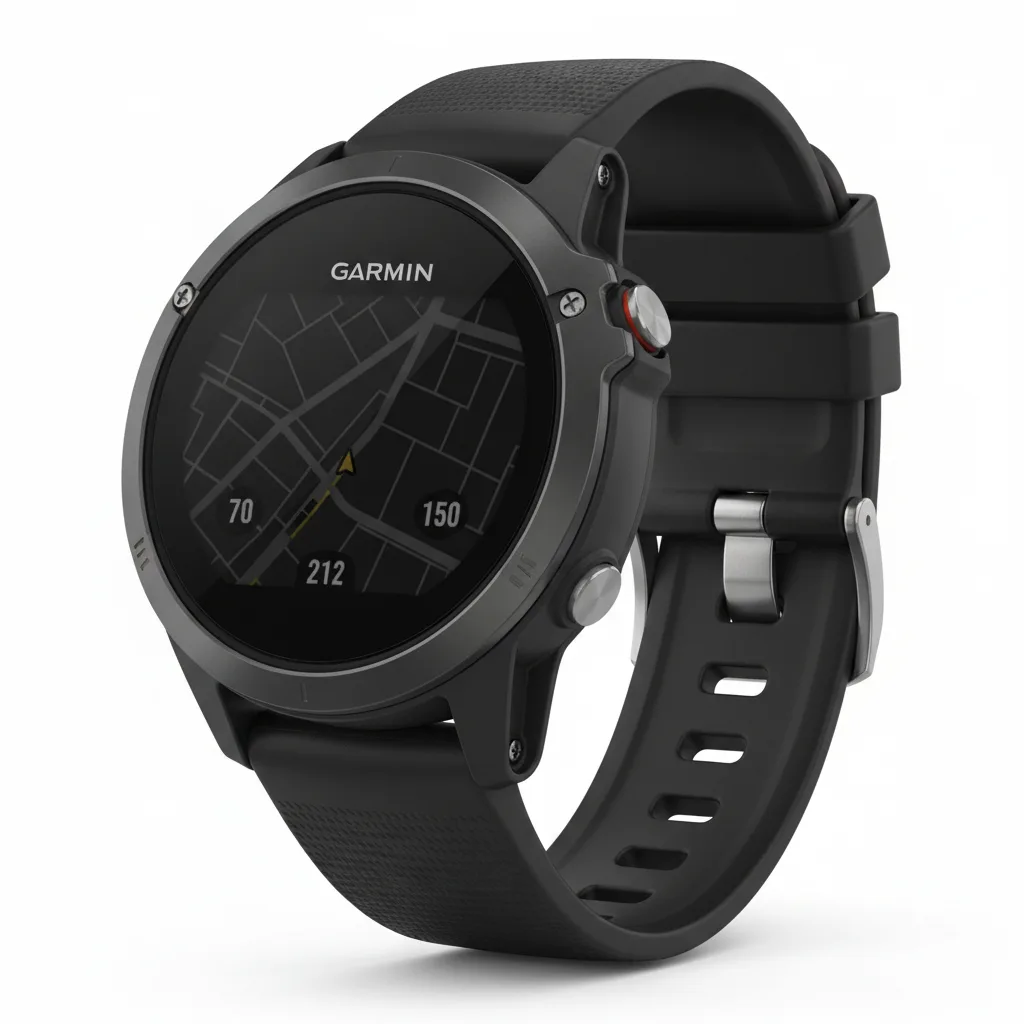
The Forerunner 970 is Garmin's most feature-complete running and triathlon watch — effectively a Fenix-grade feature set in a lighter, running-focused body. It adds ECG, a built-in LED flashlight, a speaker and microphone for calls, the newest Elevate Gen 5 heart-rate sensor, and a brighter sapphire-covered AMOLED display over the outgoing 965. It's the best pure running watch Garmin sells. The catch is a $749.99 price that pushes uncomfortably close to the Fenix 8, and a smartwatch battery life that actually went down versus its predecessor. For serious runners and triathletes who want every metric Garmin offers, it's the one to get; for many others, a cheaper Forerunner makes more sense.
What It Is
The Garmin Forerunner 970 launched in May 2025 alongside the mid-range Forerunner 570, as the direct successor to the Forerunner 965. It is Garmin’s flagship running and triathlon watch — designed for serious athletes who want onboard maps, deep training analytics, and comprehensive health monitoring in a form factor optimized for running rather than the bulkier adventure focus of the Fenix line.
Garmin describes it as their “best and brightest running smartwatch,” and the hardware upgrades over the 965 support that claim. The 970 introduces several features that are firsts for the Forerunner series: ECG functionality, a built-in LED flashlight, a sapphire crystal lens, skin temperature tracking, and the new Elevate Gen 5 heart rate sensor.
Design and Build
The Forerunner 970 keeps the same 47mm case size as the 965 but upgrades the materials substantially. The titanium bezel is larger and more prominent than the 965’s design, the lens upgrades from Corning Gorilla Glass 3 DX to sapphire crystal for improved scratch resistance, and the overall finish is more premium without being significantly heavier.
At 56g, the watch remains light for a flagship GPS watch with this feature set. The five-button layout is unchanged from previous Forerunners — physical buttons work alongside the touchscreen interface, and you can disable touch input entirely for running in rain or with gloves.
The built-in LED flashlight sits at the top edge of the case, with white and red light modes. It is a practical addition for runners who train in pre-dawn or post-sunset conditions. Garmin has added flashlights to most of its 2025 watches; having it on the Forerunner finally closes a gap that previously pushed some runners toward the bulkier Fenix.
Available variants:
- Carbon Gray DLC Titanium with Black Case
- Whitestone Titanium Case with Whitestone/Translucent Amp Yellow Band
- Additional colorways via Garmin’s website
Display
The 1.4-inch AMOLED touchscreen at 454×454 pixel resolution is substantially brighter than the Forerunner 965’s display — a meaningful improvement for outdoor readability in direct sunlight. Garmin markets this as their brightest display ever on a running watch.
Always-on mode is supported, though enabling it significantly affects battery life. The default configuration uses gesture-based display activation (wrist raise to turn on), which extends battery considerably. DC Rainmaker, who spent nearly a month testing the watch across 50km runs and mountain bike rides, notes the display brightness improvement is immediately noticeable compared to the 965.
New Running Metrics: What’s Genuinely Useful
The Forerunner 970 introduces three running metrics new to the Garmin ecosystem:
Running Economy — measures your overall energy efficiency while running, comparing oxygen cost to pace. Requires the HRM 600 chest strap ($170, sold separately) for the full metric. This is a metric coaches have used to evaluate elite runners for decades; having it on a consumer watch is genuinely novel.
Step Speed Loss — measures how much you slow down when your foot strikes the ground, identifying inefficiencies in your gait. Also requires the HRM 600 for the complete picture. The Run Testers found this data “interesting” as a diagnostic tool but noted that Running Tolerance (below) is more immediately actionable.
Running Tolerance — measures the real physiological impact of running on your body, helping identify when training volume is approaching overload. This metric does not require external sensors and works from the watch’s own data. After six months of testing, The Run Testers rated this the most useful of the three new metrics for practical training decisions.
The chest strap dependency for two of these three metrics is a legitimate criticism at $749. That said, the Elevate Gen 5 optical sensor handles standard heart rate, HRV, SpO2, and skin temperature without any additional hardware.
Health and Recovery Monitoring
The Forerunner 970 includes:
ECG (Electrocardiogram) — detects atrial fibrillation (AFib) and normal sinus rhythm. This is the first ECG on any Forerunner, enabled by the Elevate Gen 5 heart rate sensor. It brings the 970 into parity with Apple Watch Ultra 3 and Samsung Galaxy Watch 7 on cardiac monitoring, while maintaining far superior running-specific analytics.
Skin temperature sensor — tracks wrist temperature for sleep and recovery analysis, supplementing HRV and sleep data for the daily readiness score.
HRV Status — tracks heart rate variability over time to provide a daily readiness score alongside sleep quality, training load, and recovery data.
Sleep tracking and coaching — provides sleep stages, a sleep score, and personalized coaching recommendations for sleep duration.
GPS and Navigation
Multi-band GNSS supports GPS, GLONASS, Galileo, QZSS, and BeiDou. SatIQ technology automatically selects the optimal satellite configuration based on environment — using full multi-band precision in urban canyons and dense forests while conserving battery in open terrain. DC Rainmaker’s testing across a wide variety of environments found GPS accuracy to be “impeccable.”
Full-color topographic maps are built in. Dynamic round-trip routing lets you specify a target distance and receive suggested routes — and if you deviate, the watch generates a new route to hit the same mileage. This navigation capability is one of the meaningful differences between the Forerunner line and mid-range GPS watches.
Garmin Coach integration provides adaptive training plans for running, triathlon, cycling, and strength — plans that adjust daily based on performance, recovery, and health metrics rather than following a fixed schedule.
Battery Life
Battery life is the 970’s most complex spec — and one area where the brighter AMOLED display creates genuine trade-offs compared to the MIP-display 965:
| Mode | Battery Life |
|---|---|
| Smartwatch mode | Up to 15 days |
| GPS (single satellite) | Up to 40 hours |
| GPS (multi-band) | Up to 24 hours |
| Always-on display | Reduced significantly |
The Run Testers, using the watch daily across running and regular wear with always-on display enabled, found themselves charging every four to five days. In gesture-based (non-always-on) mode, real-world battery life approaches the 15-day smartwatch spec more closely. For ultramarathon or multi-day events, multi-band GPS battery is more limited than the MIP-display Fenix 8 Pro.
DC Rainmaker notes this is “one of the prickly topics” for the 970 — some battery specs improved over the 965, while others decreased. The trade-off for the brighter display is real and worth understanding before buying.
Smart Features
- Built-in speaker and microphone for phone calls from the wrist (when paired to smartphone)
- Garmin Pay (NFC contactless payments)
- Music storage (Spotify, Amazon Music, and local files)
- Notifications (messages, calls, calendar)
- Voice assistant access via paired smartphone
- Connect IQ for third-party watch faces and apps
Compared to Alternatives
vs. Garmin Fenix 8 Pro ($799–$999): The Fenix costs more, is heavier, and has a more rugged adventure-focused design. Battery life is superior on MIP models. The 970 wins on weight, display brightness, and running-specific optimizations; the Fenix wins for multi-day expeditions and solar charging. The Run Testers noted that the 970’s flashlight and ECG removed two of the main reasons they had previously chosen Fenix over Forerunner.
vs. Garmin Forerunner 965 (~$450–500 street price in 2026): The 965 remains excellent — multiple reviewers emphasize this. The 970’s premium adds sapphire glass, ECG, LED flashlight, Elevate Gen 5 sensor, and the three new running metrics. At $749 vs. ~$450 for the 965 now on sale, the question is whether those additions justify ~$300 extra for your specific use case.
vs. Apple Watch Ultra 3: Apple Watch Ultra 3 offers deeper smartphone integration, a stronger smartwatch experience, and better third-party app ecosystem. The Forerunner 970 offers substantially deeper running analytics, longer GPS battery life, and more granular athletic training tools. They serve different primary use cases.
vs. Coros Pace 4: A capable alternative at a lower price for runners who don’t need maps, ECG, or the smartwatch functionality. The Forerunner 970 is a more complete device; the Pace 4 is better value for runners who want GPS accuracy and training basics without premium features.
Final Verdict
The Garmin Forerunner 970 is the most complete running watch you can buy in 2026 — and The Run Testers’ verdict after six months of real testing backs that up: three members of their team still wear it as their primary daily watch well after finishing formal testing. The ECG, sapphire crystal, LED flashlight, and new running metrics are all practical additions rather than spec-sheet padding, and the GPS accuracy and navigation capability remain best-in-class.
The honest caveats: the $749 price is painful when the Forerunner 965 is available for $450–500 and remains excellent. The two most interesting new running metrics need a $170 chest strap to work fully, which feels like an unwelcome add-on at this price point. And the brighter AMOLED display does trade battery life for visibility.
If budget is your primary constraint, the Forerunner 965 on sale is still the right recommendation. If you want the best Garmin has to offer in a running-focused form factor without stepping into Fenix territory, the Forerunner 970 earns its premium.
Frequently Asked Questions
Is the Forerunner 970 worth upgrading from the Forerunner 965?
Do I need the HRM 600 chest strap?
How does battery life compare to the Forerunner 965?
Is it suitable for triathlons?
How does it compare to Apple Watch Ultra 3 for runners?
+Pros
- Best running-specific analytics available on any consumer GPS watch
- ECG and Elevate Gen 5 bring medical-grade cardiac monitoring to a running watch for the first time
- Sapphire crystal eliminates the display scratching that was a known weakness of the Forerunner 965
- Built-in flashlight — practical feature for early morning and night runners
- GPS accuracy described as "impeccable" across varied environments in long-term testing
- Running Tolerance metric is genuinely actionable for training load management
- Onboard maps with dynamic routing — rare at any price in dedicated running watches
−Cons
- $749 is a significant price jump from the Forerunner 965, now available for $450–500
- Running Economy and Step Speed Loss require $170 HRM 600 chest strap — significant add-on cost
- AMOLED display trades battery life for brightness versus MIP alternatives
- Occasional lag when saving activities or panning maps noted in long-term testing
- Not a replacement for the Fenix for multi-day expeditions or solar charging scenarios
- $749 + $170 HRM 600 = $919 total to unlock the full feature set