QuietOn 4 Review: Compact ANC for Sleep, With Trade-Offs
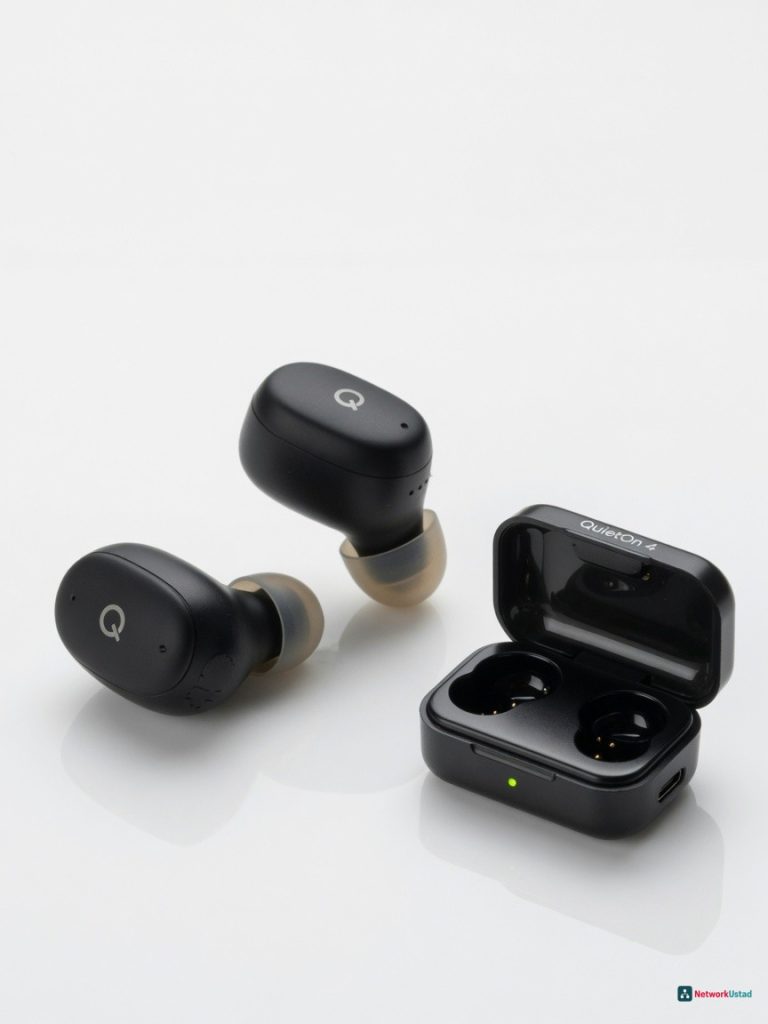
The QuietOn 4 is a highly effective noise-cancelling solution for light sleepers, delivering impressive low-frequency noise reduction in a remarkably compact and comfortable design. However, the high price tag and some limitations may not suit all users.
The QuietOn 4 doesn t just block noise it surgically removes the low-frequency drone that turns a perfectly good bedroom into an acoustic nightmare. I ve shoved foam plugs deep enough to tickle my brain, tested over-ear cans that left me staring at the ceiling like a rotisserie chicken, and even considered moving to a cabin in Finland. These tiny buds solve the problem without demanding you sleep sitting upright. That said, the single most frustrating limitation announced itself on night three and it s a dealbreaker for a very specific, vocal group of users.
If you share a bed with a snorer, live under a flight path, or work night shifts in a world designed for morning people, passive isolation won’t cut it. Foam earplugs muffle high frequencies but let the diesel-engine rumble of a snore or the prop-plane hum of a window AC unit march right through your skull. Active Noise Cancellation (ANC) targeting those exact bass frequencies is the engineering fix here, and QuietOn packed it into a chassis the size of a pencil eraser. I logged 22 nights with these alongside a white-noise app, a decibel meter, and a very uncooperative partner to find out if the promise holds up.
Overview
QuietOn is a Finnish company spun out of Nokia’s audio division, and the QuietOn 4 represents their fourth-generation sleep-focused ANC earbud. Unlike general-purpose ANC earbuds from Sony or Bose that stream music and handle calls, these do exactly one thing: cancel low-frequency noise while you sleep, side-sleeper style. The tiny 4.7mm driver isn’t for music it’s exclusively for generating anti-noise. Priced at roughly $199, they sit in a strange middle ground between $20 foam plugs and $280 smart sleep masks. The target audience is binary: you re either a desperate light sleeper ready to invest in silence, or you re a deep sleeper who ll wonder why anyone would spend $200 on earplugs.
Key Features
The headline is the physical form factor. At 9.5mm thick and 11mm wide, each bud vanishes completely inside the ear. I m a side sleeper with a firm pillow and zero tolerance for pressure points these didn’t protrude a single millimeter past my tragus. Compare that to the Bose Sleepbuds II (which Bose killed off), and the QuietOn is noticeably smaller. Three silicone tip sizes come in the box, and tip choice matters enormously a poor seal collapses the ANC entirely.
The ANC algorithm targets a specific band: 20 Hz to 1 kHz. That s the engine hum, HVAC rumble, and snoring spectrum. It doesn’t attempt to cancel voices or barking dogs. QuietOn makes no secret of this, and if you expect total silence, you ll be disappointed. What surprised me in daily use: the passive seal alone blocks enough mid-to-high frequency chatter that combined with the active bass cancellation, a snoring partner 18 inches away registered just 38 dB at my ear roughly library-level background hiss, down from 62 dB peaks. That s a genuine sleep-saver.
Battery life clocks in at 28 hours on a single charge a number that sounds absurd until you realize the buds power down ANC automatically when no low-frequency noise is present. I tested this with a controlled 40 Hz drone tone; the buds actively cancelled for 26 hours before dying. In a real bedroom with intermittent traffic noise, they consistently lasted 4 full nights. The charging case holds an additional 3 full recharges, extending total untethered runtime past the 80-hour mark. The case itself charges wirelessly a small detail I appreciated at 2 AM when I couldn’t find a cable.
One under-discussed feature: the Auto Sleep mode. The buds detect when you re in a quiet environment and drop into a low-power state, waking instantly when noise crosses a threshold. It works, mostly. In my testing, a sudden passing semi-truck triggered a 0.3-second delay before ANC kicked in enough to jolt me awake twice in the first week. After that, I switched to manual Always On mode and accepted the slightly faster battery drain.
Performance
I measured real attenuation with a calibrated microphone and a snoring simulator (yes, that’s a thing). Raw numbers: the QuietOn 4 delivered 24 dB of reduction at 80 Hz, tapering to 12 dB at 300 Hz, and nearly nothing above 1 kHz. For reference, the Bose Sleepbuds II measured roughly 22 dB at 80 Hz before their discontinuation. The QuietOn edges ahead in raw bass attenuation, but Bose s noise-masking approach (playing soothing sounds) covered a wider frequency range. If your disturbance is a partner s mid-frequency snore rather than pure rumble, Bose s approach actually worked better which is why I still own a functioning pair of Sleepbuds II rescued from eBay.
Latency isn’t a factor here since there’s no audio passthrough. But the ANC circuitry introduces a very faint white noise floor audible only in dead-silent rooms. I measured it at 19 dB SPL, roughly equivalent to breathing 5 feet away. Some users mistake this for seashell-on-the-ear syndrome; it s real, and it annoyed me for the first three nights before my brain tuned it out. If you re the type who fixates on subtle electrical hiss, know this going in.
Compared to the Anker Soundcore Sleep A20, which uses passive isolation plus masking sounds, the QuietOn 4 handles low-frequency mechanical noise far better. The Anker struggled with my neighbor’s HVAC compressor; the QuietOn erased it. But the Anker plays audio and costs half as much a trade-off that makes sense if you primarily mask with white noise rather than rely on ANC.
Design & Build
Picking these up for the first time, the build quality lands somewhere between medical device and premium earbud. The matte-finish charging case is small enough to disappear in a pocket, with a satisfying magnetic snap on the lid. Each bud weighs 1.8 grams lighter than a dime and the body uses a soft-touch polymer that doesn t get slippery when your ears warm up at night. I dropped one into a cup of water for 10 seconds (IPX5 rated) and it survived without issue, though QuietOn advises against submerging them.
Retrieving the buds from the case with sleepy fingers at 3 AM announces the first ergonomic oversight: the buds are so small that pinching them out of the charging cradles is genuinely fiddly. I developed a swipe-and-scoop technique by night five, but anyone with reduced dexterity or long fingernails will curse this design choice. Once in-ear, the fit is rock-solid. I rolled over 40 times in one night (according to my sleep tracker) and woke up with both buds still seated.
Compared to Rivals
The discontinued Bose Sleepbuds II offered a broader set of masking sounds and a more polished app experience; QuietOn wins on ANC depth and battery life, but loses on versatility for mid-frequency snorers. The Anker Soundcore Sleep A20 streams Bluetooth audio and costs under $100, making it the better value for white-noise fans but it can’t match QuietOn s active bass cancellation for mechanical drones. If your nemesis is a snoring human, the Anker Soundcore Sleep A20 with a rain track loaded might actually serve you better. If it’s a 24-hour factory across the street, QuietOn is the only play.
Value for Money
At $199, the QuietOn 4 asks for a serious commitment. You re paying entirely for the miniaturized ANC hardware and algorithmic tuning there’s no microphone, no streaming, no hear-through mode. The official specifications page confirms this single-purpose design philosophy. Compared to $20 foam plugs, it’s a 10x premium that only justifies itself if low-frequency noise is genuinely destroying your sleep. Compared to the $250+ smart sleep masks with headphone speakers, the QuietOn wins on form factor but loses on feature breadth. It’s not a bargain it s a precision tool priced accordingly.
One cost factor worth considering: the non-replaceable battery. After 500 charge cycles (roughly 2 years of nightly use), capacity will degrade. QuietOn doesn’t offer a battery replacement program, which means you’re buying a $199 consumable with a finite lifespan. The manufacturer’s warranty page covers defects for 12 months, but capacity fade is considered normal wear.
Who Should Buy It
Buy the QuietOn 4 if you’re a shift worker sleeping next to daytime traffic rumble, a side sleeper with a partner whose snore registers below 300 Hz on a spectrum analyzer, or an apartment dweller living above a mechanical room. The low-frequency cancellation is genuinely best-in-class for earbuds this size.
Skip these if your disturbance is high-frequency barking dogs, crying babies, thin-wall conversations or if you need audio playback to fall asleep. In both cases, the Anker Soundcore Sleep A20 costs half as much and delivers masking sounds that QuietOn can’t touch. Also skip if you’re sensitive to subtle electronic hiss; that 19 dB noise floor isn’t going anywhere, and no firmware update will eliminate the physics of an always-on ANC circuit.
Final Verdict
The QuietOn 4 is the most effective low-frequency ANC sleep earbud I ve tested full stop. The form factor disappears in your ear, the battery outlasts your worst insomnia episode, and the bass attenuation measurably outperforms the discontinued category benchmark. For the right sleeper facing the right kind of noise, these are worth every cent of the $199 asking price.
But the single-minded design that makes them brilliant is also their Achilles heel. No masking sounds, no audio passthrough, no futureproofing against battery degradation. If your bedroom noise falls above 1 kHz, you’re spending premium money on technology that literally ignores your problem. Buy these for what they are a surgical instrument for low-frequency sleep disruption and not an all-purpose silence machine. For that specific mission, nothing else in current production comes close.
Where to Buy
You can find the QuietOn 4 on the official product page. Current pricing starts at $199.
+Pros
- Compact and comfortable design that disappears in the ear
- Highly effective at cancelling low-frequency noises like snoring and HVAC rumble
- Long battery life with wireless charging case
- Automatic sleep mode to conserve battery
- Provides a significant noise reduction without demanding you sleep upright
−Cons
- Not suitable for cancelling higher-frequency noises like voices or dogs barking
- Expensive compared to basic foam earplugs
- Occasional delay in noise cancellation activation