Samsung Galaxy S23 Review: Sleek Powerhouse for Daily Use
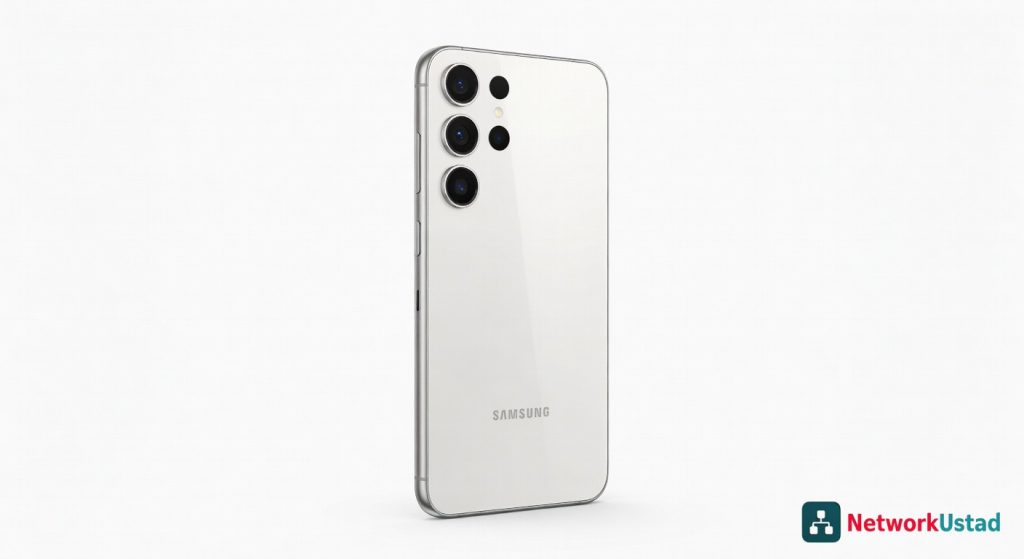
The Samsung Galaxy S23 launched in 2023 as a consumer flagship but its Knox security architecture makes it a legitimate enterprise endpoint consideration in 2026 — particularly for organisations that need compact, manageable Android devices at reduced procurement cost. Knox is not an app or a setting — it is burned into the device's circuit board at manufacturing, delivering Hardware Root of Trust, TrustZone isolation, real-time kernel protection, and Knox Workspace container separation from the chip up. The 5-year security update commitment ending in 2028 is the honest limitation for long-term fleet planning. For IT teams evaluating [Android Enterprise deployment on NetworkUstad](https://networkustad.com/reviews/), the Galaxy S23 remains one of the most security-capable handsets available at its current street price.
Knox Security Architecture: Built Into the Silicon
Samsung Knox is the enterprise security argument for the Galaxy S23, and it requires explanation beyond marketing language. Knox is not an app. It is not a setting. It is not a software layer that can be uninstalled. Knox is embedded in the device's circuit board at manufacturing — a set of hardware and cryptographic mechanisms that operate before the operating system loads and continue operating under the OS without the OS being able to disable them.
The foundation is the Hardware Root of Trust — a set of cryptographic keys burned into the Snapdragon 8 Gen 2 silicon during manufacturing. These keys are used to verify the integrity of every piece of software that loads during boot. If verification fails, Knox either records the tampering permanently by flipping the Knox Warranty Bit — a one-time hardware fuse that cannot be reset — or prevents the device from booting further. A device with a flipped Knox Warranty Bit is permanently flagged as compromised and loses access to Knox Workspace, Samsung Pay, and other Knox-dependent services.
TrustZone is the ARM processor feature that Knox leverages to create a hardware-isolated secure environment running in parallel with the normal Android OS. Sensitive operations — encryption key management, biometric data processing, secure payment cryptography — execute in the TrustZone’s secure world. The normal Android OS cannot access the secure world’s memory or interrupt its processes. Even a fully compromised Android environment cannot reach data processed in TrustZone.
Real-time Kernel Protection (RKP) runs continuously in the TrustZone secure world, monitoring the Android kernel — the core of the OS — for modification attempts. Any attempt to bypass device security through kernel exploits is blocked and logged in real time. Periodic Kernel Measurement (PKM) runs scheduled integrity checks of core OS software between RKP monitoring cycles, detecting any tampering that occurs between real-time checks. Together they provide layered kernel protection that neither Windows nor iOS matches at hardware level in the same price category.
Samsung Message Guard: Zero-Click Attack Prevention
The Galaxy S23 introduced Samsung Message Guard — a security feature that directly addresses one of the most dangerous and underappreciated mobile threat vectors: zero-click attacks delivered through image files.
A zero-click attack exploits vulnerabilities in how an operating system processes incoming data — in this case, image files received through messaging apps — without any user interaction required. The attacker sends a specially crafted image. The receiving device’s OS processes it automatically. The exploit executes. The user never taps anything, clicks anything, or sees anything unusual.
Samsung Message Guard isolates every incoming image file in a restricted sandbox environment before the operating system processes it. Within the sandbox, the image is examined for hidden code or exploit payloads. Only after this sandbox processing is completed does the image reach the messaging app. This is enabled by default on all Galaxy S23 devices with no user configuration required and no performance impact visible during normal use.
For enterprise IT teams managing devices used for external communications — sales, customer support, field operations — Message Guard addresses a threat category that traditional mobile antivirus cannot effectively prevent.
Knox Suite: Enterprise Fleet Management
Beyond the hardware security features, Knox Suite is Samsung’s enterprise mobility management platform — a cloud-based set of tools for enrolling, configuring, monitoring, and managing Samsung device fleets. It integrates with existing MDM infrastructure including Microsoft Intune, VMware Workspace ONE, and IBM MaaS360, meaning Galaxy S23 deployments can slot into enterprise mobility frameworks organisations already operate rather than requiring a separate management platform.
Knox Workspace creates a hardware-encrypted container on the device that separates corporate applications and data from personal applications and data. The corporate container is managed by IT, enforces corporate policies, and can be remotely wiped independently of the personal profile. Employees retain a fully personal Android environment on the same device. This BYOD architecture reduces the device cost and procurement complexity of enterprise mobile deployments while maintaining the data separation that regulatory compliance typically requires.
Knox Manage, the MDM component of Knox Suite, provides remote configuration, policy enforcement, app deployment, device monitoring, and emergency remote wipe. Knox E-FOTA (Enterprise Firmware Over The Air) gives IT administrators control over when firmware updates are deployed to fleet devices — preventing the scenario where employees update their phones overnight and arrive at work with a changed configuration before IT has validated the new firmware.
Software Longevity: Android 15 on a 2023 Device
The Galaxy S23 launched with Android 13 and Samsung committed to four Android OS upgrades and five years of security patches. As of July 2026, the Galaxy S23 is running Android 15 with One UI 8.5 — the fourth major OS upgrade has been delivered, and security patches continue through 2028.
This is notable context for enterprise procurement decisions. A device purchased at retail in early 2023 is still receiving current Android OS updates in mid-2026 — a lifecycle that most Windows laptops in the same price category cannot match. The Galaxy S23’s security patch cadence aligns with Samsung’s monthly security update schedule, meaning known vulnerabilities are addressed promptly rather than accumulating between infrequent update cycles.
The honest caveat is what comes next: security support ends in 2028. For IT teams planning three-year device lifecycles from today, that means the Galaxy S23 provides approximately two years of guaranteed patching. For teams planning five-year cycles, it does not. The Galaxy S24 series introduced a seven-year support commitment — making it the better choice for long-term fleet planning despite the higher current cost.
Performance in 2026: Still Competitive
The Snapdragon 8 Gen 2 for Galaxy — Samsung and Qualcomm’s custom-overclocked version with the Cortex-X3 core at 3.36GHz and Adreno 740 GPU at 719MHz — remains a capable chip in 2026. It handles enterprise workloads, video conferencing, document editing, CRM applications, and concurrent app management without meaningful throttling during normal business use.
The performance gap versus 2025-2026 flagships running Snapdragon 8 Elite is measurable in benchmarks and visible in sustained gaming loads — neither of which are typical enterprise use cases. For the roles where the Galaxy S23 makes procurement sense — mobile sales teams, field technicians, call centre staff with mobile access requirements, and BYOD enterprise users — the Snapdragon 8 Gen 2 remains adequate.
The 3,900mAh battery is the more practical performance concern. It delivers approximately 1.5 days of moderate use — reasonable, but notably smaller than current flagship standards. For enterprise users with heavy mobile data or call volumes, mid-day charging may become necessary.
How It Compares for Enterprise Procurement
Against the Samsung Galaxy S24 (current generation, ~$650 street), the S24 wins on seven-year support commitment, Snapdragon 8 Gen 3, improved camera system, and faster 45W charging. The S23 wins on price — $200 less at current street pricing with equivalent Knox security architecture. For fleets where support timeline is flexible, the S23’s cost advantage is meaningful.
Against the Google Pixel 8a (~$499), the Galaxy S23 wins on Knox security depth — Pixel provides strong Android Enterprise security but without Samsung’s hardware root of trust, TrustZone integration, and Knox Warranty Bit mechanism. Pixel wins on guaranteed software support timeline (seven years for the 8a) and pure Android experience without Samsung’s One UI layer.
Against the Apple iPhone 15 (~$699), the Galaxy S23 wins on MDM flexibility — Knox Suite and Android Enterprise offer more granular enterprise policy control than Apple’s MDM framework. Apple wins on software support longevity and the Secure Enclave’s hardware security model. Both are credible enterprise choices; the right answer depends on whether your organisation is iOS-first or Android-first.
Who Should Deploy the Samsung Galaxy S23
The Galaxy S23 makes enterprise sense for three specific scenarios: organisations deploying compact flagship Android devices for roles requiring one-handed operation; IT teams with budget constraints that make current-generation Samsung flagships cost-prohibitive for large-scale deployment; and BYOD programmes where employees already own Galaxy S23 devices and IT needs to enrol them in Knox Workspace without procurement.
Skip the Galaxy S23 for new enterprise fleet deployments where the device lifecycle extends beyond 2028 — the security update cliff is the disqualifier. In that scenario, the Galaxy S25 series provides identical Knox architecture with seven-year support at higher but justified cost.
Verdict
The Samsung Galaxy S23 is a 2023 flagship running on a 2026 security patch cadence — and that combination makes it more enterprise-relevant than most consumer phone reviews acknowledge. Knox’s Hardware Root of Trust, TrustZone, real-time kernel protection, Message Guard zero-click protection, and Knox Workspace container separation represent the most comprehensive hardware-level mobile security stack in Android at any price. The fact that all of it is available on a device now trading at approximately $450 makes the S23 a defensible procurement choice for specific enterprise scenarios.
The 2028 security support end date is the ceiling on that argument. For fleet deployments extending beyond two years from today, the Galaxy S24 or S25 series provides identical Knox security with a longer guarantee. For organisations with tighter budgets, shorter planning horizons, or existing S23 BYOD fleets, the security architecture holds up.
Rating: 4.0 / 5 — The most comprehensive hardware mobile security stack in Android, on a device whose age is visible in battery size and charging speed but not in its security architecture.
Frequently Asked Questions
What is Samsung Knox and how does it work on the Galaxy S23?
How long will the Samsung Galaxy S23 receive security updates?
What is Samsung Message Guard and why does it matter for enterprise security?
Can the Samsung Galaxy S23 be managed with Microsoft Intune or other MDM platforms?
What is the Knox Warranty Bit and why does it matter?
How does the Galaxy S23 compare to iPhone 15 for enterprise security?
Is the Samsung Galaxy S23 still worth buying for enterprise in 2026?
What is Knox Workspace and how does it enable BYOD enterprise deployments?
+Pros
- Knox security is hardware-level and permanent — Hardware Root of Trust, TrustZone, and Knox Warranty Bit cannot be disabled or bypassed by software
- Samsung Message Guard provides zero-click attack protection against image-based exploits that ship to every Galaxy S23 enabled by default
- Knox Workspace delivers enterprise-grade work/personal separation on a single device, reducing BYOD management complexity
- Compact 6.1-inch form factor is rare in 2026's large-phone market — valuable for roles requiring one-handed operation
- Street price around $450 makes enterprise bulk procurement significantly more cost-effective than current flagship alternatives
- Currently running Android 15 with One UI 8.5 — active software development demonstrates Samsung's commitment to older devices
−Cons
- 5-year security update commitment ends 2028 — shorter than the 7-year support Samsung introduced with Galaxy S24, limiting long-term fleet deployment planning
- 25W wired charging is slow by 2026 standards — Galaxy S24 and S25 offer 45W, competitors offer 65W+
- No microSD expansion — 256GB ceiling requires cloud-first storage strategy
- 3,900mAh battery is the smallest in the S23 lineup and shows its age against 2026 flagships with 5,000mAh+ cells
- No Ultra Wideband (UWB) — precision location and secure car key features unavailable on base S23 model
- One UI 8.5 green line display issue reported on some units after update — active issue at time of review