Businesses that implement structured sales funnels achieve 50% higher conversion rates than those relying on unstructured lead handling, according to a 2024 analysis by HubSpot Research.
What Is a Sales Funnel and How It Guides Buyer Decisions
A sales funnel maps every stage a prospect travels from first awareness to final purchase. It turns scattered marketing efforts into a repeatable sequence that moves people closer to buying. Companies use this model because it reveals exactly where leads drop off and where messaging needs adjustment.
The concept traces back to early 20th-century advertising models but gained modern relevance through digital tracking. Today’s platforms let marketers measure clicks, email opens, and cart completions in real time. This visibility turns the funnel from a theoretical diagram into a data-driven management tool.
Think of it as a pipeline rather than a literal funnel shape. Each stage narrows the audience while increasing intent. The goal remains constant: deliver the right message at the right moment to maximize revenue per lead.
Core Stages Every Sales Funnel Must Include
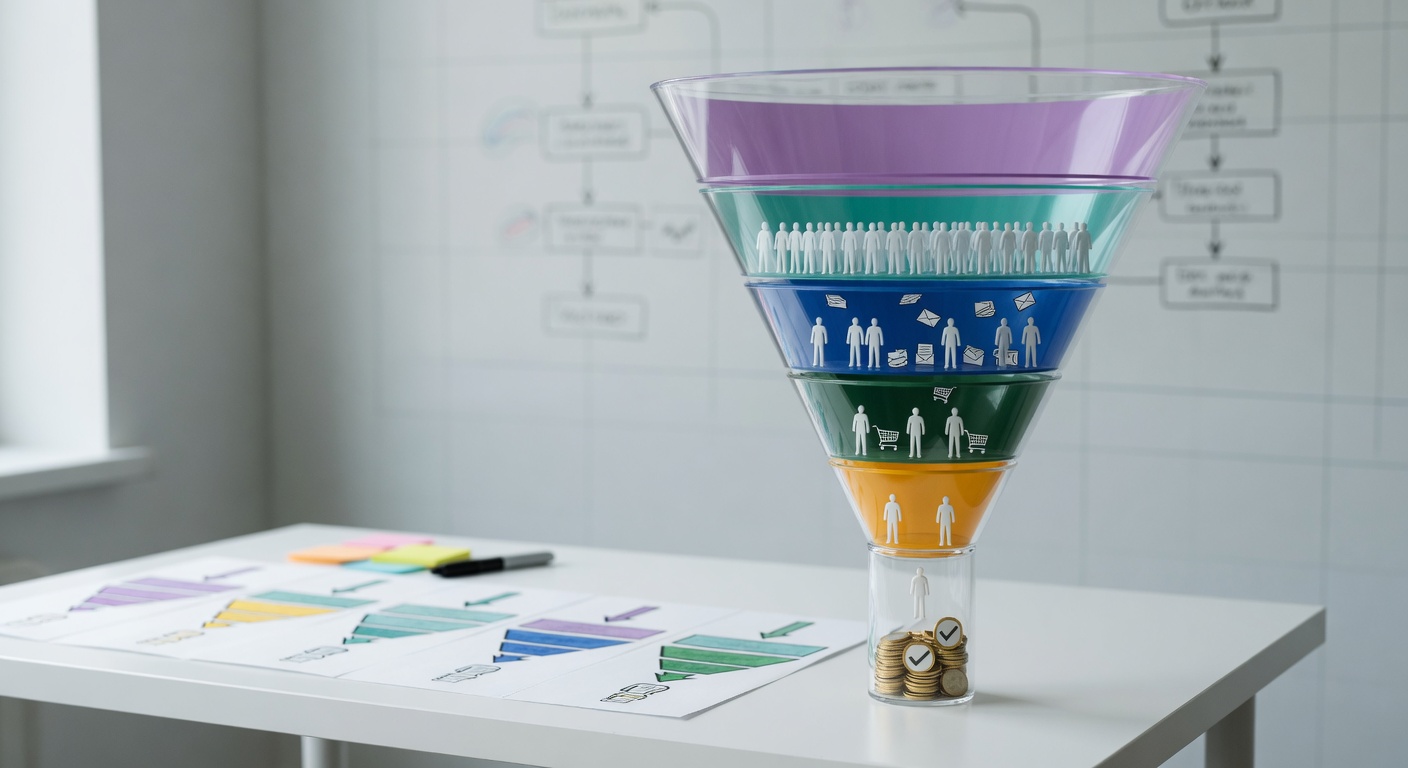
Most effective funnels follow four primary stages: awareness, interest, decision, and action. During awareness, prospects encounter your brand through content, ads, or referrals. Interest develops when visitors consume educational material such as blog posts or comparison guides.
The decision stage occurs when prospects evaluate pricing, features, and reviews against competitors. Action completes the process when they purchase or subscribe. Each stage demands different content and follow-up tactics.
Skipping any stage creates leaks. For example, pushing for an immediate sale during awareness often triggers immediate unsubscribes. Matching content depth to buyer readiness keeps momentum alive.
Key Benefits of Implementing Sales Funnels in Modern Business
Structured funnels deliver measurable returns across multiple business metrics. Companies report 30% lower customer acquisition costs when they automate lead nurturing sequences. They also see improved lifetime value because buyers receive consistent follow-up instead of one-off promotions.
Another documented advantage appears in team efficiency. Sales teams spend less time chasing unqualified leads when marketing qualifies prospects through earlier funnel stages. This alignment reduces friction between departments and shortens sales cycles by an average of 20%.
Finally, funnels generate clearer forecasting. Revenue projections become reliable when managers track conversion percentages at each stage. Investors and leadership teams favor businesses that demonstrate predictable pipeline performance.
Types of Sales Funnels and When to Use Each Model
Single-product funnels focus on one offer and work best for straightforward purchases such as ebooks or SaaS trials. These sequences keep messaging simple and reduce decision fatigue. Many startups launch with this model before expanding their catalog.
Multi-product funnels guide buyers through upsells and cross-sells after the initial purchase. They increase average order value without requiring new customer acquisition. Subscription businesses frequently layer these sequences on top of core onboarding flows.
Webinar funnels combine live or recorded presentations with limited-time offers. They excel at educating complex audiences before asking for commitment. B2B companies often favor webinar models because they allow deeper product demonstrations.
Lead Magnet Funnels for Top-of-Funnel Growth
Lead magnet funnels trade valuable content for contact information. Common assets include checklists, templates, and mini-courses. The exchange builds trust while populating a database for later nurturing.
Success depends on alignment between the magnet and the eventual offer. A budgeting template works for financial software, whereas a recipe book fits kitchen appliances. Mismatched magnets produce low-quality leads that rarely convert.
Delivery must happen instantly. Automated email sequences triggered by form submissions maintain momentum. Delayed delivery often results in prospects forgetting why they opted in.
Building an Effective Sales Funnel Step by Step
Start by defining your ideal customer profile and mapping their typical journey. Interview recent buyers to understand pain points and information needs at each touchpoint. This research prevents assumptions that later cause drop-offs.
Next, create stage-specific content. Awareness assets might include social posts and short videos. Interest content includes comparison articles and case studies. Decision assets cover pricing pages and testimonials.
Once content exists, connect the pieces with automation. Use email platforms or CRM tools to move leads between stages based on behavior. Set triggers for actions such as page visits or email clicks to keep sequences personalized.
Tools and Platforms That Power Modern Sales Funnels
Popular choices include ClickFunnels for visual builders and HubSpot for integrated CRM. Many teams combine Shopify for eCommerce checkout with Klaviyo for email flows. The right stack depends on team size and technical skill.
Analytics layers matter as much as creation tools. Google Analytics 4 and server-side tracking give visibility into cross-device behavior. Heatmap tools such as Hotjar reveal where visitors hesitate before abandoning carts.