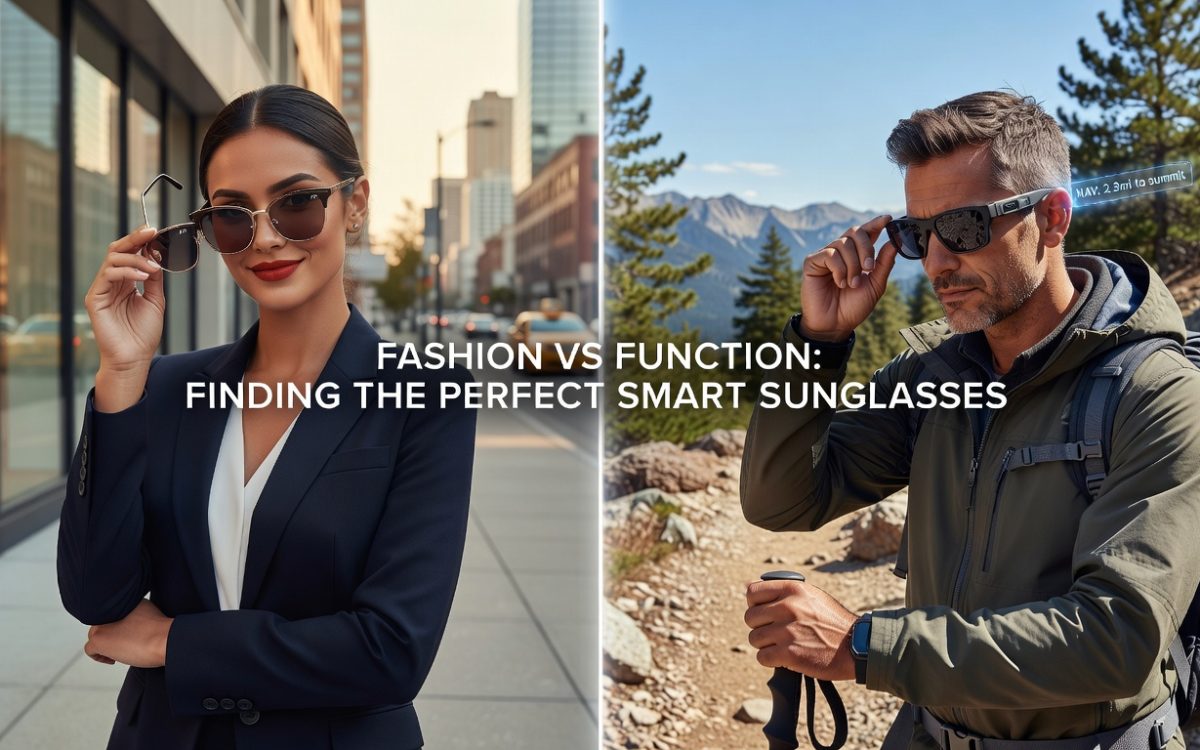
We’ve all faced that familiar tension standing in a store aisle or scrolling through product pages: do you choose the accessory that looks incredible, or the one packed with features that actually make your life easier? For years, that felt like a forced choice — style lived on one side, technology on the other. Smart sunglasses are quietly dismantling that divide.

These aren’t your average tinted lenses. Today’s smart eyewear combines sophisticated electronics, adaptive photochromic lenses, and Bluetooth connectivity into frames designed to turn heads. The real challenge for fashion-conscious buyers isn’t finding a pair that works — it’s finding one that works and belongs on your face. Nobody wants to look like they’re wearing a science experiment.
This article breaks down everything you need to navigate that balance confidently. We’ll explore what makes smart sunglasses genuinely innovative, examine the design trends shaping the best smart sunglasses on the market, unpack essential features like Bluetooth glasses and photochromic eyewear, and walk you through a practical selection process. By the end, you’ll know exactly what to look for — and what to leave on the shelf.
Understanding Smart Sunglasses: More Than Just Eye Protection
Smart sunglasses represent a genuine leap beyond traditional eyewear. Where conventional frames simply block light, smart eyewear integrates electronics, sensors, and connectivity directly into the frame — creating a wearable device that happens to sit on your face. The category has evolved rapidly over the past decade, moving from clunky prototypes that screamed “gadget” to refined designs that rival premium fashion brands in visual appeal.

At their core, these glasses rely on a combination of miniaturized components: micro-speakers embedded in the temples, Bluetooth chips for wireless communication, photochromic lens technology that responds dynamically to light exposure, and in some cases, bone conduction audio systems that transmit sound without blocking ambient noise. Battery cells are now slim enough to tuck invisibly into frame arms, and companion apps give wearers granular control over settings without fumbling with physical buttons.
The best smart sunglasses on the market today don’t ask you to compromise. Early adopters of smart eyewear often tolerated awkward proportions and limited style options because the technology itself was the draw. That’s changed considerably. Manufacturers now invest seriously in industrial design, collaborating with eyewear designers to ensure frames look intentional rather than accidental.
Popularity is climbing for two distinct reasons. Tech-savvy users are drawn to the hands-free convenience — managing calls, music, and voice assistants without reaching for a phone. Style-focused buyers are discovering that smart eyewear can anchor an outfit just as effectively as a classic pair of designer frames. When both motivations align in a single product, the result is something genuinely compelling: an accessory that earns its place on your face through both performance and presence.
The Fashion Forward Side: Designing Smart Sunglasses for Style
For fashion-conscious buyers, a pair of glasses lives or dies by how it looks on the face before anyone asks what it can do. Smart eyewear manufacturers have finally internalized this truth. The most compelling options on the market today approach design with the same seriousness as established optical houses — proportions are deliberate, finishes are refined, and the overall silhouette communicates personality rather than utility. The technology becomes secondary, almost invisible, which is precisely the point.
Top brands are increasingly treating smart sunglasses as a genuine fashion accessory rather than a gadget with a strap. Collaborations between tech companies and eyewear designers have produced frames that fit naturally into a wardrobe, whether that wardrobe leans minimalist, streetwear-influenced, or classically tailored. Brands like ohosunshine have emerged in this space by prioritizing the aesthetic conversation alongside the technical one, recognizing that a frame nobody wants to wear is a feature list that goes nowhere. The result is a category where the electronics enhance the experience without dominating the aesthetic conversation.
Key Design Trends in Modern Smart Eyewear
Three distinct directions are driving smart eyewear design right now. Minimalist frames — think slim rectangular or softly rounded profiles in matte black, tortoiseshell, or brushed metal — appeal to buyers who want their glasses to integrate seamlessly with multiple outfits. Bold, oversized silhouettes cater to those who treat eyewear as a statement piece, with wider temples that conveniently house audio components without looking engineered. A third trend involves customizable elements: interchangeable lens tints, swappable nose pads, and color-variant frame options that let wearers adapt a single pair to different settings.
Materials have shifted meaningfully too. Lightweight titanium and aircraft-grade aluminum alloys keep frames feather-light despite the added electronics, while bio-acetate and recycled plastics are appearing more frequently as sustainability becomes a genuine purchasing consideration rather than a marketing footnote. These materials also photograph beautifully, which matters in an era when accessories are chosen partly for how they read on a screen. The best smart sunglasses succeed because they look like something you’d choose anyway — the technology is simply a bonus that justifies the decision twice over.
Essential Functional Features: Technology That Enhances Experience
Style earns the first glance, but features determine whether smart sunglasses stay in rotation or collect dust in a drawer. The best smart sunglasses on the market earn their keep through a combination of connectivity, adaptive optics, and protection that genuinely improves daily life — not just a spec sheet designed to impress in a product listing. Understanding which features matter most helps you cut through the noise and focus on what you’ll actually use.
Bluetooth Glasses: Seamless Connectivity on the Go
Bluetooth integration is the cornerstone of smart eyewear’s practical appeal. Open-ear speakers built into the temples let you take calls, stream music, and summon voice assistants — all without touching your phone or wearing earbuds that isolate you from your surroundings. This hands-free convenience is particularly valuable during commutes, workouts, or any situation where pulling out a device feels disruptive. The better implementations pair quickly with both iOS and Android, maintain stable connections across reasonable distances, and deliver audio quality that’s genuinely enjoyable rather than merely functional. Battery life varies significantly across products, but the most capable options sustain four to six hours of active use — enough to cover a full workday of intermittent listening and calls before needing a charge.
Photochromic Eyewear: Intelligent Lens Adaptation
Photochromic lenses solve a problem that fixed tints never could: light conditions change constantly, and no single shade handles every environment well. These adaptive lenses darken automatically under UV exposure and clear up indoors or after sunset, responding within seconds to shifting conditions. For urban dwellers moving between bright streets and shaded interiors, this eliminates the need to swap frames mid-day. Outdoor enthusiasts benefit equally — hikers and cyclists no longer have to choose between glare protection on open terrain and adequate visibility in tree cover. Pairing photochromic technology with full UV400 protection ensures eyes stay shielded regardless of lens state. When combined with app integration that lets wearers fine-tune settings and monitor battery levels, these features create an eyewear experience that feels genuinely intelligent rather than gimmicky.
Practical Guide: How to Select Your Perfect Smart Sunglasses
Knowing what smart sunglasses can do is one thing — knowing which pair belongs on your face is another. The selection process becomes straightforward once you approach it with a clear framework rather than getting distracted by spec sheets or marketing language.
Start by auditing your personal style and wardrobe. Pull out the outfits you wear most frequently and identify the common thread: are your clothes predominantly neutral and understated, or do you gravitate toward bold silhouettes and color? Your answer should directly inform frame shape and finish. A minimalist wardrobe pairs naturally with slim rectangular frames in matte black or brushed metal, while more expressive dressers can carry oversized or geometric profiles without the glasses feeling out of place. The goal is a pair that looks chosen, not tolerated.
Next, identify your non-negotiable features before browsing. If you commute by bike or foot and regularly field calls, Bluetooth connectivity with reliable open-ear audio should sit at the top of your list. If you move between indoor and outdoor environments throughout the day, photochromic lenses will serve you better than any fixed tint. Ranking features before shopping prevents you from paying for capabilities you’ll never use while ensuring the ones you need are genuinely present.
Comfort and fit deserve serious attention, particularly for all-day wear. Nose pad adjustability, temple length, and overall frame weight determine whether glasses stay comfortable after hour three. Lightweight materials like titanium or thin acetate make a meaningful difference over extended wear.
Finally, weigh brand reputation alongside real-world reviews rather than relying solely on official product descriptions. Look specifically for feedback on battery longevity, connection stability, and how the frames hold up after months of use — these details reveal whether a pair earns its place in daily rotation or disappoints once the novelty fades.
Style Meets Technology: Making the Right Choice
Smart sunglasses have moved well past the novelty phase. What was once a trade-off — sacrifice style for features, or features for style — has become a genuine both/and proposition for buyers willing to approach the category thoughtfully. The best smart sunglasses on the market today prove that Bluetooth connectivity, photochromic lens technology, and refined design can coexist in a single frame without any element feeling like an afterthought.
The key takeaways are straightforward: let your personal style lead the frame selection, let your daily routine determine which features earn priority, and let real-world feedback — not marketing copy — tell you whether a specific pair holds up over time. Comfort, fit, and build quality matter as much as any spec on a product page, particularly when you’re wearing these glasses for hours at a stretch.
Fashion-conscious buyers no longer need to settle. Whether you prioritize seamless audio for a busy commute, adaptive lenses for unpredictable outdoor conditions, or simply a frame that completes an outfit while quietly doing more than it lets on, the right pair exists. The only remaining step is knowing what you’re looking for — and now you do. Choose with intention, and your smart sunglasses will earn their place in your daily rotation from day one.