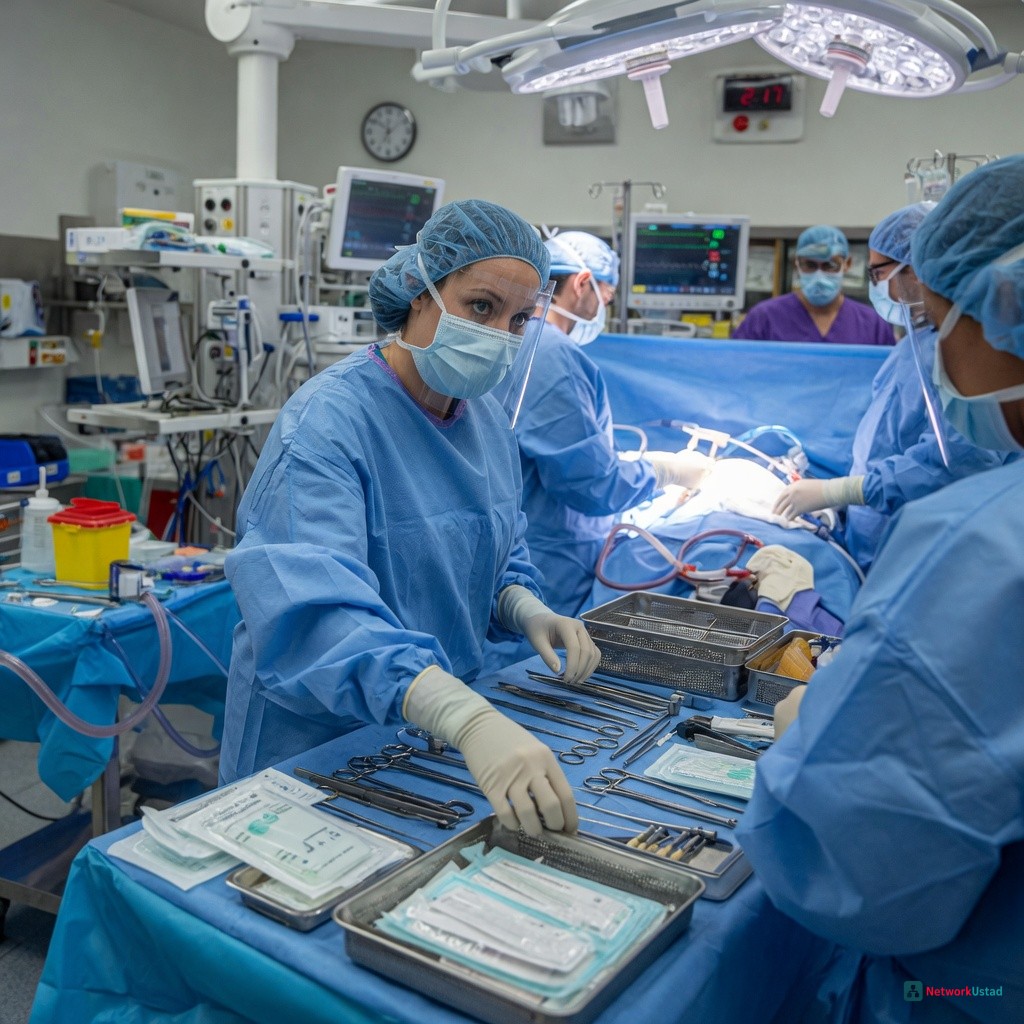
Healthcare systems are leaning harder on operating rooms than at any point in recent memory. Procedures that once required lengthy hospital stays are now routine, same-day events, and the volume keeps climbing. Behind every surgeon stands a team whose work rarely makes the news but quietly determines whether an operation runs smoothly or falls apart. Among that team, one role has stepped firmly into the spotlight, and employers across the medical field are scrambling to fill seats that simply cannot stay empty.
A Field That Keeps Outpacing Its Workforce
Hospitals are struggling to staff their operating rooms at the pace surgical schedules now demand, and the gap between open positions and qualified candidates widens with each passing year. Patients face longer wait times for elective procedures, surgical teams burn out under heavier rotations, and administrators watch revenue slip when rooms sit idle. Aspiring professionals who want a direct path into this career should explore colleges for Surgical Technologist where structured programs build the clinical foundation, instrument knowledge, and sterile field discipline that hiring managers screen for from the very first interview. These programs typically blend classroom theory with hands-on lab work, then push students into clinical rotations where they assist on real cases under direct supervision. Graduates leave with the kind of practical readiness that employers want on day one, not a candidate who needs months of on-the-job coaching before they can scrub in safely.
Why Hospitals Cannot Get Enough Qualified Hands
The reasons behind the staffing crunch run deeper than a simple wave of retirements. An aging patient population means more joint replacements, more cardiac procedures, and more cancer-related operations than the system has ever absorbed. At the same time, outpatient surgical centers have multiplied rapidly, each one needing its own staff to function. Add the steady expansion of minimally invasive techniques, robotic platforms, and complex specialty procedures, and you have a workforce equation that refuses to balance. Facilities that once relied on travel staff to plug holes are now competing fiercely for permanent hires, often raising sign-on incentives and improving shift flexibility just to keep their rosters full.
The Skills That Set Strong Candidates Apart
Employers are no longer satisfied with candidates who can simply hand over the correct clamp at the right moment. The job has grown more technical, more collaborative, and more demanding. Strong candidates show fluency with sterile technique, sharp anticipation of the surgeon’s needs, comfort with rapidly evolving equipment, and the composure to stay focused during long, intricate cases. Communication carries just as much weight as technical ability. Teams move quickly inside an operating room, and someone who cannot speak up clearly when a count seems off, or who hesitates to flag a possible breach in sterility, creates real risk for the patient. The professionals who advance fastest are those who pair technical fluency with calm, direct communication and a willingness to keep learning long after their formal training ends.
How Training Programs Are Adapting
Educational institutions have noticed the demand and responded by sharpening their curricula. Modern programs spend more time on imaging-guided procedures, robotic assistance protocols, and the documentation requirements that accompany increasingly regulated operating environments. Simulation labs have replaced much of the old chalk-and-talk approach, giving students repeated exposure to realistic scenarios before they ever step into a live case. Clinical partnerships with regional hospitals and surgery centers have also grown stronger, giving students earlier and broader exposure to different specialties. The result is a graduate who arrives at a first job already familiar with the rhythm of a real operating room, rather than someone who needs weeks to acclimate to the noise, the pace, and the pressure.
Career Pathways That Keep Opening Up
A first position is rarely the final stop in this field. Many professionals begin as generalists, rotating through whatever cases the day brings, and then gravitate toward a specialty that suits their temperament and interests. Cardiovascular work, neurosurgery, orthopedics, and transplant teams all welcome experienced hands who want to go deeper into a particular discipline. Others move toward roles in central sterile processing leadership, surgical first assisting, or education, where they train the next wave of students entering the field. A handful pivot into medical device companies, where their operating room experience becomes invaluable for product development, clinical training, and surgeon support. The career ceiling sits higher than many newcomers realize, and the lateral options are surprisingly broad.
The Human Element Behind the Demand
Numbers, schedules, and staffing reports tell part of the story, but the work itself carries a weight that goes beyond logistics. Patients arrive at their most vulnerable moment, often anxious and uncertain, and the team around them shapes how that experience unfolds. A calm voice during prep, a steady presence at the table, a thorough handoff to the recovery team. These small moments matter, and the professionals who deliver them consistently become the ones colleagues request by name. That human element is part of why the field continues to attract people looking for purpose alongside a paycheck. The work is physically demanding and mentally taxing, but it is also tangible in a way that few careers manage. Every shift ends with a clear record of patients helped, surgeries completed, and a team that pulled together when it counted.
What Comes Next for the Profession
The pressure on operating rooms is unlikely to ease anytime soon. Medical advances continue to expand what surgery can accomplish, populations continue to age, and the appetite for outpatient procedures keeps growing. Employers will keep raising their standards while also working harder to retain the talent they already have. For anyone weighing a career move into healthcare, the trajectory is clear. The roles are open, the training is accessible, and the work itself rewards those who commit to it with stability, advancement, and a sense of contribution that holds up across an entire career. Those who step in now will find themselves entering a field where their skills remain in demand for decades to come.