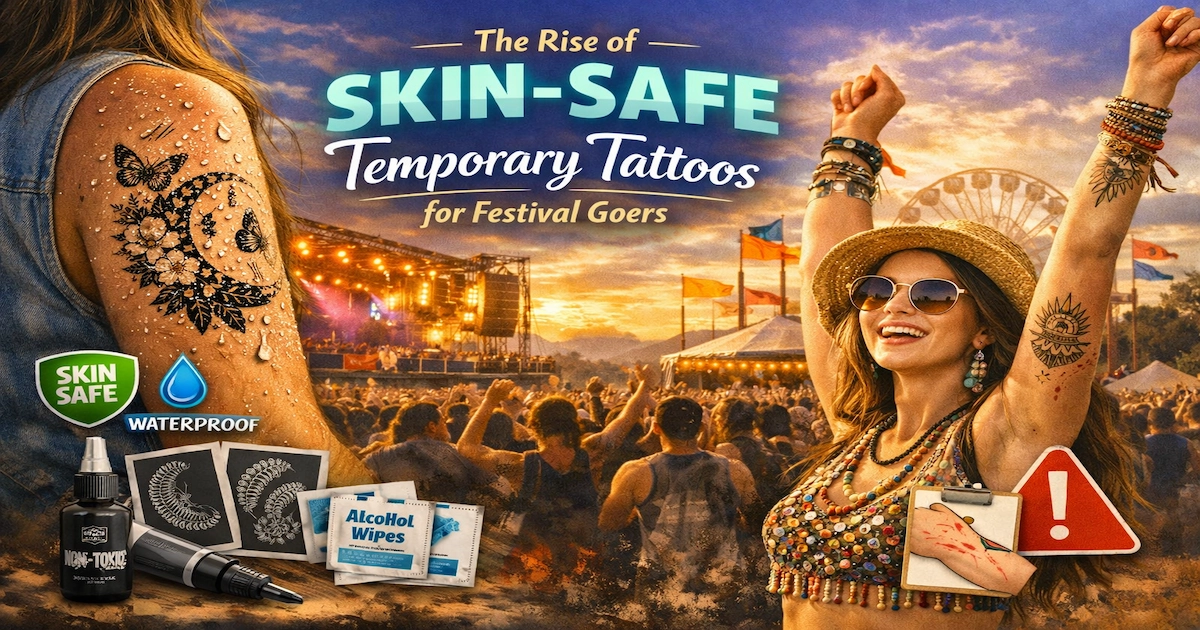

Picture this: you’re standing at the entrance of your favorite music festival, surrounded by a kaleidoscope of colors, bold outfits, and people expressing themselves in the most creative ways imaginable. Body art is everywhere — intricate patterns crawling up arms, delicate designs adorning collarbones, and glittering motifs catching the afternoon sun. Temporary tattoos have become an essential part of festival culture, offering a stunning way to transform your look without any permanent commitment.
But here’s the challenge most festival-goers know all too well: not all temporary tattoos are created equal. Some fade within hours, others cause unexpected skin reactions, and many simply can’t survive a sweaty dance floor or a surprise rain shower. Finding options that are genuinely skin-safe and waterproof can feel like searching for a needle in a haystack.
This guide is here to change that. Whether you have sensitive skin or simply want body art that lasts from the opening act to the final encore, we’ll walk you through everything — from identifying safe, non-toxic formulas and choosing the right temporary tattoo kit to mastering flawless application and discovering the trendiest designs of the season. Safety, longevity, and style don’t have to be a compromise.
The Rise of Skin-Safe Temporary Tattoos for Festival Goers
Festival environments are uniquely demanding on skin. You’re outdoors for hours, often in intense heat, sweating through dance sets, and potentially exposed to dust, sunscreen, and other products layered onto your body. For anyone with sensitive skin, this combination creates the perfect storm for irritation — and adding a poorly formulated temporary tattoo into the mix can turn a fun weekend into a rashy, uncomfortable nightmare. That’s why skin safety isn’t just a nice-to-have feature; it’s a genuine necessity when choosing body art for festivals.
Many budget temporary tattoos still rely on ingredients that dermatologists routinely flag as problematic. PPD (p-phenylenediamine), a chemical commonly found in black henna and certain ink formulas, is one of the most frequent culprits behind allergic reactions, causing redness, blistering, and long-term skin sensitization. Synthetic fragrances, formaldehyde-releasing preservatives, and heavy metal-based pigments are other ingredients worth avoiding. Always scan the ingredient list before purchasing, and be especially cautious with products that don’t disclose their full formula.
Non-toxic, hypoallergenic formulas have become the gold standard for a reason. They eliminate the guesswork, using plant-derived dyes and cosmetic-grade ingredients that have been tested for skin compatibility. These formulations are far less likely to trigger reactions, making them suitable for a wider range of skin types — including children’s skin, which is even more reactive.
What Makes a Temporary Tattoo Skin-Safe?
Three factors define a genuinely skin-safe design: FDA-compliant or EU Cosmetics Regulation-approved inks, clearly disclosed natural or cosmetic-grade ingredients, and documented allergy testing. When reading labels, look for certifications such as dermatologist-tested, hypoallergenic, or cruelty-free markings. Reputable brands will also list every ingredient rather than hiding behind vague terms like “proprietary blend.” If a product lacks transparency about its formula, that alone is reason enough to keep looking.
Ensuring Your Temporary Tattoos Are Waterproof and Durable
A festival is not a controlled environment. Between the heat radiating off a packed crowd, spontaneous trips to a water station, and the inevitable downpour that seems to find every outdoor event, your body art needs to hold up under real pressure. Waterproof temporary tattoos aren’t just a marketing claim — they represent a fundamentally different construction than standard paper-transfer designs. Where conventional tattoos begin peeling the moment moisture seeps under the edges, waterproof formulas use flexible polymer-based adhesives and water-resistant topcoats that bond more securely to skin and resist lifting even after hours of exposure to sweat and humidity.
The technology behind long-lasting temporary tattoos typically involves one of two approaches: a sealed film layer that acts as a barrier between the ink and the environment, or a cosmetic-grade ink that partially bonds with the outermost layer of skin rather than simply sitting on top of it. The latter, often found in higher-quality kits, mimics the appearance of real tattoos far more convincingly and tends to outlast standard transfer designs by several days. Some products also include a dedicated sealant spray in the kit — applying this over a freshly placed tattoo adds a protective coating that significantly extends wear time, particularly across areas that flex and move frequently, like wrists, shoulders, and ankles.
Durability also depends on placement. Areas with high friction — inner elbows, behind the knees, and the sides of the torso — will degrade faster regardless of formula quality. Choosing flatter, less mobile skin surfaces gives even mid-range waterproof products a fighting chance across a multi-day festival.
Tips for Maximizing Temporary Tattoo Longevity
Preparation is where longevity is won or lost. Start by thoroughly cleansing the skin with a gentle, fragrance-free cleanser and allow it to dry completely — any residual moisture creates a barrier that prevents proper adhesion. Exfoliating the target area a day before application removes dead skin cells that would otherwise cause premature flaking. Critically, avoid applying any moisturizer, sunscreen, or body oil to the area before placing the tattoo, as oil-based products actively break down adhesive bonds. Once the tattoo is applied and fully dry, hold off on applying sunscreen directly over it for at least thirty minutes. For multi-day wear, a light dusting of translucent setting powder over the design each morning helps absorb excess sebum and extends the seal. When washing, pat the area gently rather than rubbing, and avoid prolonged soaking in pools or hot tubs, which will accelerate breakdown regardless of waterproof rating.
How to Choose the Best Temporary Tattoo Kit for Your Needs
Walking into the temporary tattoo market without a clear framework is overwhelming. Hundreds of kits compete for attention, each promising vibrant colors, long wear, and effortless application — but the reality varies dramatically. The first distinction worth making is between pre-made transfer designs and custom stencil-based kits. Pre-made designs offer convenience and consistency, making them ideal if you want polished results without much practice. Custom kits, on the other hand, give you creative control over placement, size, and layering, which appeals to anyone building a cohesive festival aesthetic from scratch. Neither is objectively better; the right choice depends on how much time and effort you’re willing to invest before the event.
Ink quality is the most consequential factor in any kit evaluation. Look specifically for cosmetic-grade, non-toxic inks that carry FDA compliance or meet EU Cosmetics Regulation standards. Beyond the ink itself, consider what application tools are included. A kit that bundles stencils, a fine-detail applicator, and a waterproof sealant spray offers significantly more value than one that ships ink alone. The sealant is particularly important for festival use — without it, even premium ink formulas will degrade faster under sweat and friction. Some higher-end kits also include a small setting brush or powder, which helps the design settle without smearing during the critical drying window.
Design variety matters more than it might initially seem. A kit with a broad range of motifs — from fine-line botanical illustrations to bold geometric shapes — gives you flexibility to match different outfits across a multi-day festival. Brands like Never Have I Ever have built their festival collections around exactly this kind of range, offering curated design sets that pair naturally with different aesthetic directions. Before purchasing, verify that the kit includes designs scaled appropriately for your intended placement areas. Oversized stencils rarely translate well onto wrists or ankles, while intricate small designs can lose detail when scaled up for back or shoulder placements. Use this checklist when evaluating any kit: skin-safe certified inks, included sealant or topcoat, variety of stencil sizes, clear application instructions, and transparent ingredient disclosure.
Key Features to Look for in a Temporary Tattoo Kit
The components that separate a festival-ready kit from a novelty product come down to a few non-negotiables. Skin-safe, hypoallergenic ink is the baseline — any kit without clear ingredient disclosure should be disqualified immediately. Beyond that, look for flexible adhesive films or transfer papers that conform to curved body surfaces without cracking, since rigid transfers tend to peel at the edges within hours of application. A waterproof topcoat or sealant spray, ideally included in the kit rather than sold separately, dramatically extends wear time and is essential for outdoor events. Precision applicators — fine-tipped tools or stencil guides — make the difference between a design that looks intentional and one that appears smudged or amateurish. Finally, reputable brands typically back their products with dermatologist-tested certifications and offer clear guidance on patch testing, which is the single most reliable way to confirm compatibility with your specific skin type before committing to full application.
A Step-by-Step Guide to Applying Temporary Tattoos Perfectly
Even the highest-quality temporary tattoo can look disappointing if the application process is rushed or careless. Getting it right takes maybe ten extra minutes, but the difference in results is dramatic. Begin by selecting your placement area and cleaning the skin thoroughly with a gentle, alcohol-free cleanser — this removes surface oils, sweat, and any residual product that would prevent adhesion. Pat completely dry and wait at least five minutes before proceeding. If you’re working with a stencil-based kit, position the stencil carefully and secure the edges with light pressure to prevent shifting mid-application. Apply ink using smooth, consistent strokes from the center outward, which reduces the risk of bleeding under the stencil edges. Avoid pressing too hard, as this can cause pooling that blurs fine details. Once the design is complete, allow it to air dry fully before touching or covering it — typically three to five minutes depending on ink density. Resist the urge to fan or blow on it, as uneven drying can cause smearing. If your kit includes a sealant spray, apply a thin, even coat from about six inches away once the ink is dry. This step is non-negotiable for festival conditions. The finished design should complement your overall look, whether paired with layered body jewelry, metallic accessories, or bold festival outfits that frame the placement area intentionally.
Removal Techniques for Safe and Easy Clean-Up
Removing a temporary tattoo should be as gentle as the application process, particularly if your skin has been through a full festival weekend. The most effective method is applying a generous amount of coconut oil, baby oil, or a dedicated makeup remover oil directly over the design and letting it sit for two to three minutes. The oil breaks down the adhesive bond without requiring aggressive scrubbing, which can leave skin red and irritated. After soaking, use a soft cotton pad to wipe away the design in gentle circular motions. Avoid harsh rubbing or using acetone-based removers, which strip the skin’s natural moisture barrier. Once the tattoo is fully removed, rinse the area with lukewarm water and follow with a fragrance-free moisturizer to restore hydration. If any residual ink remains, repeat the oil treatment rather than scrubbing harder. Post-removal skin care is especially important after multi-day festival wear — a soothing aloe vera gel or gentle barrier cream helps calm any minor irritation and keeps skin in good condition.
Trendy Designs: Temporary Tattoos as Festival Accessories
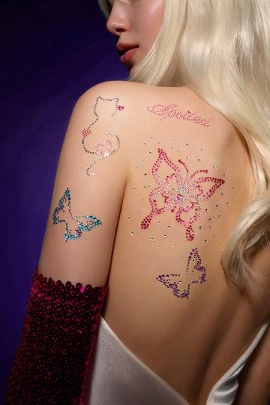
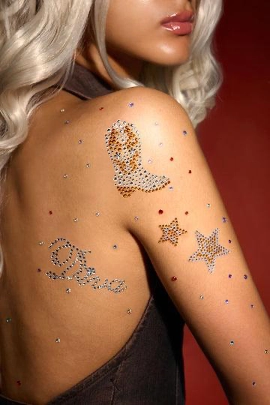
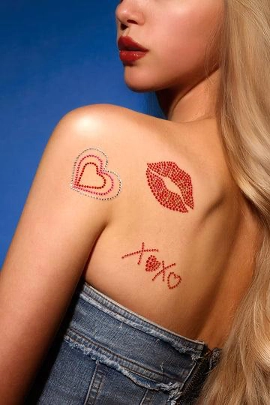
Festival fashion has evolved into a full-body art form, and temporary tattoos are no longer an afterthought — they’re a centerpiece. The designs trending most heavily this season reflect a broader shift toward intentional, layered aesthetics. Geometric patterns remain a festival staple: clean triangles, interlocking hexagons, and mandala-inspired compositions work beautifully across shoulders, sternum, and upper arms, creating a structured visual anchor that complements flowing boho silhouettes and structured co-ords alike. Floral motifs have also surged in popularity, particularly fine-line botanical illustrations — delicate ferns, single-stem roses, and wildflower clusters that feel organic rather than costume-like. For those who want maximum visual impact, glitter-infused designs and metallic gold or silver foil transfers catch light in a way that photographs strikingly and reads beautifully under festival stage lighting.
The real magic happens when temporary tattoos are layered with other festival accessories. A cuff bracelet or stack of delicate chain bracelets paired with a wrist tattoo creates a seamless blend of body art and jewelry that looks deliberately styled. Collar bone placements echo necklace lines, making a single fine-line design feel like an extension of your jewelry rather than a separate element. Body chains worn across the torso can frame a larger back or ribcage tattoo, turning the combination into a cohesive statement piece. Anklet stacks and ankle tattoos follow the same logic — the layering reads as intentional and fashion-forward rather than random.
Customizing Your Temporary Tattoos for Personal Style
Personalization is where temporary tattoos genuinely outshine permanent ones — the freedom to experiment is total. Stencil-based kits make it easy to layer multiple designs, building composite looks that feel unique to you. Try overlapping a geometric outline with a botanical fill pattern, or scale the same motif in two different sizes across adjacent placements for a cohesive but dynamic effect. Mixing ink finishes — combining a matte black fine-line design with a metallic gold accent piece nearby — adds dimension and visual interest without requiring artistic skill. Temporary tattoos also pair naturally with body glitter applied around the edges of a design, softening the border and integrating the tattoo into a full-body festival glow. The key is treating your body as a canvas with intentional composition: choose a focal placement, build outward with smaller complementary pieces, and let the overall arrangement tell a cohesive visual story that reflects your personal aesthetic.
Your Festival Body Art Starts with the Right Choices
Festival season is your opportunity to express yourself boldly, and temporary tattoos have earned their place as one of the most versatile tools in that creative arsenal. But as this guide has shown, getting the most out of them requires more than grabbing the first kit you find. Skin safety comes first — prioritizing non-toxic, hypoallergenic formulas with transparent ingredient lists protects you from reactions that could derail your weekend entirely. Waterproof durability comes next, because body art that survives only the opening act isn’t worth the effort of applying it.
Choosing the right temporary tattoo kit, preparing your skin properly, and following a careful application process transforms what might seem like a simple accessory into a genuinely polished part of your overall look. Layer those designs thoughtfully with body jewelry and festival accessories, and the results speak for themselves — intentional, cohesive, and entirely your own.
The good news is that safe, durable, and stunning temporary tattoos are more accessible than ever. Armed with the knowledge from this guide, you’re fully equipped to evaluate your options critically and apply them with confidence. Browse the recommended kits, experiment with trending designs, and head into your next festival knowing your body art will look just as incredible on day three as it did on day one.