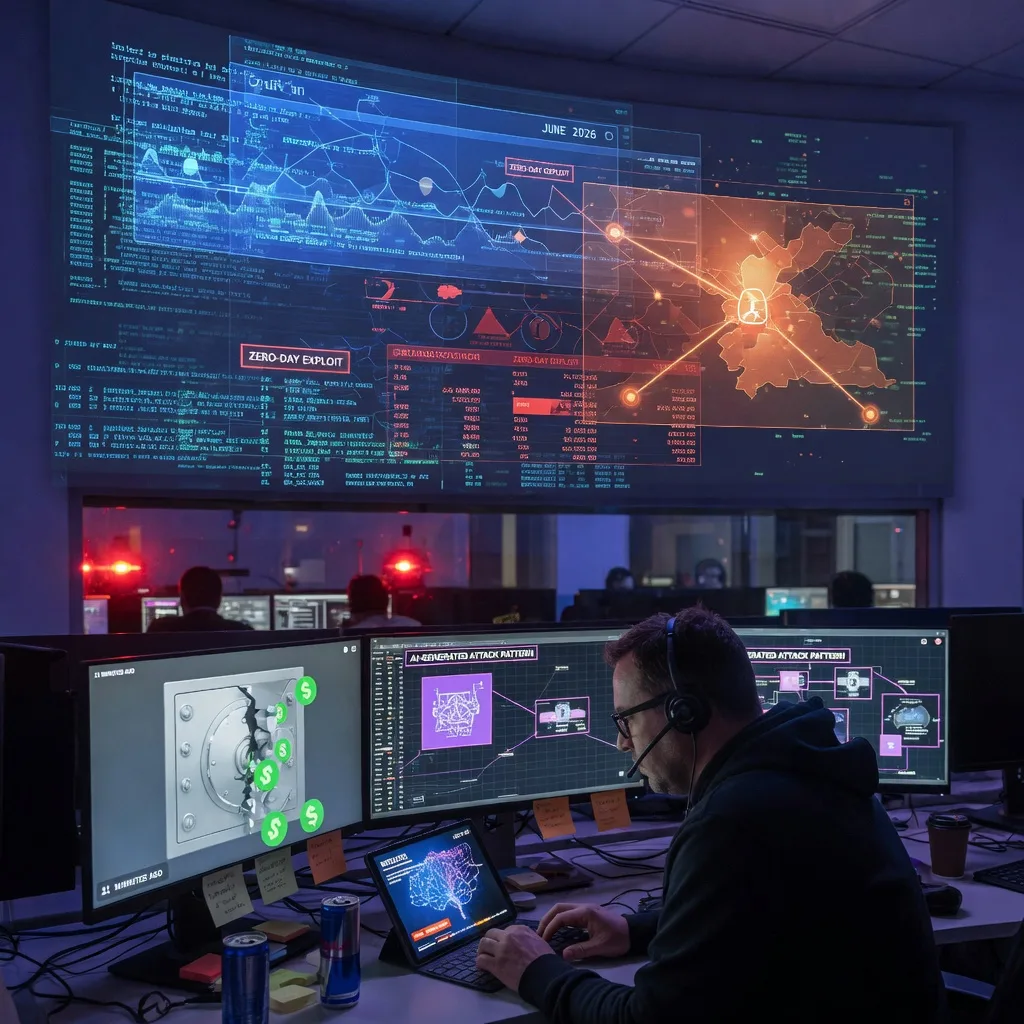
AI-Driven Threats, Zero-Days, and Data Breaches Define This Week in Cybersecurity for June 2026
A major bank lost $4.5M in 11 minutes when attackers exploited a zero-day in its VPN gateway — a vulnerability the vendor had patched three weeks earlier. Meanwhile, a global logistics firm suffered a crippling ransomware attack that disrupted operations for over a week after AI-powered malware evaded its security controls. These are just two of the many high-profile cybersecurity incidents making headlines this month, underscoring the escalating challenges organizations face in the age of AI-driven threats.
The Rise of AI-Powered Cyberattacks
According to a recent report, over 80% of enterprise networks have experienced an AI-powered attack in the past 12 months. Threat actors are increasingly leveraging large language models and other AI technologies to automate vulnerability scanning, evade detection, and launch complex, targeted assaults. Anthropic’s Project Glasswing — an AI-based cybersecurity initiative — has already identified thousands of previously unknown zero-day flaws across major software and cloud platforms.
This dynamic is forcing security teams to rethink their defensive strategies. “Traditional security controls simply can’t keep up with the speed and scale of AI-driven threats,” says Cybersecurity Analyst Asad Ijaz. “Enterprises need to adopt a proactive, AI-centric approach to stay ahead of the curve.”
Embracing AI-Powered Security
The solution lies in leveraging AI and machine learning to combat AI-powered attacks. Forward-thinking organizations are deploying autonomous security orchestration platforms that can rapidly detect, analyze, and respond to threats without human intervention. These systems use deep learning models to continuously monitor network activity, identify anomalies, and automatically trigger mitigation workflows.
- Automated Zero-Day Patching: AI-powered vulnerability management tools can automatically assess, prioritize, and deploy critical patches — reducing the window of exposure before exploits emerge.
- Intelligent Threat Hunting: AI-driven security analytics can uncover hidden indicators of compromise, correlate disparate signals, and proactively hunt for advanced persistent threats.
- Autonomous Incident Response: Security automation platforms can autonomously investigate incidents, contain threats, and remediate systems — minimizing business disruption.
“The key is to fight AI with AI,” advises Cybersecurity Consultant Mujtaba Khattak. “Enterprises that embrace AI-powered security will be far better equipped to defend against the new breed of AI-driven attacks.”
The Cybersecurity Talent Crunch
Of course, implementing these AI-centric security solutions requires specialized talent. However, the cybersecurity skills gap continues to widen, with over 3.4 million unfilled positions globally. Retaining and upskilling existing teams is critical, as is investing in automation to reduce the burden on security personnel.
“The human element will always be essential, but we simply can’t scale security operations fast enough to keep up with the pace of digital transformation,” says Wahab Ali, Chief Information Security Officer at a major healthcare provider. “Enterprises must empower their security teams with intelligent, AI-driven tools that augment their capabilities.”
Conclusion: Proactive, AI-Centric Cybersecurity
In the face of escalating AI-powered threats, organizations can no longer rely on reactive, rules-based security controls. Embracing proactive, AI-centric cybersecurity strategies will be essential for protecting critical systems, safeguarding sensitive data, and ensuring business continuity in the years ahead. By leveraging the power of AI to combat AI-driven attacks, enterprises can stay one step ahead of the rapidly evolving threat landscape.