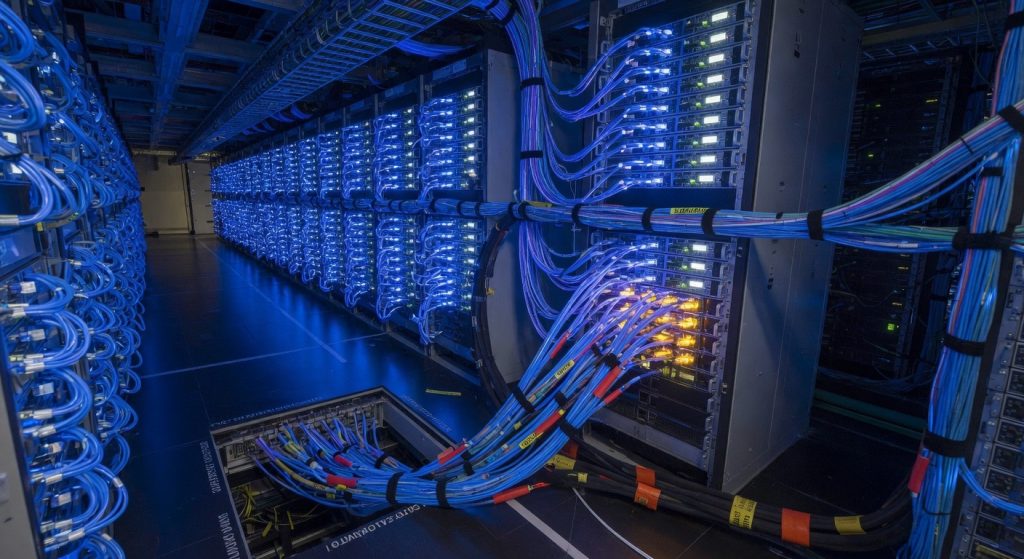
The Gulf region’s rapid adoption of AI technologies is straining its undersea cable infrastructure, creating a critical bottleneck for hyperscalers and enterprises alike. With AI workloads demanding exponentially more bandwidth and lower latency, the region’s reliance on a handful of aging submarine cables is becoming a significant vulnerability. Recent cable disruptions have exposed the fragility of this infrastructure, forcing IT teams to rethink network architecture and redundancy strategies.
Hyperscalers like AWS, Microsoft Azure, and Google Cloud are driving much of this demand, deploying AI-powered services that require massive data transfers between regional data centers and global networks. However, the Gulf’s geographic position—sandwiched between Europe, Asia, and Africa—makes it a hub for international traffic, further amplifying the strain. The result is a precarious balance between growth and reliability, where even minor cable faults can cascade into widespread outages.
### The Role of Submarine Cables in AI Workloads Submarine cables are the backbone of global internet connectivity, carrying over 99% of international data traffic. In the Gulf, these cables are particularly critical due to the region’s reliance on cloud-based AI services. AI workloads, such as natural language processing, computer vision, and predictive analytics, require real-time data processing and low-latency connections. This is especially true for enterprises leveraging AI for customer engagement and operational efficiency.
A single AI model training session can consume terabytes of data, often sourced from geographically distributed datasets. When submarine cables experience disruptions, the latency spikes can disrupt AI workflows, leading to costly delays. For example, a recent outage on the SEA-ME-WE 4 cable—one of the primary routes connecting the Gulf to Europe—caused latency increases of up to 300ms, crippling AI applications reliant on real-time data processing.
### Network Redundancy and Resilience Challenges To mitigate these risks, enterprises in the Gulf are investing in network redundancy strategies, such as deploying multiple submarine cable routes and leveraging terrestrial fiber links. However, the region’s geography limits the number of viable cable routes, creating a dependency on a few high-capacity corridors. This concentration of traffic increases the risk of single points of failure.
One approach gaining traction is the use of SD-WAN and MPLS technologies to dynamically reroute traffic during outages. For instance, Cisco’s SD-WAN solutions allow enterprises to prioritize AI workloads across multiple paths, ensuring minimal disruption during cable faults. Similarly, VRF (Virtual Routing and Forwarding) configurations can isolate critical AI traffic, preventing congestion from affecting other applications.
Despite these advancements, the cost of implementing robust redundancy measures remains a barrier for many enterprises. Deploying additional submarine cable routes or leasing capacity on alternative paths can be prohibitively expensive, especially for smaller organizations. This has led to increased interest in edge computing, where AI workloads are processed closer to the data source, reducing reliance on long-haul submarine cables.
### The Role of Hyperscalers and Governments Hyperscalers are taking proactive steps to address the region’s infrastructure challenges. AWS, for example, has announced plans to build new data centers in the Gulf, reducing the need for cross-region data transfers. Similarly, Microsoft Azure is investing in QoS (Quality of Service) enhancements to prioritize AI traffic across existing submarine cables.
Governments in the Gulf are also stepping up, with initiatives like Saudi Arabia’s Vision 2030 and the UAE’s Smart Dubai program driving investments in digital infrastructure. These projects include the deployment of new submarine cables, such as the 2Africa project, which will connect the Gulf to Europe and Africa with significantly higher capacity. However, these initiatives take years to complete, leaving enterprises to navigate the current infrastructure constraints in the interim.
### What This Means for IT Professionals For network engineers and IT professionals in the Gulf, the current challenges highlight the need for proactive planning and investment in redundancy. Key steps include:
- Auditing network architecture to identify single points of failure and prioritize AI traffic.
- Implementing SD-WAN and MPLS solutions to dynamically reroute traffic during outages.
- Exploring edge computing to reduce reliance on submarine cables for AI workloads.
- Collaborating with hyperscalers to leverage their infrastructure investments and QoS enhancements.
The Gulf’s AI boom is a testament to the region’s ambition, but it also underscores the importance of robust network infrastructure. As AI workloads continue to grow, the need for reliable, low-latency connectivity will only intensify. By addressing the undersea cable problem now, enterprises can position themselves for sustainable growth in the AI-driven future.