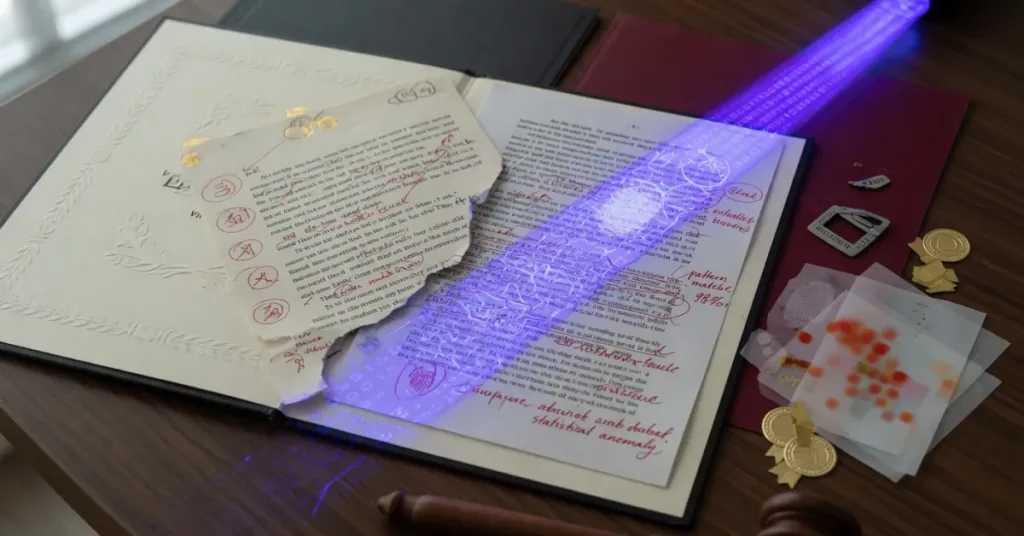
Three of the five regional winners for the Commonwealth Short Story Prize now face formal allegations that their submitted work contains passages generated by large language models. Organizers confirmed that stylometric analysis flagged unusual uniformity in sentence length and vocabulary distribution across the disputed entries, with human judges identifying repetitive phrasing that rarely appears in unassisted prose.
Detection Methods in Literary Contests
Literary organizations increasingly rely on a layered detection stack. Automated tools scan submissions for burstiness patterns and token probability curves that deviate from typical human writing. Judges then perform close reading to verify claims of originality. When both layers align, organizers issue statements rather than immediate disqualifications, preserving due process while protecting prize integrity. The Commonwealth Short Story Prize followed this protocol when its African, Asian, and European regional panels each received external complaints backed by comparative text analysis.
Technical Challenges of AI Attribution
Attributing AI involvement remains technically complex. Current detectors achieve 72 percent accuracy on unmodified outputs from major models yet drop below 40 percent when writers apply light post-editing or mix AI drafts with personal revisions. Temperature settings, prompt engineering, and retrieval-augmented generation further blur statistical signals. Contest administrators therefore treat detector scores as triage indicators rather than conclusive evidence. They must weigh these scores against manuscript history, writer interviews, and sometimes forensic examination of metadata or cloud sync logs.
Industry Response and Policy Shifts
Several major literary awards have already published explicit guidelines requiring authors to declare any AI assistance above a 20 percent threshold. The Science Fiction and Fantasy Writers Association updated its ethics code to prohibit AI-generated text in submitted work. Similar moves by university creative writing programs signal a broader institutional shift toward transparency requirements. These policies create new administrative burdens: organizers must now allocate resources for verification workflows and maintain appeal procedures for disputed submissions.
Implications for Professional Writers
Writers who use AI as a drafting aid now operate under increased scrutiny. Those who previously treated chatbots as brainstorming partners must now maintain detailed logs showing which sections received machine assistance and which remain entirely human. Some literary agents have begun requesting AI disclosure statements alongside traditional query letters. Career consequences extend beyond single prizes; repeated allegations can damage reputation and block access to grants or residencies.
Key Takeaways
Literary institutions face a widening gap between available detection technology and evolving author practices. Professional writers must adopt documentation habits previously reserved for scientific research. Contest rules that require full disclosure of tool use will likely become standard across creative fields.