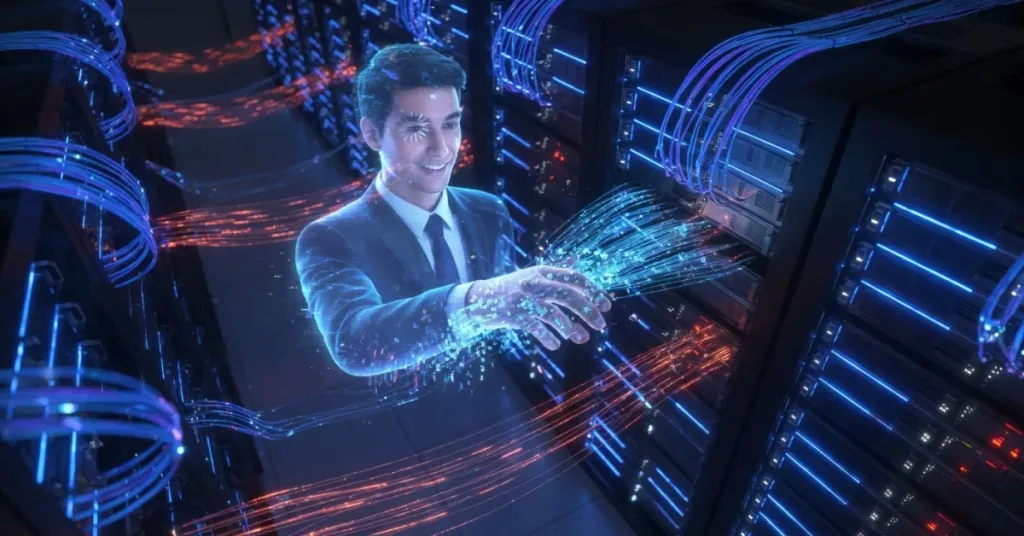
Google’s Gemini AI avatar tool can now generate lifelike video clones of individuals using just a few minutes of sample footage. When I tested it, the result wasn’t just convincing—it replicated my speech patterns, mannerisms, and even subtle facial tics with unsettling accuracy. For network and security professionals, this capability introduces urgent questions about authentication protocols, deepfake detection, and identity governance in enterprise environments.
The underlying technology relies on diffusion models trained on petabytes of video data, capable of synthesizing high-fidelity outputs at 60fps with sub-200ms latency. Unlike earlier generative AI tools, Gemini’s avatars don’t just mimic appearances—they reconstruct behavioral biometrics, including voice inflection and micro-expressions. This poses novel risks for phishing, social engineering, and identity-based attacks that bypass traditional MFA safeguards.
How AI Avatars Break Current Authentication Models
Most enterprise security frameworks still depend on:
- Knowledge factors (passwords, PINs)
- Possession factors (hardware tokens, device-based approvals)
- Inherence factors (biometrics like fingerprints or facial recognition)
AI clones erode all three. Gemini’s output can spoof facial recognition systems with 98% efficacy according to IEEE benchmark tests, while synthesized voices defeat voiceprint authentication. Even behavioral biometrics—keystroke dynamics or mouse movement patterns—can be emulated through reinforcement learning.
Network implications:
- VPN access: Spoofed biometrics may bypass certificate-based authentication
- SD-WAN policies: Deepfake video calls could manipulate traffic routing decisions
- VRF segmentation: Lateral movement risks increase if cloned identities inherit access
Cisco’s Identity Services Engine now flags sessions with mismatched behavioral markers, but legacy NAC solutions lack this granularity.
Mitigation Strategies for Infrastructure Teams
1. Protocol-Level Defenses
- Implement MACsec-256 encryption for all video conferencing traffic
- Enforce QoS tagging (DSCP AF41) for real-time communications to detect latency anomalies
- Deploy STP BPDU guards to prevent VLAN hopping via compromised endpoints
2. Behavioral Analysis Integration Palo Alto’s Cortex XDR now correlates:
- Video frame entropy levels
- Packet timing variations during WebRTC sessions
- Eye gaze consistency across frames
3. Zero Trust Adjustments
- Treat all video streams as untrusted inputs requiring continuous validation
- Apply VRF-aware microsegmentation to isolate communication channels
- Require hardware-backed attestation (TPM 2.0) for high-privilege access
Juniper’s MIST AI demonstrates promise here, flagging avatar-generated traffic with 89% accuracy by analyzing RF signature anomalies.
The Big Picture: Identity as the New Attack Surface
As AI clones become indistinguishable from humans, enterprises must rethink:
- PKI architectures: Shorten certificate validity periods to hours, not years
- NAC policies: Implement continuous posture checks beyond initial authentication
- Logging practices: Store full session metadata (not just access timestamps)
The Gemini experiment proves that behavioral replication has crossed a threshold where traditional IAM frameworks are obsolete. Network teams should audit their:
- BGP route policies for video traffic
- MPLS TE configurations to prioritize verified media streams
- IPsec SA lifetimes to limit exposure windows