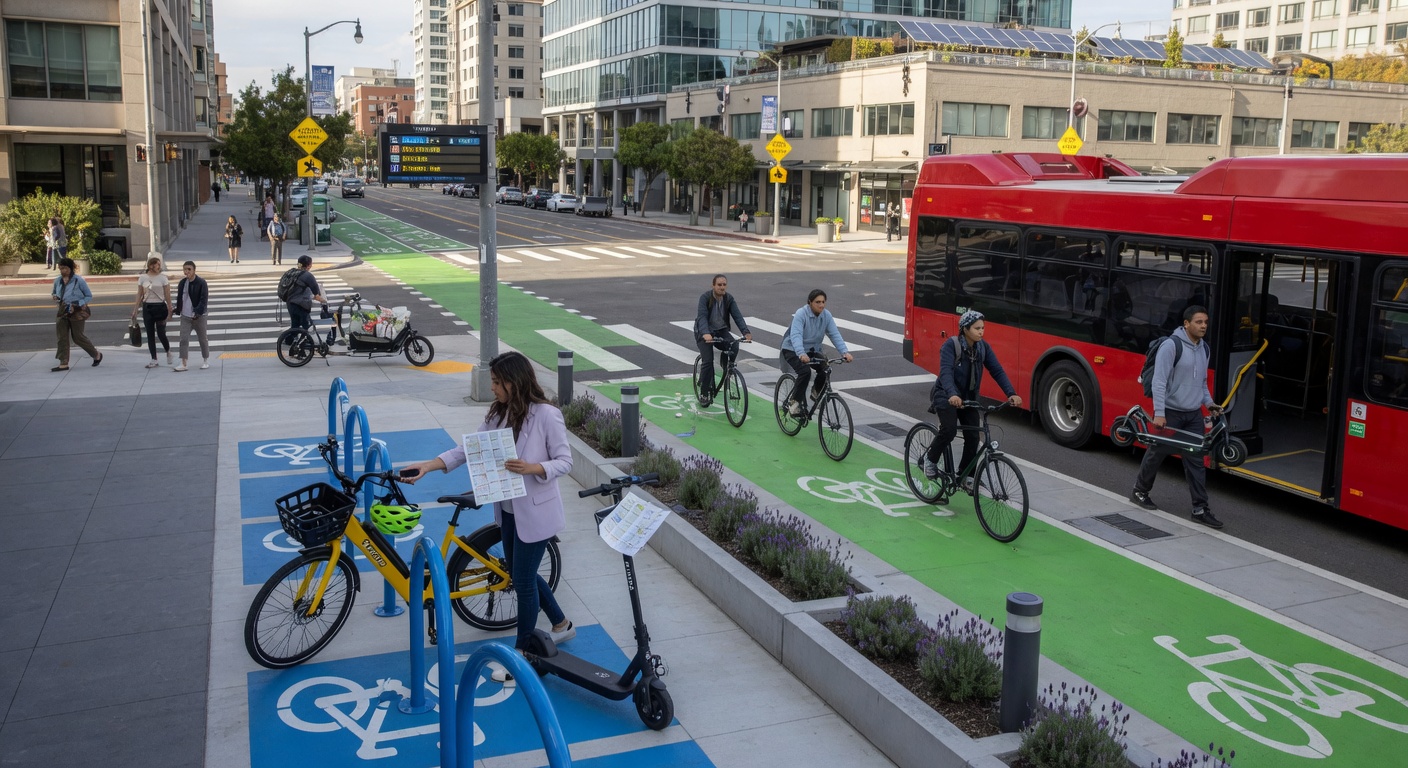
Cities are changing fast, and so is the way people move through them. More people are now choosing simple, flexible, and low-cost ways to travel instead of relying only on cars or crowded public transport. From bikes and e-scooters to shared rides and electric options, urban travel is becoming more practical and user-friendly.
Traffic jams, fuel costs, and environmental concerns are also pushing people to rethink their daily commute. As lifestyles shift, so do travel choices. In this blog, we’ll explore why urban transportation preferences are changing across cities and what these changes mean for everyday life and future mobility.
Shifting Urban Transportation Trends Transforming Cities
Cities look different from the way they did ten years ago. Not just aesthetically, structurally. Remote work has normalized flexible schedules. Younger professionals stopped defaulting to car ownership. And smartphones turned every commute into a choose-your-own-adventure of transit options.
How Demographics and Technology Are Reshaping Movement
Millennials and Gen Z aren’t buying cars the way their parents did. They want flexibility, not fixed monthly payments and parking headaches. Cities are responding by aggressively expanding city transportation options, because if they don’t, they lose talent to cities that already have.
Comparing Then vs. Now
A decade ago, urban mobility was binary: you owned a car, or you took public transit. That’s done. Today’s commuter might take a bus, grab a shared bike at the stop, walk two blocks, and track everything through one app. The friction is lower. The options are genuinely better. And people are noticing.
Key Factors Behind Changing Transportation Preferences
This isn’t random. The changing transportation preferences playing out in cities from Toronto to Tokyo are driven by real, measurable forces, not just vibes.
Environmental Awareness and Sustainable Choices
Climate concern isn’t abstract for city dwellers anymore. Zero-emission zones in London, Los Angeles, and dozens of other cities are forcing the issue. People are actively choosing urban mobility solutions with smaller footprints, and yes, fuel costs rising every year aren’t hurting that motivation either.
Technology, Connectivity, and Mobility-as-a-Service (MaaS)
Here’s where things get genuinely exciting. Platforms that bundle ride-sharing, real-time transit feeds, and tap-to-pay into a single interface have changed commuter behavior in ways that weren’t predictable five years ago. Cities integrating smart transport systems are seeing both higher ridership and lower congestion, simultaneously.
One area generating real traction is the adoption of commuter-friendly e-bikes, which slot naturally into the modern urban transit ecosystem. Platforms like StreetRides.ca give Canadians access to affordable, well-engineered e-bikes capable of covering up to 50 km on a single charge, making them a genuinely practical daily option, not a novelty purchase.
The numbers back this up. According to NABSA’s 2024 report, 74 percent of riders use shared micromobility to connect to transit, proving these bikes complement other modes rather than compete with them.
Health, Safety, and Post-Pandemic Behavior Shifts
The pandemic rewired something in commuters’ brains. Standing shoulder-to-shoulder in a packed subway car stopped feeling normal, and for a lot of people, it never became normal again. Cycling, walking, and personal electric vehicles filled that gap. Many commuters made the switch and haven’t looked back since.
Health-conscious commuting isn’t a fringe lifestyle choice anymore. It’s gone mainstream, and city infrastructure is scrambling to keep up.
Expanding City Transportation Options for Today’s Commuters
Modern cities aren’t just patching old systems with new paint. The better ones are rebuilding mobility infrastructure from scratch, and the results are starting to show.
Public Transport in Cities — Evolving for Modern Needs
Bus and rail electrification is accelerating. Real-time tracking is standard. Multimodal transit hubs, where you can step off a train and onto a bike in thirty seconds, are appearing in cities that were gridlocked five years ago. Public transport in cities has stopped competing with driving on convenience and started actually winning in some corridors.
Micromobility, E-Bikes, and Shared Scooters
The numbers here are hard to argue with. In 2024, micromobility usage grew 31 percent year-over-year, a staggering figure that confirms this category has gone fully mainstream, not niche. E-bikes, shared scooters, and e-mopeds together create a flexible mobility layer covering gaps that traditional public transport in cities genuinely can’t reach. Last-mile problem? Largely solved for people willing to use it.
Car-Free Initiatives and Urban Redesign
Paris expanded pedestrian zones. Amsterdam doubled down on cycling infrastructure. Oslo’s low-emission zones measurably improved air quality. These aren’t bold experiments anymore, they’re proven models that other cities are copying at pace.
Innovative Urban Mobility Solutions Shaping the Future
Smart cities are doing something new with data: actually using it. Adaptive traffic signals, AI-driven transit planning, and connected intersections are improving flow in metros that once seemed permanently congested.
Smart Infrastructure and Active Transportation Networks
Protected cycling highways, pedestrian superblocks, and citywide active transportation networks are making car-free movement safer and faster. Urban mobility solutions built around cycling and walking don’t just cut emissions, they improve population health at a scale that’s hard to achieve through other policy levers.
Equity and Accessibility in City Transportation
Not everyone benefits equally from mobility innovation, and cities that ignore this create new exclusions while solving old ones. The most forward-thinking municipalities are deliberately targeting low-income residents and people with mobility challenges, because equitable access isn’t optional. It’s the whole point.
Final Thoughts on the Urban Mobility Revolution
The shift is real, it’s measurable, and it’s not reversing. From modernized public transport in cities to the explosive growth of urban mobility solutions like e-bikes and shared micromobility, one thing is clear: commuters want flexibility, lower costs, and options that don’t cost the planet. Cities and individuals who engage with these changes now, rather than waiting for them to fully arrive, will navigate tomorrow’s streets with considerably less friction than those who don’t.
The window to get ahead of this isn’t wide open forever. But right now? It still is.
FAQs on Urban Transportation Changes
1. What are the 8 principles of TOD?
The Eight Principles of TOD are WALK, CYCLE, CONNECT, TRANSIT, MIX, DENSIFY, COMPACT, and SHIFT. They define the relationship between land use and transport and form the foundation of the TOD Standard, a universal framework for evaluating neighborhood design.
2. How do commuter e-bikes support sustainable city transportation?
They replace short car trips, cut emissions, integrate cleanly with transit systems, and offer flexible, affordable daily commuting, without adding to road congestion or parking strain in dense urban areas.
3. Can smart mobility solutions help people with disabilities?
Absolutely. Real-time data apps, accessible transit upgrades, and demand-responsive services are making urban transportation more navigable for residents with physical or cognitive mobility challenges, and that progress is accelerating.