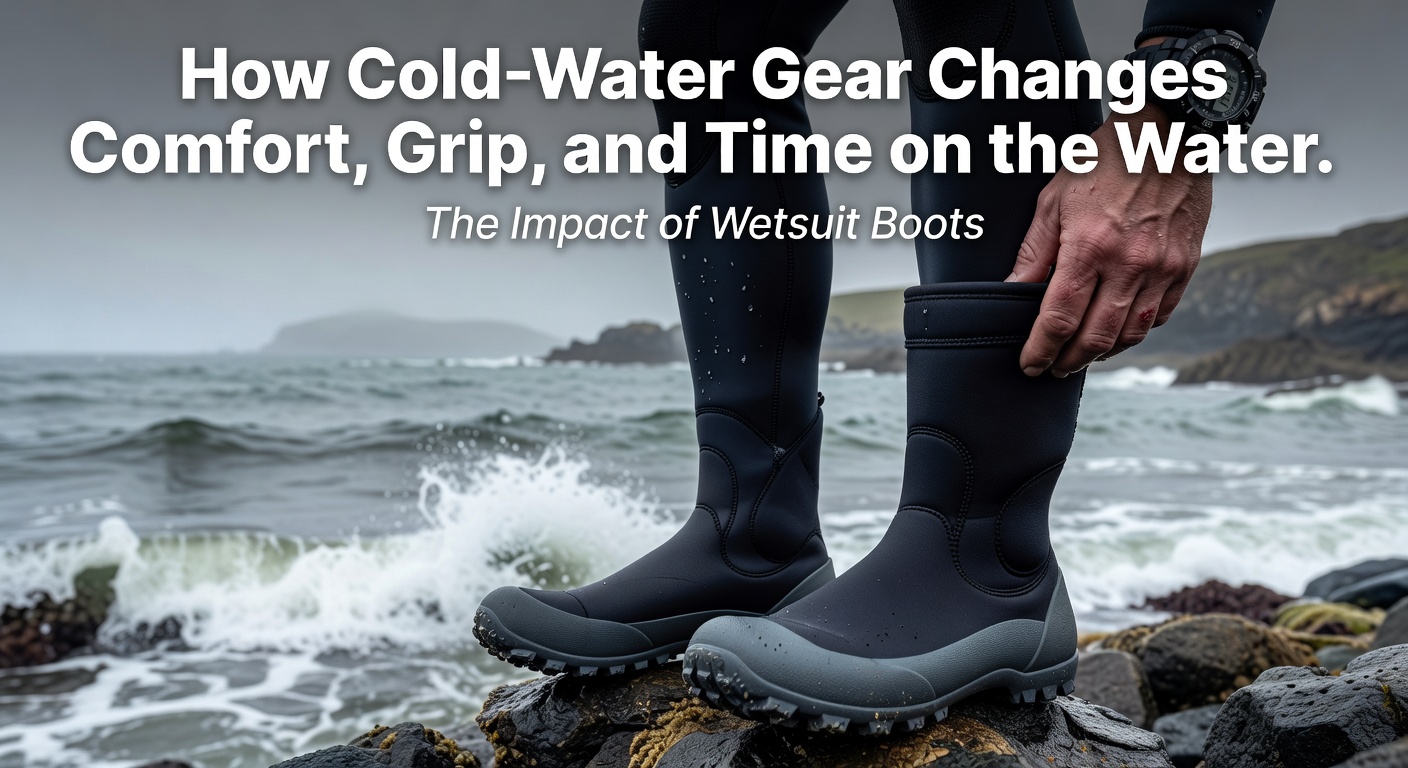
Cold feet end sessions early. They make people tense up, lose feel for the board, and make choices they would not make with warm feet. Knowing how to choose wetsuit boots is a practical cold-water skill most riders learn only after a miserable session or two.
The right boot does not just keep you warm. It changes how the board feels under your feet and how long you can ride well.
Why Foot Comfort Matters More Than Most Riders Think
Foot pain and cold feet send the same signal to the body: something is wrong. That signal does not stay local. It creates tension in the legs, shortens attention, and reduces willingness to push into waves or commit to moves that require balance and trust.
Riders who upgrade their boot situation describe the change in terms of session length. They stay out longer because their feet stopped being the reason they came in. That is a real performance gain without any technique change.
Board feel is part of this too. A boot that is too thick or too stiff removes tactile information the foot relies on. You feel the board less, and your body compensates with more upper body movement, which is less efficient.
How Neoprene Thickness Changes What You Feel and How You Move
Neoprene thickness in wetsuit boots is measured in millimeters. A 3mm boot suits water temperatures in the mid to upper range of cold. A 5mm or 6mm boot is designed for genuinely frigid conditions. Choosing too thin means cold feet. Choosing too thick means losing sensitivity and range of motion.
For surfers, board feel drops with every millimeter added to the sole. A 3mm boot still transmits meaningful feedback through the foot. A 5mm boot starts to feel like a soft cast. Some riders accept that tradeoff in very cold water. Others prefer thinner boots with thermal liners.
Wing foilers and windsurfers often tolerate slightly thicker neoprene because the foot is secured in a strap or footpad. Board feel is already limited by the equipment, so warmth becomes the priority.
How to Choose Wetsuit Boots: Grip and Fit on the Board
Traction on a wet board is not automatic. The sole material of the boot, the texture pattern, and the stiffness all affect whether the foot stays put or slides when weight shifts. A boot with a soft neoprene sole and minimal tread is very different from one with a hard rubber sole designed for grip.
Fit affects traction more than most people expect. A boot that is loose allows the foot to slide inside the boot before the sole moves on the board. That lag reduces response and makes fine adjustments harder. Shops that carry purpose-built wetsuit boots for board and wind sports typically stock multiple fits and sole configurations, because the right combination depends on the specific discipline and water conditions.
For split-toe boots, the big toe works independently and provides a stronger grip point on rails and foil boards. Round-toe boots feel more natural to many riders and work well on boards with textured pads.
Matching Boot Thickness and Style to Water Temperature
The simplest way to approach this is to start with the water temperature and work outward. Water below ten degrees Celsius calls for a 5mm or 6mm boot with a round toe and a sealed seam. Water in the ten-to-fifteen degree range usually works well with a 3mm or 4mm option.
Seam construction matters as much as thickness. A glued and blind-stitched seam keeps water from flowing through, so the thin layer trapped against the skin stays warmer rather than constantly refreshing. That feature makes a real difference over a long session.
Many riders use two different boots depending on the season and conditions. A lighter surf footwear option for the shoulder season and a heavier cold-water boot for the depths of winter keeps both warmth and board feel optimized across the year.
Breaking In New Boots and Getting the Fit Right
New neoprene boots feel stiff out of the bag. Most soften after a few sessions as the neoprene stretches and conforms to the foot. Buying too large to account for this is a mistake. A snug fit when dry is the right starting point.
Heel lift is the most common fit problem in neoprene boots. If the heel slips when you point or flex the foot, the boot is too large. That movement adds friction, causes fatigue, and reduces control. In a foil boot or strap setup, it can also affect safety.
Water sports comfort over a session comes down to how little you are thinking about your feet. A boot that fits well, seals correctly, and matches the conditions is one you forget you are wearing within minutes of entering the water.
The Boot That Fits Well Will Change Your Sessions
Cold-water riding does not have to mean shortened sessions and numb feet. The gear exists to solve that problem effectively. The challenge is matching the solution to the specific conditions and the specific way the rider uses their feet.
Riders who get this right describe the difference as significant. They are not just warmer. They are riding better, taking more risks, and coming in because the session is done rather than because they cannot feel their feet.
Once you know how to choose wetsuit boots for your water temperature and riding style, the cold stops being a barrier and starts being just another condition to gear up for and get out in.