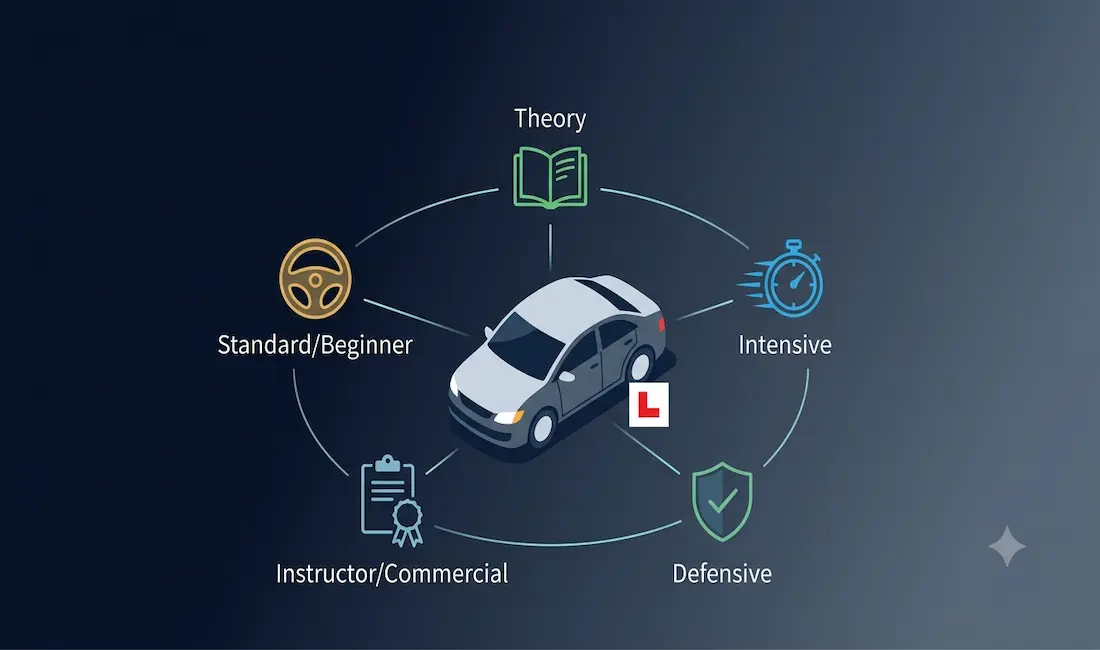
Driving is one of the most practical skills a person can learn, opening up independence, job opportunities, and everyday convenience. But becoming a safe, confident, and legally licensed driver takes more than just getting behind the wheel a few times. Driving instruction is actually organized into several distinct categories, each serving a different purpose and a different stage of a driver’s development. This guide breaks down the main types of driving classes available, so you can identify which one actually fits your current needs.
Standard (Beginner) Driving Classes
Also known as student or beginner’s lessons, standard driving classes teach the fundamentals to someone who is completely new behind the wheel: vehicle controls, basic maneuvers, road positioning, and the foundational habits that everything else builds on. These lessons are typically spread out over weeks or months, giving a new driver time to genuinely absorb each skill before moving to the next.
Many new drivers also take post-test refresher classes after passing their initial driving test, since passing a test and feeling genuinely confident on the road are two different things. These follow-up lessons help build real-world confidence in situations a structured test doesn’t always cover, like unfamiliar routes, motorway driving, or busy urban traffic.
Driving Theory Classes
Nearly every licensing system in the world requires passing a written or computer-based theory test alongside the practical driving test, covering traffic laws, road signs, right-of-way rules, and hazard awareness. Theory classes prepare a learner specifically for this exam, and while theory instruction is often bundled into a standard driving course, it can also be taken as a standalone preparatory class for someone who wants focused, dedicated study time before sitting the test.
Intensive Driving Courses
Intensive courses compress the same amount of instruction that would normally be spread over months into a much shorter timeframe, often just one to two weeks, through daily lessons of several hours at a time. This format suits people with a firm deadline (an upcoming job that requires a license, a tight vacation window, or simply a strong preference for rapid, focused learning) more than it suits every learner, since the pace is genuinely demanding and requires consistent daily availability.
In many licensing systems, the theory test must be passed before a practical test can even be booked, so an intensive course schedule needs to account for that sequencing rather than assuming both can be crammed into the same short window without preparation beforehand. For learners whose schedule can’t accommodate a fully intensive pace, a more gradual, semi-intensive course structure is usually available as a middle-ground option.
Defensive Driving Courses
Being a skilled driver yourself doesn’t eliminate the risk posed by other road users, distracted, aggressive, fatigued, or simply inexperienced drivers remain a real hazard no matter how well you drive. Defensive driving courses focus specifically on hazard anticipation: recognizing developing risks before they become emergencies, maintaining safe following distances, and making sound decisions under changing road conditions.
These courses are widely recognized well beyond initial licensing. In many regions, completing a certified defensive driving course can lead to reduced auto insurance premiums, and some courts allow it to be used to dismiss a minor traffic citation or reduce points on a driving record, making it a genuinely practical investment even for experienced drivers.
Driving Instructor Certification Courses
Becoming a certified driving instructor requires training well beyond simply being a competent driver. Instructor certification programs cover instructional technique, how to assess and correct a learner’s specific mistakes safely in real time, and often a separate, more rigorous driving assessment than the standard licensing test itself. Advanced instructor programs can go further still, training instructors who go on to train other instructors, forming the next tier of the certification pipeline.
Regulatory requirements for driving instructor certification vary significantly by country and region, so anyone pursuing this path should confirm the specific licensing body and requirements that apply where they intend to teach.
Job-Related and Commercial Driving Classes
Certain jobs require licensing and training that goes well beyond a standard driver’s license. Passenger transport roles (taxi, rideshare in some jurisdictions, and bus driving) typically require additional certification specific to carrying paying passengers safely. Commercial trucking and freight roles require a commercial driver’s license (or the regional equivalent), which involves its own separate written and practical testing focused on vehicle size, load handling, and safety regulations specific to heavy vehicles.
Operating heavy equipment, such as forklifts, bulldozers, and other construction or industrial machinery, requires yet another distinct set of certifications entirely separate from standard road-driving licenses, since these machines handle completely differently and carry different safety risks.
Other Specialized Driving Classes
Beyond the core categories above, additional specialized classes exist for specific needs: skid control and vehicle recovery courses for drivers who regularly face difficult weather conditions, night-driving-specific instruction, and courses focused specifically on interpreting road signs, traffic signals, and right-of-way rules in depth for drivers who want a more thorough grounding in traffic law than the minimum required to pass a licensing test.
Choosing the Right Class for You
| If you are… | Consider… |
|---|---|
| A complete beginner | Standard driving classes, paired with theory preparation |
| Working toward a testing deadline | An intensive or semi-intensive course, provided your schedule truly allows daily lessons |
| A licensed driver wanting sharper hazard awareness (or lower insurance costs) | A certified defensive driving course |
| Interested in teaching driving professionally | An instructor certification program specific to your region |
| Pursuing a job requiring a commercial or passenger-transport license | Job-specific commercial or passenger driving certification |
Conclusion
Driving instruction isn’t a single, one-size-fits-all category, it spans everything from a complete beginner’s first lesson to specialized commercial licensing for professional drivers. Identifying which category actually matches your current goal, rather than defaulting to the most generic option available, makes the process faster, more relevant, and ultimately more useful, whether you’re preparing for your first test or building toward a driving-related career.
Frequently Asked Questions
What is the difference between standard driving classes and intensive driving courses?
Standard driving classes spread instruction out over weeks or months, giving a learner time to gradually build skills and confidence between lessons. Intensive courses compress the same overall instruction into a much shorter timeframe, often one to two weeks, through daily multi-hour lessons, which suits learners with a firm deadline but requires a demanding, consistent daily time commitment that not everyone’s schedule can accommodate.
Do I need to take a defensive driving course if I’m already a licensed driver?
It isn’t legally required in most cases, but it can still be genuinely worthwhile. Defensive driving courses focus on hazard anticipation and safe decision-making that go beyond what a standard licensing test covers, and completing a certified course can often lead to reduced insurance premiums or, in some jurisdictions, help resolve a minor traffic citation, making it a practical option even for experienced drivers.
What kind of training do I need to become a certified driving instructor?
Driving instructor certification requires training in instructional technique and how to safely correct a learner’s mistakes in real time, in addition to demonstrating your own strong driving ability, often through a more rigorous assessment than the standard licensing test. The specific certification body, curriculum, and requirements vary significantly by country and region, so it’s important to confirm the exact process that applies wherever you intend to teach.
Do I need special training to drive for a job?
Many driving-related jobs require certification beyond a standard driver’s license. Passenger transport roles typically need additional passenger-safety certification, commercial trucking and freight roles require a commercial driver’s license involving separate written and practical testing, and operating heavy equipment like forklifts or construction machinery requires entirely separate training distinct from any road-driving license.
Should I take the theory test before or during an intensive driving course?
In most licensing systems, the theory test must be passed before you can even book a practical driving test, so this sequencing needs to be planned into an intensive course schedule rather than assumed to happen automatically within the same short window. Many learners complete theory preparation and pass the theory test before starting an intensive practical course specifically to avoid this becoming a bottleneck.