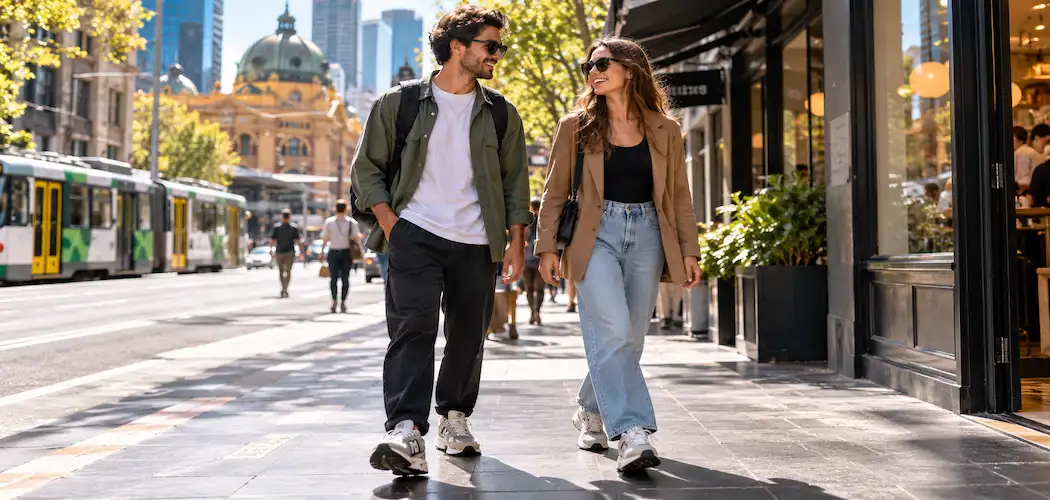
Sneaker trends in Australia have shifted noticeably over the past year, and the shift says as much about how people actually live in their shoes as it does about fashion. The loud, logo-heavy hype sneaker hasn’t disappeared, but it’s sharing shelf space with something quieter: low-profile retro runners, genuinely performance-grade trail shoes worn around the city, and soft, almost ballet-like silhouettes that look nothing like a traditional sneaker at all. Here’s what’s actually driving sneaker trends in Australia right now, which specific models are behind each trend, and how to think about buying into one without ending up with a shoe you stop wearing by winter.
Why Sneaker Trends in Australia Look Different This Year
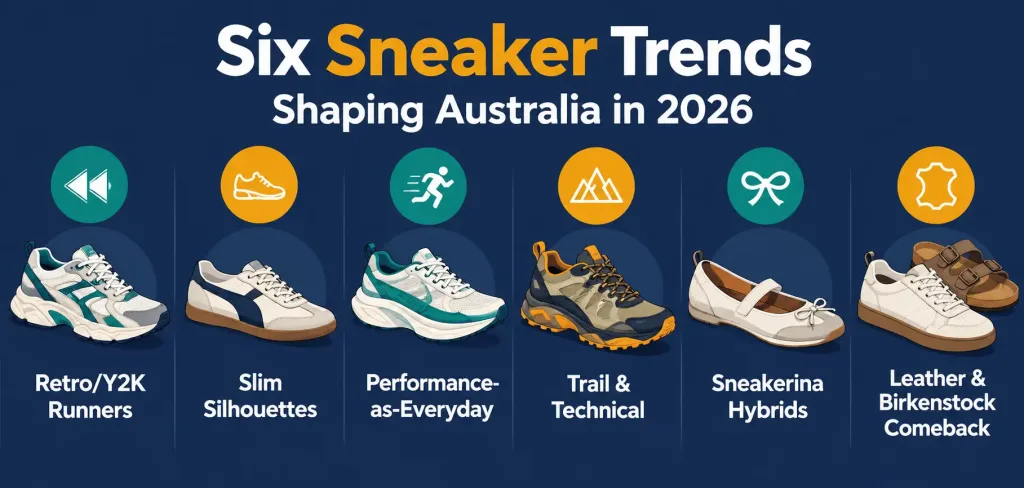
A few years ago, sneaker trends in Australia were dominated almost entirely by basketball-silhouette hype releases and limited-run collaborations. That’s still part of the picture, but Australian retailers and fashion coverage this year are pointing to a broader, more everyday-wearable shift: performance running technology moving into casual wardrobes, retro Y2K runners returning after roughly two decades, and softer, hybrid shoe shapes that blur the line between sneaker, flat, and slipper. Retailers like Hype DC and Platypus Shoes, which supply seasonal forecasts to Australian fashion coverage, describe this as less about any single “it” shoe and more about several parallel movements competing for the same closet space.
Retro and Y2K Runners Are Back in a Big Way
Chunky, early-2000s-style running shoes are having a genuine resurgence, and it’s one of the clearer sneaker trends in Australia this year — arguably the most visually distinct of the bunch. Mesh uppers, metallic overlays, and thick, layered midsoles are back on brands including New Balance, Asics (its Gel NYC model specifically), and Saucony (the Progrid Omni 9). Nike’s Vomero 5 and the Y2K-inspired P-6000 fall into the same retro-runner lane, and both are stocked through Nike’s own Australian retail presence.
What makes this different from the retro sneaker revivals of a decade ago is that these aren’t just nostalgic reissues — several of the models driving the trend are current performance runners that happen to carry the chunky Y2K aesthetic naturally, rather than vintage reissues dressed up to look technical. That distinction matters if you’re buying one: a genuine current-generation running shoe in this silhouette will usually hold up to daily wear better than an aesthetic-only retro reissue.
Slim, Clean Silhouettes for Everyday Wear
Running in the opposite direction from the chunky Y2K look, slim and low-profile sneakers are having a parallel moment. Onitsuka Tiger’s Mexico 66 — a genuinely minimal, decades-old design — has seen renewed attention, and Adidas’s Gazelle and Spezial lines continue to anchor this cleaner-lined category. These shoes tend to work across a wider range of outfits than chunkier silhouettes, which is part of why they’ve held steady appeal even as other trends cycle faster.
The practical upside of this category is versatility: a slim, neutral-toned sneaker in this style generally pairs with both casual and slightly dressed-up outfits, which makes it a reasonable choice for anyone who doesn’t want to rotate between several very differently styled pairs.
Performance Running Shoes Doing Double Duty as Everyday Sneakers
One of the more consistent threads across current sneaker trends in Australia is that genuinely performance-oriented running shoes have moved firmly into everyday rotation, not just gym bags. Hoka’s maximalist cushioned runners, On’s Cloudmonster and Cloudnova (sold through On’s own Australian retail presence), Nike’s Vomero Plus, and Adidas’s Evo SL are all being worn well outside of actual running — as daily walking-around shoes, for travel, and for general comfort-first dressing.
This shift tracks with a broader move toward comfort-driven footwear generally, something Australian retail forecasters attribute partly to more people prioritizing all-day wearability over a shoe’s “hype” status alone. A chunky, highly cushioned performance runner is a genuinely different proposition from a basketball-silhouette hype sneaker — it’s built around support and shock absorption first, styling second — and its growing presence in everyday Australian wardrobes reflects that.
Trail and Technical Styles Moving Into the City
Outdoor-inspired, technical-looking sneakers remain one of the stronger and more durable trends rather than a passing moment. Salomon’s XT-6 and XT Whisper models, worn well outside of actual trail use, continue to anchor this category, alongside Merrell’s hiking-inspired silhouettes and the return of Nike’s ACG (All Conditions Gear) line. Water shoes and climbing-style “approach” shoes are also expected to grow within this broader trail-and-technical category through the rest of the year.
Part of the appeal here is genuinely practical rather than purely aesthetic: these shoes are built with real traction, water resistance, and durable materials, which makes them a reasonable choice for anyone who wants a sneaker that can handle an actual hike or a wet commute, not just a shoe that looks like it could.
Hybrid Designs: Sneakerinas, Loafer-Sneakers, and Split-Toe Styles
A genuinely new category this year sits somewhere between a sneaker, a ballet flat, and a loafer. Adidas’s Samba-Jane and Tokyo MJ models, along with Puma’s Speedcat Ballet and H-Street Ballet, take a low-profile, rounded, almost slipper-like shape rather than a traditional structured sneaker silhouette — a look fashion coverage has started calling “sneakerina.” Separately, loafer-sneaker hybrids like New Balance’s 1906L combine a loafer’s upper construction with a running shoe’s sole unit, and split-toe or tabi-inspired designs are also appearing, continuing a broader move toward shoes that resist being filed neatly into one category.
These hybrid shapes tend to divide opinion more than the other trends on this list — they’re a bigger style departure from a conventional sneaker than a retro runner or a slim Gazelle — so they’re worth trying on in person before buying rather than ordering based on photos alone, given how much the fit and proportion can vary by foot shape.
The Return of Leather, Suede, and Birkenstock
Not every current footwear trend is a sneaker at all. Leather and suede shoes — loafers, with boat shoes and Derby styles expected to follow — are making a genuine comeback across Australian fashion coverage, with brands including Timberland, Dr. Martens, Sebago, and Paraboot named specifically. Birkenstock is also expanding beyond its classic sandal silhouettes into new shapes, and it’s worth noting specifically for an Australian audience: fashion coverage describes Australia as having an outsized attachment to the brand compared with other markets, which makes Birkenstock’s new styles particularly relevant locally even though they sit outside the sneaker category proper.
Where to Actually See These Sneaker Trends in Australia
Rather than relying on social media alone to gauge what’s current, it’s worth knowing where these trends are actually showing up at retail. Hype DC and Platypus Shoes are two of the larger Australian sneaker retailers whose seasonal forecasts informed much of this guide, and several brands — including Onitsuka Tiger, On, and Salomon — now operate dedicated flagship stores in major shopping precincts like Melbourne’s Emporium, which lets shoppers try genuinely current stock in person rather than guessing sizing online. Melbourne-based label Noskin has also built a notable premium non-leather loafer range worth knowing about if the leather-adjacent trend above interests you but you’re avoiding animal products.
What’s Actually Driving the Shift
A few forces are behind this broader move toward comfort and performance in everyday sneaker trends in Australia. Social media — particularly Instagram and YouTube — has made sneaker culture far more accessible than it was a decade ago, lowering the barrier to entry for people who want to follow releases without being deeply embedded in the subculture. That’s broadened the buyer base beyond dedicated collectors to include a much larger, casually interested, influencer-led group, and that larger group tends to prioritize comfort and everyday wearability over limited-run hype releases.
At the same time, demand for genuinely hard-to-find releases has sustained a secondary resale market in Australia, where authenticated pairs change hands outside normal retail channels. That resale activity is a reasonable signal of which specific models are generating real demand beyond what’s simply available on shelves, even though resale pricing itself fluctuates too much to treat as a reliable buying guide on its own.
How to Choose Sneakers That Actually Fit Your Life
With this many simultaneous trends competing for attention, it’s worth stepping back from “what’s trending” and toward a more practical framework before buying:
- Start with how you’ll actually use the shoe. A technical trail-style sneaker makes sense if you’re genuinely walking on uneven ground or in wet weather regularly; a slim, minimal silhouette makes more sense for daily commuting and mixed-outfit versatility.
- Prioritize genuine comfort over the aesthetic alone, especially for performance-runner-as-everyday-shoe styles. A shoe built around real cushioning and support technology is a better investment for all-day wear than a shoe that merely looks chunky and cushioned.
- Try hybrid and unconventional silhouettes on in person where possible. Sneakerina-style and split-toe designs fit differently across foot shapes, and photos alone can be misleading about how a given pair will actually sit on your foot.
- Consider durability for anything you’ll wear often. Trail-inspired and technical sneakers generally hold up better to regular daily wear than fashion-first retro reissues built primarily around aesthetics rather than materials.
- Don’t feel obligated to chase every trend at once. The six categories above are genuinely distinct style directions, not stages of one trend — a single well-chosen pair that fits your actual lifestyle will get more wear than a closet full of trend pieces bought because they were current.
The Bottom Line
Looking across every category above, sneaker trends in Australia this year point toward comfort and genuine performance mattering as much as hype status — chunky Y2K-style runners, slim minimalist sneakers, trail-ready technical shoes, and softer hybrid silhouettes are all competing for the same wardrobe space, alongside a parallel leather-and-suede comeback that includes Australia’s particular affection for Birkenstock. None of these trends require choosing just one; picking based on how and where you’ll actually wear the shoe is a more reliable strategy than buying whatever’s loudest on social media this month.
Frequently Asked Questions
What’s the biggest of the current sneaker trends in Australia right now?
There isn’t a single dominant trend — chunky Y2K-style retro runners, slim minimalist silhouettes, and performance running shoes worn as everyday sneakers are all competing simultaneously, alongside a newer “sneakerina” hybrid category blending sneakers with ballet flats and loafers.
Are performance running shoes actually good for everyday wear, or just a trend?
They’re a genuine practical choice for many people, not just a style statement — shoes like Hoka’s maximalist runners or On’s Cloudmonster are built around real cushioning and support technology, which tends to make them more comfortable for all-day wear than fashion-first sneakers built primarily around looks.
Why is Birkenstock part of a sneaker trends article?
Birkenstock isn’t a sneaker brand, but it’s part of the same broader footwear shift toward comfort-driven, leather, and suede styles currently trending in Australia, and fashion coverage specifically notes Australia’s unusually strong attachment to the brand compared with other markets.
Are trail-style sneakers like the Salomon XT-6 actually functional outdoors, or just fashion?
They’re genuinely functional — models like the Salomon XT-6 and Merrell’s hiking-inspired styles are built with real trail traction, water-resistant materials, and durable construction, which is part of why they’ve held up as a trend longer than purely aesthetic styles.
Where can I actually try these trending sneakers on in Australia?
Retailers including Hype DC and Platypus Shoes carry a broad cross-section of current styles, and several brands — including Onitsuka Tiger, On, and Salomon — now run their own flagship stores in major shopping precincts, which is generally a more reliable way to check sizing and fit than buying unfamiliar styles online.
Should I buy into every current sneaker trend?
No — the trends covered here are distinct style directions suited to different needs, not sequential must-haves. Choosing based on how and where you’ll actually wear a shoe tends to produce a more useful wardrobe than buying a pair of every trending silhouette.