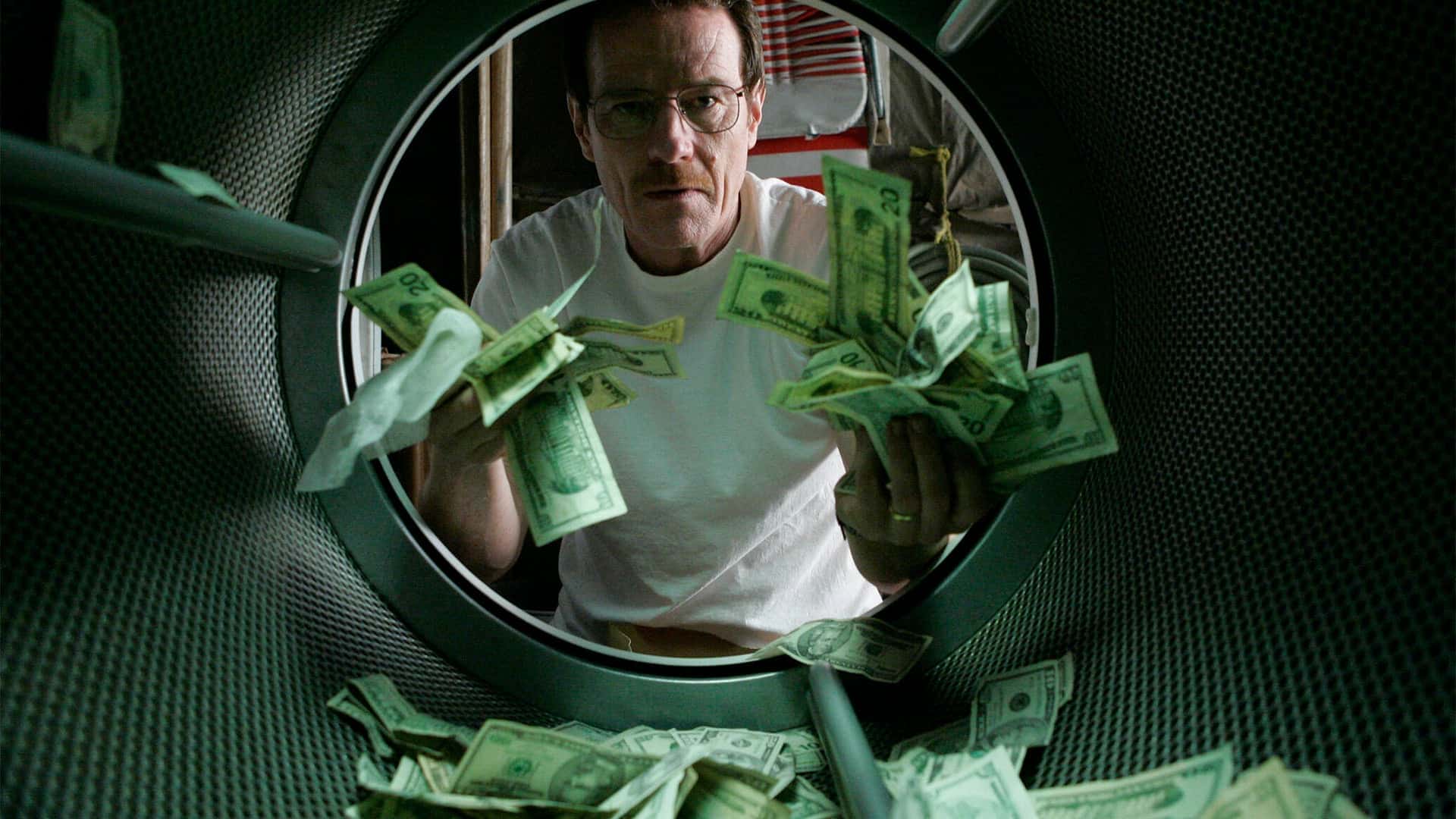
The Byrde family didn’t stumble into money laundering — Marty Byrde engineered it. When Netflix’s Ozark premiered, the opening scene didn’t show a murder or a cartel execution. It showed a man calmly explaining to his wife that their entire life in Chicago was a house of cards built on Mexican drug money. That psychological pivot — from suburban normalcy to criminal complicity within a single conversation — set the tone for four seasons of television that rewrote the rules of the prestige crime drama. Across 44 episodes, Ozark accumulated 45 Primetime Emmy nominations and, by its final season in 2022, had become one of Netflix’s most-watched original series globally, trailing only Stranger Things and Wednesday in total hours viewed during its release windows.
What Separates Ozark From Every Other Crime Drama
The surface comparison has always been Breaking Bad — suburban parent, illicit trade, escalating violence. But Ozark operates on a fundamentally different narrative engine. Where Walter White’s story traced a downward spiral from morality into monstrosity, Marty and Wendy Byrde begin their story already compromised. The show’s central tension doesn’t come from watching good people go bad. It comes from watching competent people discover, with genuine surprise, just how much further they’re willing to go.
Series creator Bill Dubuque structured Ozark around a single thematic question: what happens when the institutions meant to protect us — family, business, government — become the instruments of our corruption? The cartel shows and movies that preceded Ozark typically positioned the drug trade as an external threat invading clean American spaces. Ozark inverted that premise. The Byrdes brought the threat with them. The Navarro cartel didn’t corrupt the Missouri Ozarks — the Byrdes did, using the same financial instruments and political maneuvering they’d deployed in Chicago.
The Blue-Collar Money Laundering That Makes Ozark Feel Real
Most crime fiction treats money laundering as a magician’s trick — cash goes in, clean money comes out, and the mechanics remain deliberately obscure. Ozark refused that shortcut. Marty Byrde’s schemes, developed with consultation from actual forensic accountants, grounded the show in operational reality that most series never attempt.
Consider the Blue Cat Lodge purchase in Season 1. It wasn’t flashy. Marty bought a failing waterfront business, much like the laundering operations depicted in other cartel dramas, then systematically inflated its reported revenue through fabricated receipts, fake customer counts, and cash-mixed deposits structured to fall below the $10,000 federal reporting threshold — a tactic known as smurfing that the Treasury Department’s Financial Crimes Enforcement Network flagged in real-world cases as recently as 2025. The genius of Ozark was making those mechanics dramatically compelling. A scene where Marty argues with a cashier about how many air filters they “sold” carried more tension than most shows’ gunfights.
Later seasons escalated the complexity: the Missouri Belle casino in Season 3 became a laundering masterclass. Slot machines converted cartel cash into chips, chips became “gambler winnings,” and those winnings generated IRS-compliant tax documents. The Kansas City Mob’s involvement through the union pension fund mirrored actual organized crime infiltration patterns documented in the FBI’s historical RICO case files. Ozark understood that the real horror wasn’t the violence — it was the paperwork.
Wendy Byrde and the Politics of Ambition
Laura Linney’s Wendy Byrde became, across four seasons, one of television’s most unsettling characters — not because she was evil, but because she was recognizable. Her transformation from reluctant accomplice to the partnership’s dominant strategic mind tracked with actual behavioral patterns identified in organizational psychology: when individuals discover competence in immoral domains, moral inhibitions tend to recalibrate around achievement rather than ethics.
The Season 3 arc where Wendy sacrifices her own brother, Ben Davis, to protect the family’s position represented Ozark at its thematic peak. Ben, brilliantly played by Tom Pelphrey, wasn’t killed by the cartel. He was killed by the Byrdes’ rational calculation — a decision Wendy made and Marty endorsed. That sequence forced audiences to confront an uncomfortable truth: the line between protecting family and destroying it vanishes when ambition wears love as its justification.
Linney’s performance drew specific praise from critics who noted that Wendy never became a caricature of female ruthlessness. She remained, to the final episode, a mother who believed she was doing the right thing. That self-deception made her far more dangerous than any overt antagonist in the series.
The Visual Language of Dread in Ozark
Cinematographer Ben Kutchins and directors Jason Bateman and Alik Sakharov developed a color palette for Ozark that deserves its own critical study. The series famously leaned into a desaturated blue-teal grading — no true whites, no true blacks, just an endless wash of murky midtones — that accomplished something rare in television: it made the environment itself feel complicit.
That color grading wasn’t an aesthetic choice alone. Kutchins, in a 2022 interview with American Cinematographer, explained that the palette was calibrated to match the emotional register of people under constant surveillance. Every frame of Ozark looked like it had been shot through water — appropriate for a show set around a lake that kept claiming bodies. The visual consistency across all four seasons created a claustrophobic continuity that larger-budget dramas often lose when different directors cycle through episodes.
The show’s signature wide shots of the Lake of the Ozarks — that flat, gray expanse stretching to tree lines that offered no horizon — functioned as visual metaphors for the Byrdes’ situation. There was no escape visible because the frame itself offered none.
Ruth Langmore and the American Underclass Ozark Refused to Romanticize
Julia Garner’s Ruth Langmore became Ozark’s moral center — but not because she was innocent. Ruth was a convicted felon by 19, raised in a trailer by a father who taught her that violence was currency and trust was weakness. What made her the show’s most sympathetic character was her transparency: Ruth knew exactly who she was, and her tragedy was that no amount of competence or loyalty could buy her way out of the class she was born into.
Garner won three Emmy Awards for the role, a record for a supporting actress in a drama series. The performance worked because Ruth’s dialogue — that specific Missouri Ozarks cadence, the dropped consonants and blunt syntax — never felt like an affectation. Writers consulted local dialect coaches and residents of the actual Lake of the Ozarks region to ensure the Langmore family’s speech patterns reflected genuine Ozark vernacular, not a Hollywood approximation of rural poverty.
Ozark made an uncomfortable argument through Ruth: the American class system is more lethal than any cartel. The Navarros operated from a position of power. The Langmores operated from a position of desperation. Both killed to survive, but only one group got to call it business.
The Final Season’s Philosophical Gambit
Season 4 of Ozark, split into two parts totaling 14 episodes, abandoned the procedural tension of earlier seasons for something more ambitious: a meditation on whether redemption is possible for people who’ve already crossed every line. The introduction of the FBI’s deal — the Byrdes could walk free if they delivered the cartel’s leadership — reframed the entire series in retrospect.
The ending divided audiences precisely because it refused catharsis. Without spoiling specifics, the final scene left viewers arguing about whether the Byrdes won or lost — and that ambiguity was the point. Showrunner Chris Mundy stated in post-finale interviews that the creative team never considered a “justice served” conclusion. Ozark had spent four seasons demonstrating that institutions protect the people who know how to work them. The ending simply followed that logic to its uncomfortable conclusion.
The statistical footprint of the final season told its own story: Part 1 debuted to 4.1 million U.S. households in its first week, and Part 2 outperformed it by 18%, according to Nielsen streaming ratings. Audiences weren’t just watching Ozark — they were arguing about it, and that argument continues in forums and retrospectives years after the final credits rolled.
What Ozark Predicted About American Anxiety
Watching Ozark years after its conclusion announces something its original audience couldn’t have recognized during the weekly-release era: the show was less about crime than about the collapse of trust in systems. The Byrdes corrupted every institution they touched — banking, politics, law enforcement, philanthropy, even the nuclear family — and the show’s bleakest insight was that those institutions were already corruptible.
The political subplot involving the Byrdes’ foundation and the Navarro family’s eventual arrangement with the FBI paralleled actual concerns documented by transparency watchdog groups about the revolving door between illicit finance and legitimate political influence. Ozark didn’t invent these dynamics; it dramatized mechanisms that investigative journalists at the International Consortium of Investigative Journalists and similar organizations have spent decades mapping through leaked financial documents and corporate registries.
That’s why Ozark endures. It didn’t offer escape from American anxieties — it named them, dressed them in a blue-collar thriller’s clothes, and forced viewers to recognize that the distance between a Chicago financial advisor and a cartel money launderer is measured not in morality but in circumstances. The question the show left behind isn’t whether the Byrdes were villains. It’s whether, given the same pressures and the same rationalizations, anyone would have been different.