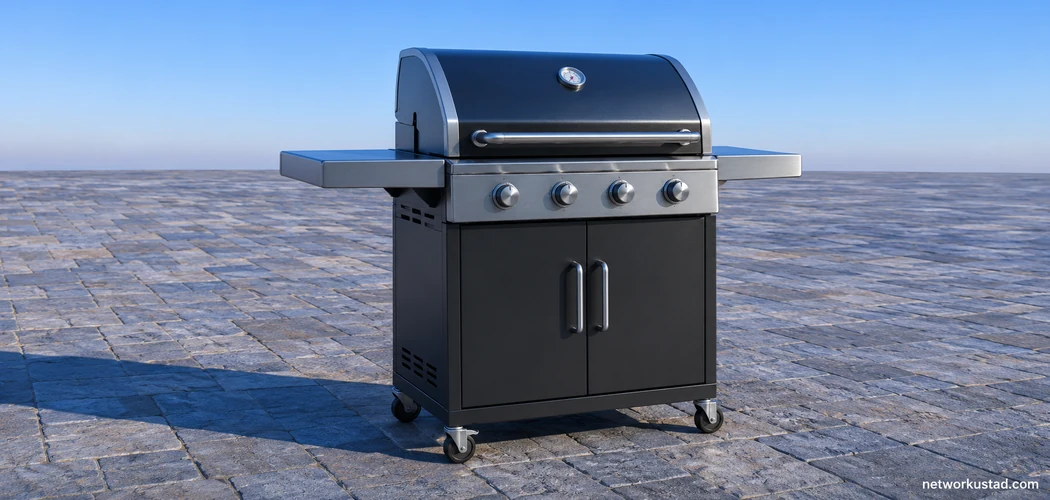
A grill can look like the right size in a showroom and still be awkward at home. Its lid may hit an obstacle, its side shelves may block a walkway, or its main grate may be too shallow for the pans you use. Before comparing prices, measure the space where you will cook and think through a meal you make often.
Use this checklist to choose an outdoor grill you can place safely, cook on comfortably, and maintain over time. Bring a tape measure to the store. For an online purchase, look for the exact model’s manual and parts diagram before you order.
Choose an Outdoor Grill That Fits Your Space
Measure the proposed spot and leave room to open the lid, stand at the controls, and move around the grill. Check the model’s dimensions with its shelves extended and its lid open. If the grill needs to pass through a gate, measure that opening too. A grill that fits on the patio can still be too wide to get there once assembled.
Follow the model’s required clearances and check local and building rules. The U.S. Fire Administration’s outdoor fire safety guidance advises using outdoor grills outside and keeping them away from siding, railings, eaves, and branches. A compact electric grill still needs a permitted location. Confirm the model’s installation requirements and the building’s policy before buying one for a balcony.
At the store, open the lid and check how the cart feels when you use the handle. Look for uneven feet, excessive play in the lid hinge, and shelves that flex under light pressure. If the model has casters, check that you can reach the locks and that the cart stays put when they are engaged. The assembled unit tells you more about stability than the material listed on the box.
Compare Fuel by What It Takes to Cook a Meal
| Grill type | What to check before buying |
|---|---|
| Propane gas | Find a convenient cylinder exchange or refill source. Check how easily the cylinder can be reached and secured as the manual directs. |
| Natural gas | Confirm the model is made for your supply and find out what installation the manufacturer and local rules require. |
| Charcoal | Check access to the fuel grate, how the vents move, and how the cold ash is removed. |
| Pellet | Check the hopper access, pellet storage, and the model’s electrical requirements. |
| Electric | Confirm the outlet requirements, where the cord will run, and whether the building permits the model in your intended location. |
Consider how much time you want to spend starting the grill, managing heat, and cleaning up after dinner. If you are still weighing how different designs fit your routine, see this guide to matching a grill to the way you cook.
Measure the Main Grate Separately
Check whether the advertised cooking area includes an upper warming rack. The primary grate is the useful comparison when you need room to cook several items at once. Ask for its width and depth. Two grates with the same listed area can fit very different combinations of food and cookware.
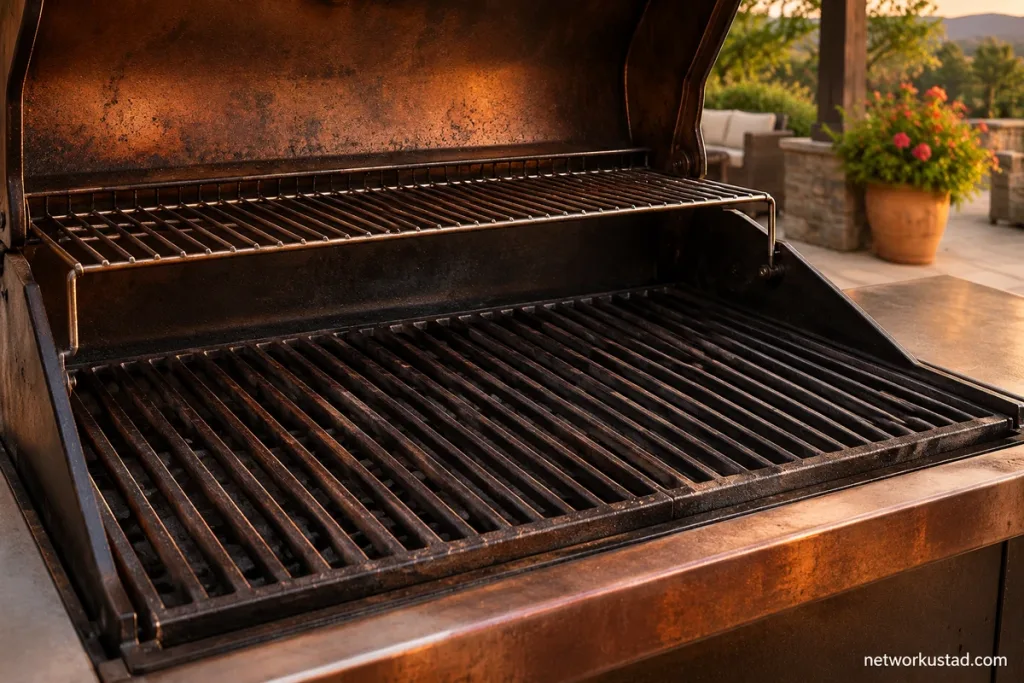
Think through the busiest meal you cook regularly. If it usually includes chicken, vegetables, and a cast-iron pan, measure the pan and sketch where each item would go. Allow room for tongs and for moving food between hotter and cooler areas. If you cook for a crowd only a few times a year, decide whether working in batches is worth the savings in space and price.
Heat control also matters. On a gas grill, check which burners have independent controls and where they sit under the grate. On a charcoal grill, look at the vent access and the space available to arrange coals on one side. If a review mentions hot spots, see how the reviewer tested for them and whether the test covered the exact model you are considering.
Check Cleaning Access, Parts, and Warranty
Look at the steps for emptying the grease tray or clearing cold ash. A tray that slides out from the front may be easier to reach in a permitted installation where access from the rear is limited. On the showroom unit, ask whether you can lift the grates and see which parts must come out for routine cleaning.
Find the model number and look up the replacement parts you are most likely to need. For a gas grill, start with grates, burners, and igniters. Check which parts the warranty covers and whether it covers labour. A clear parts list and a practical repair route are more useful than guessing how long a grill will last from its finish alone.
Add delivery, assembly, fuel, and any required installation to the purchase price. Then look at optional extras. A side burner is useful if you regularly cook a sauce outdoors. For many meals, usable grate space and a grease tray you can reach will matter more.
Use the Right Thermometer
A built-in lid gauge can help you track the heat inside the grill near the gauge. A food thermometer measures the temperature inside the food. The USDA’s food thermometer guidance explains why internal temperature matters for food safety. Follow the guidance for the food you are preparing and use the grill controls to manage cooking heat.
Before ordering, confirm four things on the exact model. It fits with the lid open, it meets the rules for your location, the main grate handles a typical meal, and you can access the parts you will need to clean or replace. Those checks give you a practical basis for comparing the final prices.