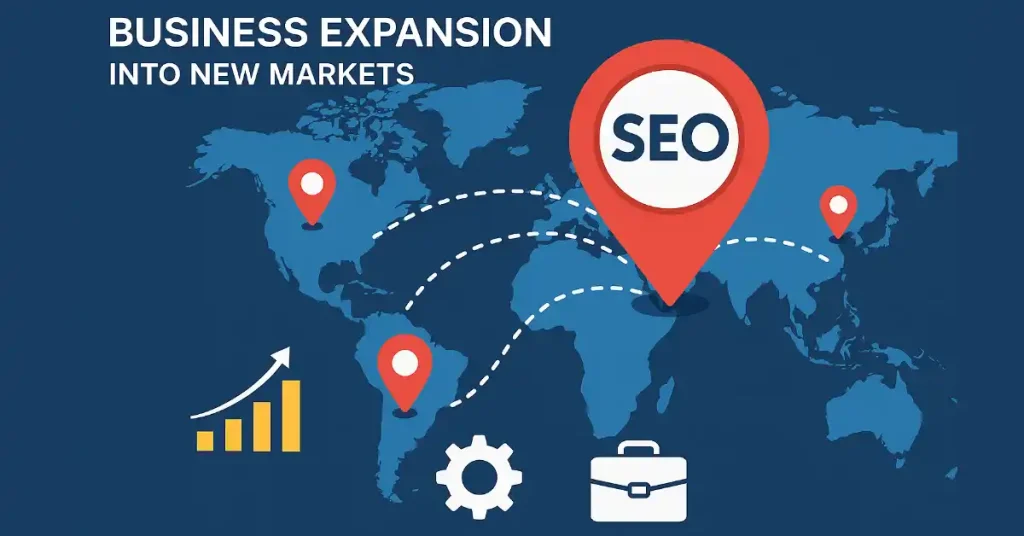

Expanding into a new market changes how a business shows up in search in ways that are easy to underestimate. Geography adds a new element to how search engines interpret relevance, authority, and intent. What worked well in one region does not automatically carry the same weight in another. Search visibility becomes tied to location signals, structural clarity, and how well a business presents its presence in each market.
SEO during expansion works best when it is treated as a distinct phase rather than an extension of existing efforts. New locations introduce new data, new competitors, and new user behavior. Search engines look for clear signals that a business truly operates in each market it targets. Strategic planning helps avoid confusion, overlap, and missed opportunities as geographic reach grows.
Reassessing Location Signals
Entering a new market usually begins with reviewing how the location is communicated across the website and related assets. Address details, service areas, and regional references all play a role in how search engines connect a business to a place. Assumptions made during earlier growth phases often need adjustment once expansion moves beyond familiar territory.
At this stage, many businesses recognize the value of outside coordination to maintain accuracy. Working with teams that provide local SEO services can support consistency across listings, pages, and profiles during expansion. They bring experience in managing location data accurately across multiple platforms, which reduces the risk of conflicting signals during growth. Their skill lies in spotting inconsistencies early and correcting them before they affect visibility. They also understand how search engines evaluate local signals, allowing expansion to stay structured and reliable rather than fragmented. Looking up local SEO service agency near me allows businesses to find partners who understand regional search behavior and location-specific ranking factors.
Location Pages and Real Operations
Location pages become more important as markets are added. Each page needs to reflect real operations, local context, and actual service availability. Pages built from mirrored templates can weaken trust and create confusion for both users and search engines.
Strong location pages communicate presence through details that align with how the business functions in that area. Operating hours, service descriptions, and local references should feel grounded in reality. As such, this helps search engines associate the page with a specific market rather than treating it as a duplicate of another location.
Aligning Google Business Profiles
Google Business profiles play a central role during expansion. Each new location requires careful setup to match real-world operations. Inaccurate categories, mismatched addresses, or inconsistent naming can weaken visibility before growth even begins.
Alignment across profiles supports trust and discoverability. Search engines rely on these profiles to validate location data and user engagement. Careful management during expansion helps prevent issues that become harder to correct once multiple locations are live.
Managing Keyword Overlap
Expansion increases the risk of keyword overlap across pages. Multiple locations may target similar services, which can lead to internal competition if pages are not clearly differentiated. Search engines need clear signals to understand which page belongs to which market.
SEO planning during expansion includes mapping keywords to specific locations. This structure helps each page serve a defined purpose. Strategic alignment reduces confusion and supports stronger rankings across markets without pages competing against each other.
Timing Expansion with SEO Growth
SEO results take time, especially in new markets. Expansion plans work best when timelines account for this ramp-up period. Launching multiple locations at once without allowing search visibility to develop can spread resources thin.
Aligning expansion pacing with SEO growth allows performance to build steadily. Data from early markets can guide later launches. This approach supports sustainable visibility and clearer performance measurement as geographic reach increases.
Strengthening Entity Signals
As geographic reach grows, search engines expect clearer signals about what a business is and where it operates. Entity signals help connect brand identity, services, and locations into a coherent whole. Expansion increases the need for consistency across structured data, on-site content, and external references.
Strong entity signals reduce ambiguity as more locations are introduced. Search engines rely on these signals to confirm legitimacy and relevance in each market. Proper alignment across pages, profiles, and mentions supports stable visibility and reduces misinterpretation during growth.
Segmenting Performance Metrics
Performance measurement becomes more complex during expansion. Averaging metrics across locations can hide problems and overstate success. Each market behaves differently, with its own competition, demand patterns, and visibility curve.
Segmenting metrics by location provides clarity. Traffic, conversions, and rankings should be evaluated within the context of each market. This way, teams can identify where SEO efforts are gaining traction and where adjustments are needed, supporting smarter decision-making as expansion continues.
Technical SEO At Scale
Adding locations increases technical complexity across a site. URL structures, internal links, crawl paths, and page load performance all require closer attention. Small technical issues can multiply quickly as the site grows.
Tackling technical SEO early helps minimize larger problems later. Clear site architecture and consistent implementation support scalability. Expansion works more smoothly when technical foundations are built to support additional markets without creating friction for users or search engines.
Learning from Local Competition
Local competition often reveals gaps that are not visible at a broader level. Competitors in new markets may target different keywords, emphasize different services, or structure content in ways that exhibit local demand. These patterns provide valuable insight during expansion.
Studying local competitors helps refine SEO strategy for each market. Understanding what already performs well locally supports smarter content development and positioning. This knowledge helps new locations gain relevance more efficiently without relying on assumptions based on previous markets.
Avoiding Duplicate Content
Duplicate content risks increase as markets are added. Similar services across locations can lead to repeated language and structure if not carefully managed. Search engines may struggle to distinguish pages if differentiation is unclear.
Preventing duplication requires intentional content planning. Each location page should reflect its own context and purpose. Ultimately, this supports stronger indexing and reduces the risk of pages competing with each other for visibility.
Understanding Map Visibility Lag
Map visibility often develops at a different pace than organic rankings. New locations may appear in organic results before gaining a consistent presence in map listings. This lag is common during early expansion phases.
Understanding this timing helps set realistic expectations. Map visibility grows as profiles gain engagement and data. SEO planning accounts for this delay, allowing time for local signals to strengthen without unnecessary adjustments.
Interpreting New Market Reviews
Reviews from new markets influence trust differently than those from established locations. Early reviews carry significant weight because they shape first impressions. Search engines and users both rely on this feedback to assess credibility.
Managing review acquisition and response supports smoother entry into new markets. Encouraging authentic feedback helps establish trust locally.
Expanding into new markets requires SEO strategies that account for location-specific signals, structure, and measurement. Successful expansion depends on patience rather than rapid duplication.
FAQs
What are key SEO considerations when expanding into new markets?
Expansion adds geography to SEO, impacting relevance, authority, and intent. Reassess location signals like addresses and service areas, create real-operation-based pages, align Google Business profiles accurately, manage keyword overlap to avoid internal competition, time launches with visibility ramp-up, strengthen entity signals via structured data, segment metrics by market, address technical scalability early, study local competitors, prevent duplicate content, account for map lags, and interpret early reviews for trust.
How can businesses manage keyword overlap during market expansion?
Keyword overlap risks internal competition from similar services across locations. Map keywords uniquely to specific markets, differentiating pages by local context, services, and user intent. This reduces confusion for search engines, supports stronger individual rankings, and ensures each location’s visibility without cannibalizing traffic from others, fostering overall growth.
Why is timing important in SEO for new market expansions?
SEO results in new markets take time to build due to competition and signal establishment. Align expansions with visibility ramp-up periods, avoiding simultaneous launches that dilute resources. Pace based on data from initial markets for sustainability, allowing organic growth, measurable performance, and adjustments before scaling further.
What role do location pages play in SEO for new markets?
Location pages must reflect actual operations, including hours, services, and local references, avoiding generic templates that erode trust. They help search engines associate content with specific areas, enhancing relevance and discoverability while building user confidence through contextual, accurate information aligned with real-world presence.
How should businesses interpret new market reviews for SEO impact?
Early reviews heavily shape trust and credibility in new markets. Actively encourage authentic feedback, respond promptly to build engagement, and use insights to refine services. Positive reviews influence users and search engines, strengthening local signals and rankings, while addressing negatives prevents long-term reputation damage