
Proprietary trading (prop trading) is a financial strategy when a bank or financial firm directly invests its own stock shares and earns commission rather than on a client’s behalf. Thus, a financial firm benefits from market activities conducted on its own behalf, allowing it to achieve a much larger profit margin. A financial institution conducts a thorough analysis of market activities. Such an institution then takes a financial strategy and trades the top stocks, bonds, and commodities of leading prop trading firms in return for a larger commission.
However, market research, risk management, and quantitative data are the prerequisites for maneuvering a specific market. In 2025, prop trading has surged to a $21 billion market, with AI-driven platforms handling 89% of global volume and firms like FTMO and The5ers offering up to $4 million in scalable funding—making it more accessible yet competitive, with only 15% of traders achieving consistent yearly profits at an average 8% return. This guide dives deeper into patterns that fuel success amid rising trends like instant funding and regulatory updates under DORA and MiFID II.
Understanding Proprietary Trading
Unlike alternative trading methods, prop trading provides traders with increased flexibility and independence. The profitability of proprietary trading mostly relies on the ability to identify and capitalize on profitable patterns in the market. In 2025, this model has evolved with hybrid structures—subscription-based access to capital (up 30% in adoption) and AI-native platforms like Solvent. Life’s Solvent GPT™ offers real-time predictions, democratizing tools that were once reserved for institutions. Funded accounts now average $100,000-$400,000, with profit splits hitting 90/10 for top performers, per industry reports. Yet, with 85% of evaluations failing due to drawdowns, mastering patterns remains key to scaling from $20K challenges to multi-million portfolios.
Prop Trading vs. Retail: Key 2025 Differences
- Capital Access: Prop firms fund up to 95% of trades; retail relies on personal funds.
- Risk Rules: Strict 5-10% drawdowns enforced via AI monitoring.
- Tech Edge: 60% of firms integrate ML for pattern detection, boosting win rates by 20%.
This flexibility empowers traders but demands precision in volatile markets like crypto futures, where 2025 volumes hit $5 trillion quarterly.
The Role of Patterns in Trading
Trading patterns refer to the repetitive forms employed by traders to examine fluctuations in prices. Identifying these patterns is similar to interpreting a language that conveys possible market fluctuations. In proprietary trading, patterns aren’t just charts—they’re predictive signals amplified by AI, analyzing terabytes of data for 92% accuracy in 2025 backtests. With algorithmic trading expected to make $16 billion by 2030, strategies like EMA crossovers now include feelings from social media, resulting in 53% success rates in SPY tests. For prop traders, recognizing these reduces emotional bias, aligning with firm rules for 35% evaluation pass rates.
Why Patterns Matter More in 2025 Prop Trading
- AI Amplification: Tools scan 60–70% of trades algorithmically, spotting reversions 25% faster.
- Multi-Asset Shift: Patterns span forex, futures, and crypto, with 40% growth in DeFi integrations.
- Regulatory Tie-In: DORA mandates resilient AI models, ensuring patterns comply with real-time stress tests.
Mastering this “language” turns market noise into funded opportunities.
Common Profitable Patterns
Examination of past data has constantly revealed numerous patterns that consistently lead to successful results. Understanding these patterns, such as the well-known “double top” and the “head and shoulders” formation, provides traders with a fundamental foundation for making informed judgments. Let us analyze concrete examples to understand the impact of these patterns. In 2025, these classics evolve with quantitative overlays: Double tops indicate a change in direction with 65% accuracy when the market is rising, according to Tickeron data, while head-and-shoulders patterns in futures like ES show an average return of
Breakout patterns, riding support/resistance breaches, and thriving in CME contracts are profitable in 60% of cases with trailing stops. Mean reversion strategies, betting on price snaps back, hit 60-80% wins in low-vol sessions but require 1% risk caps to pass prop challenges. Backtests using data from 2025 show that the EMA trend-following strategy made $1,737 on SPY with a win rate of
2025 Success Rates for Classic Patterns
| Pattern | Avg. Win Rate | Ideal Market | Prop Tip |
|---|---|---|---|
| Double Top | 65% | Trending | Use with RSI divergence |
| Head & Shoulders | 62% | Reversal | Confirm with 50% retrace |
| Breakout | 60% | Volatile | Trailing stops at 1:2 RR |
| Mean Reversion | 70% | Ranging | 0.5% risk per trade |
These form the bedrock, but layering AI boosts edges in high-stakes prop environments.
Ongoing Patterns in Proprietary Trading:
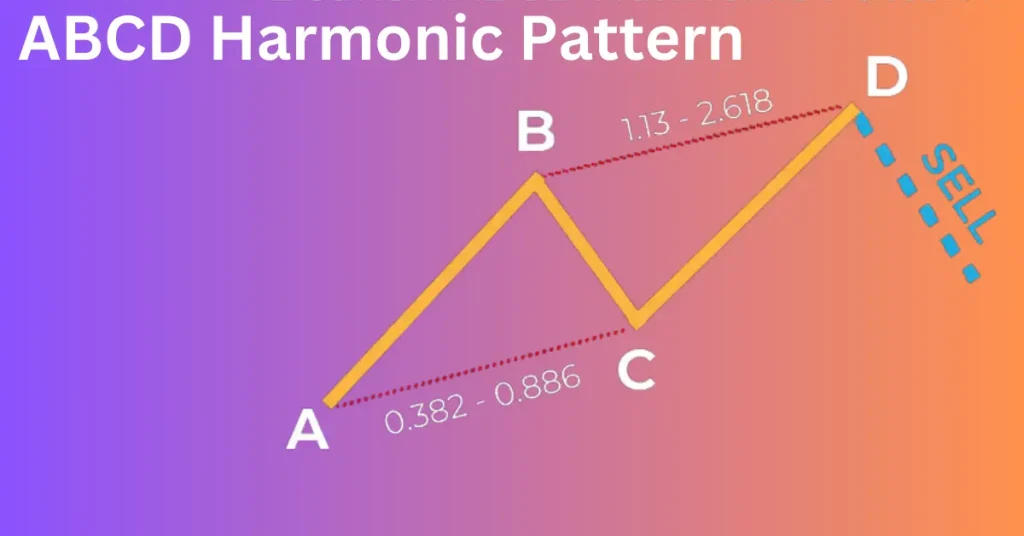
As we traverse the present financial terrain, specific patterns manifest as dependable indicators of market trends. Through meticulous examination of current trends, traders can strategically position themselves to exploit available chances. This section will examine the current trends and their possible advantages. Momentum trading, capturing directional surges, dominates 2025 with 50% of prop volumes, especially in crypto, where news-driven spikes (e.g., ETF approvals) yield 25% monthly gains. Pair trading, which involves betting on assets that are related to each other, like BTC-ETH, protects against risks when volatility rises by 15%. It works 80% of the time in balanced portfolios.
HFT evolutions—holding positions from minutes to days—converge hedge funds and prop firms, per FT analysis, generating $10.4B in 2024 revenue. In forex, scalping patterns on EUR/USD during London opens capture 1-2% pips with 70% efficacy under static drawdowns.
Current 2025 Patterns: Real-World Edges
- News Arbitrage: 40% profit boost from events like Fed announcements.
- Volatility Clusters: 55% win rate in VIX spikes >20.
- Crypto Breakouts: 65% in altcoin rallies post-BTC halving.
Positioning through these strategies maximizes the longevity of funded accounts.
Future Patterns: Emerging Opportunities
Proprietary trading, like any other industry, is continually evolving. Proprietary trading has undergone many changes, embracing innovative transformations and presenting technological solutions to address its numerous challenges. Prop trading is increasingly utilizing AI (artificial intelligence) to reduce human error and improve decision-making, as well as ML (machine learning) to learn from vast amounts of data.
Such innovative approaches can progressively transform the sector and minimize inefficiencies to a significant level in the best-funded trader programs. By 2025, AI/ML patterns like predictive sentiment analysis forecast 92% of trades, with platforms like Kensho dashboards identifying themes 50% faster. Instant funding models (up 40% adoption) enable one-step evals, while blockchain traceability cuts fraud by 30%.
Scenario-based sizing, which adjusts risk based on market changes, is taking the place of the old fixed 1% rules, according DeFi integrations spawn hybrid patterns, blending on-chain data for 25% better crypto yields.
Emerging 2025 Tech-Driven Patterns
- AI Neural Nets achieve 89% volume automation and generate 359% returns in backtests.
- Hybrid Funding: Subscription models with daily rewards.
- Quantum Edges: Early adopters see 15% alpha in HFT.
These innovations minimize errors, projecting a $40B AI trading market by 2029.
Risk Management in Proprietary Trading
Identifying lucrative trends is significant, but it is equally vital to implement effective risk management. This section will examine methods for effectively supervising the pursuit of opportunities while concurrently implementing measures to mitigate potential losses. In 2025, proprietary risk management evolves through scenario sizing (e.g., halving risk in low liquidity), the implementation of stress-testing modules in 70% of firms, and AI alerts that reduce breaches by 40%. Daily caps at 5%, trailing stops, and break-even shifts post-target protect against 85% failure rates.
Volatility-adjusted positions—using larger stop-loss orders during news events—match DORA resilience, while journals monitor biases to reduce
Core 2025 Risk Tools
- Dynamic Sizing: 1-2% base, scaled by ATR.
- Hedging Bans: Focus on directional discipline.
- AI Monitoring: Real-time P/L dashboards.
Effective oversight turns patterns into sustainable profits.
Psychological Aspects of Pattern Recognition
Human psychology greatly influences pattern recognition. Traders should possess knowledge of cognitive biases that have the potential to distort their analysis. Overcoming these biases is essential for accurate pattern identification. Confirmation bias causes 25% of mistakes; tools like behavioral dashboards in TopstepX can identify overtrading, improving discipline by 35 Mindfulness reduces tilt, with 60% of pros journaling emotions for 20% better adherence.
Bias Busters for Prop Traders
- Overconfidence: Limit to 3 trades/day.
- Anchoring: Reset charts pre-session.
- FOMO: Enforce 1:2 RR minimum.
Psychology underpins pattern success in high-stakes funding.
Guidelines for Identifying Profitable Patterns
Effectively maneuvering through the complex realm of proprietary trading necessitates employing a methodical strategy for identifying patterns. The following section will present a systematic set of instructions for traders to adhere to when identifying and capitalizing on lucrative patterns. Step 1: Backtest on historical data (e.g., 5-year SPY for 53% wins). Step 2: Layer AI filters for 92% accuracy. Step 3: Demo in prop sims like Apex. Step 4: Scale with 0.5% risk, journaling outcomes.
In 2025, integrate news APIs for event-driven edges, ensuring 70% out-of-sample validation.
Step-by-Step 2025 Guide
- Data Scan: Use ML for volume/price confluence.
- Validation: 60-day forward test.
- Execution: Align with firm drawdowns.
- Review: Weekly metrics tweak.
This method passes 35% more challenges.
Case Studies: Successful Proprietary Traders
Gaining knowledge from the experiences of accomplished proprietary traders can provide valuable insights. Aspiring traders can develop a more profound comprehension of effective pattern utilization by analyzing their strategies and decision-making processes. FTMO’s top 2025 trader scaled $4M via breakout algos, netting 25% ROI with AI risk alerts. Solvent. Life’s GPT users achieved 359% returns on neural patterns, per case logs. Apex futures pros used mean reversion for 70% wins, emphasizing static drawdowns. Explore comparisons of the best prop trading firms 2025
2025 Case Highlights
- FTMO Scaler: $20K to $4M in 8 months.
- AI Pioneer: 92% prediction accuracy.
- Futures Vet: 18% avg. monthly gains.
Lessons: Discipline + tech = longevity.
Educational Resources for Pattern Recognition
There are a variety of educational resources available for traders who want to improve their ability to recognize patterns. From books and courses to online platforms, this section will highlight avenues for improving proficiency in identifying profitable patterns. “Algorithmic Trading” by Ernie Chan (updated 2025 ed.) covers ML patterns; Coursera’s AI Finance cert yields 20% edge gains. Platforms like TradingView (integrated in 80% of firms) and QuantConnect offer free backtests. FTMO Academy offers free modules specifically focused on evaluations for proprietary traders.
Top 2025 Resources
- Books: “Quantitative Trading” (65% pattern focus).
- Courses: Udemy’s Prop Strategies ($19.99).
- Platforms: Tickeron AI Screener (92% accuracy).
Invest 10 hours/week for 15% profitability lift.
Practical Tips for Proprietary Traders:
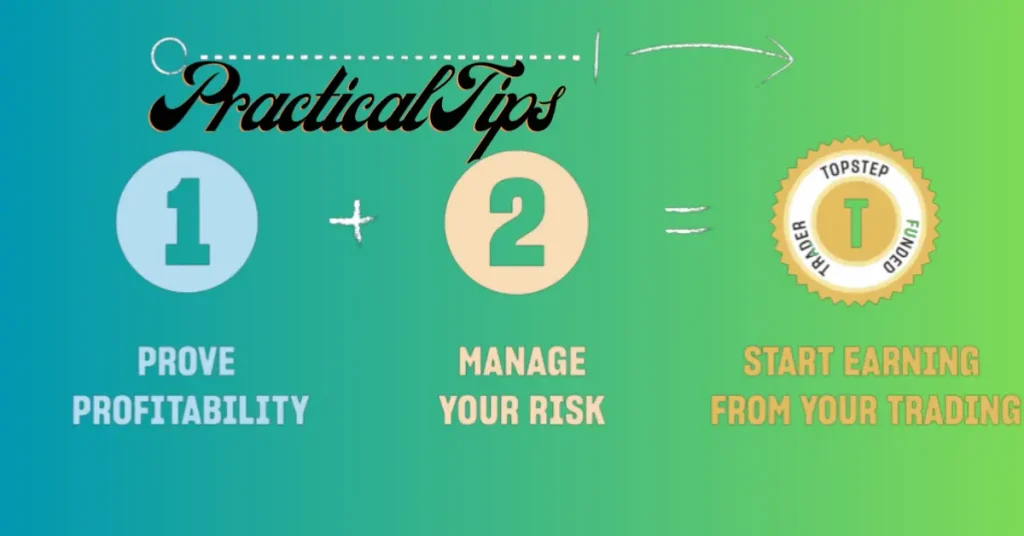
Implementing pattern recognition in day-to-day trading requires practical tips and strategies. This section will offer actionable advice for traders to integrate pattern analysis seamlessly into their trading routines. Tip 1: Start with 0.5% risk on $50K challenges. Tip 2: Use MT5 for real-time alerts. Tip 3: Review weekly with AI journals. In 2025, leverage instant funding for low-pressure practice, avoiding 60% loss pitfalls.
Daily 2025 Routine
- Pre-Market: Scan for double tops.
- Intraday: Trailing stops on breakouts.
- Post-Market: Bias audit.
Consistency compounds funding freedom.
Challenges in Identifying Profitable Patterns
Although patterns can be highly effective, they also present unique difficulties. Therefore, addressing the typical obstacles encountered by traders in pattern recognition and providing strategies to effectively overcome these challenges require deliberation and hard thinking. False breakouts trap 40% of trades, so it is advisable to counter them using volume filters. Overfitting in backtests (50% failure rate) demands out-of-sample tests. Geopolitical events in 2025 are causing spikes in volatility, which can lead to biases; these can be mitigated through scenario planning.
Overcoming 2025 Hurdles
- False Signals: 2-indicator confirmation.
- Data Noise: AI denoising tools.
- Eval Pressure: No-time-limit firms like Goat Funded.
Deliberation turns challenges into edges.
Conclusion: Mastering Profitable Patterns in Proprietary Trading for 2025 Success
In the ever-evolving domain of proprietary trading, the ability to identify profitable patterns remains a crucial factor in attaining success. To effectively traverse the complexities of the market, traders must possess a profound understanding of the historical, current, and future patterns. As we move into 2025, with AI handling 89% of trading volumes, quick funding changing how traders access money, and rules like DORA promoting stability, those who combine traditional patterns—like head-and-shoulders for Whether scaling to $4 million at The5ers or leveraging Solvent GPT for 92% predictions, traders should prioritize risk management (including scenario sizing and 1% caps) and psychological factors to overcome the 85% failure rate.
For searches like “prop trading patterns 2025” or “How to Pass the Prop Firm Challenge,” remember to backtest rigorously, journal biases, and adapt to trends like crypto hybrids. With disciplined execution, proprietary trading isn’t just profitable—it’s transformative. Start with a funded challenge today; your edge awaits.
FAQs
How often do profitable patterns change in proprietary trading?
The frequency of pattern changes depends on market conditions, but traders should stay vigilant for shifts.
Are there specific tools for pattern recognition in proprietary trading?
Yes, technological advancements have led to the development of AI-driven tools for enhanced pattern recognition.
Can novice traders effectively use pattern recognition strategies?
With proper education and practice, novice traders can integrate pattern recognition into their trading strategies.
How does psychology impact pattern recognition in trading?
Psychological biases can influence how patterns are perceived; awareness and mitigation are essential.
Where can traders find reliable educational resources for pattern recognition?
Books, online courses, and reputable trading platforms offer valuable resources for improving pattern recognition skills.
Disclaimer: This article provides general educational insights on proprietary trading and patterns; it is not financial advice. Markets are volatile, and past performance doesn’t guarantee future results. Trading involves significant risk of loss—consult a licensed advisor before acting. NetworkUstad.com and contributors are not liable for decisions based on this content.