Holistic Risk Engines: In 2026, IP rotation alone no longer creates a clean account environment. Modern risk engines correlate browser entropy, hardware signals, timezone drift, proxy reputation, and behavior cadence in one pass. Agent-Centric Automation: The category is moving from script-centric RPA to agent-centric automation, where natural-language instructions drive concurrent browser fleets. The Modern Stack: For multi-account, cross-border, and Web3 operators, the strongest 2026 stacks combine kernel-level fingerprint control, an integrated proxy layer, enterprise collaboration, and an AI control plane. Top Picks: RoxyBrowser (best overall), Multilogin (premium agency choice), AdsPower (volume operations), GoLogin (solo operators).Key Takeaways
For Web3 investors, affiliate operators, and cross-border sellers, the account problem is no longer just about IP rotation. The real issue is identity consistency across devices, sessions, and teams. In 2026, a serious antidetect browser is less a niche tool than a core operating layer for anyone managing multiple storefronts, ad accounts, wallets, creator profiles, or regional funnels.
That shift matters because platform defenses have become more granular. TikTok, Meta, Amazon, X, payment gateways, and even some SaaS tools now correlate browser entropy, hardware signals, timezone drift, language mismatch, proxy reputation, and behavior cadence in one pass. For operators dealing with region-locked traffic — for example, teams that need to keep tiktok unblocked across regional accounts — the lesson is the same: changing IPs alone no longer creates a clean environment.
Section 1: The Invisible Risk of Digital Footprints
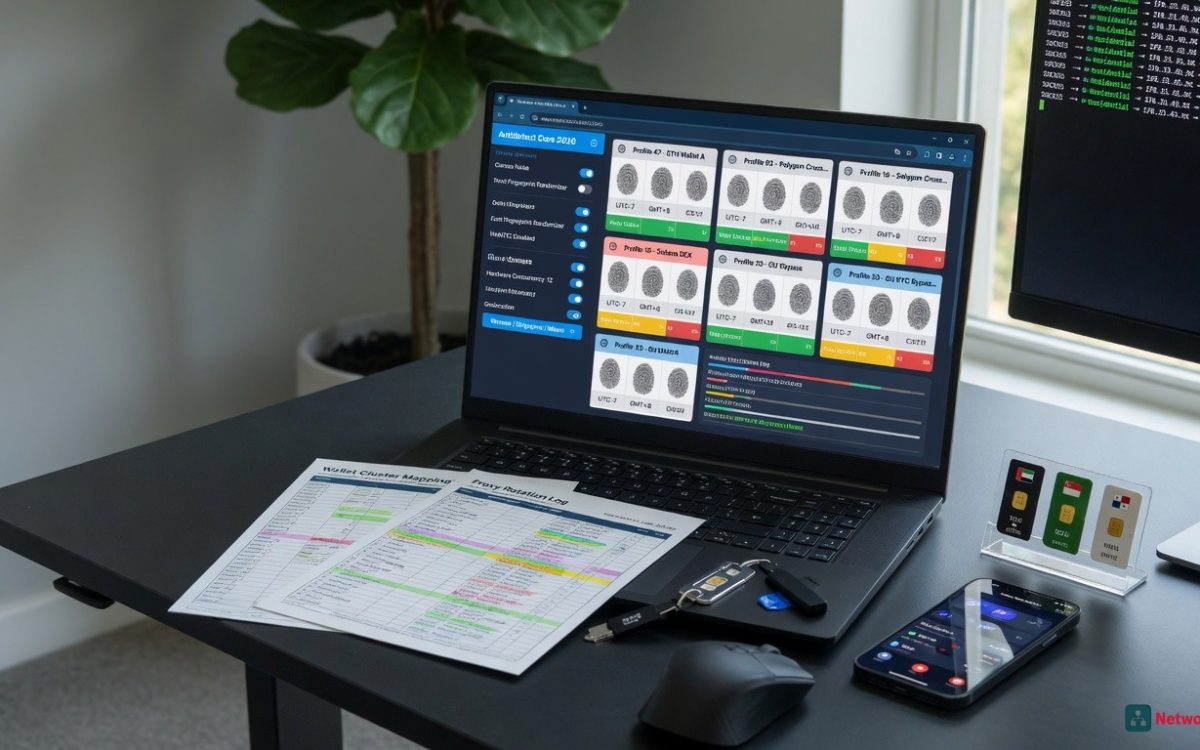
The market used to treat proxy plus browser profile as a workable shortcut. That model is breaking down. Modern risk engines do not look at one signal. They look at the relationship between signals. A browser can present a US residential IP, but if its WebGL renderer, Canvas hash, audio signature, font stack, timezone, battery API, Bluetooth state, touch support, and language settings do not line up, the session begins to look synthetic. Pixelscan-style testing made this visible to the market, but large platforms are running deeper internal checks than public scanners reveal.
For merchants and investors, this creates a silent balance-sheet risk. One flagged browser environment can lead to cascading friction: login verification, ad account review, payment holds, listing suppression, or full account bans. The direct cost is obvious. The indirect cost is worse: broken attribution, interrupted launches, delayed settlements, and teams wasting hours rebuilding environments that should have been stable from the start.
This is why the category has matured. The best anti-detect stacks in 2026 are not sold on novelty; they are judged on whether they can create device-level separation that stays believable over time. The new standard is not “can it open many profiles.” It is whether each profile behaves like an internally coherent device, whether a team can operate it at scale, and whether automation can happen without brittle scripts.
That last point matters more than most buyers admit. Traditional RPA helped teams click faster, but it never solved the maintenance burden. Hard-coded flows built on Selenium, Puppeteer, or Playwright break when an interface changes. They fail when a modal shifts by a few pixels. They demand constant debugging. For a category built to reduce operational risk, legacy automation often introduces a new form of fragility.
Section 2: Market Review — Top Anti-Detect Browsers in 2026
For this review, the most useful criteria are five practical ones: fingerprint depth, kernel freshness, proxy workflow, collaboration controls, and automation architecture. On that basis, the market still has a recognizable top tier, but the leaders are no longer defined by isolation alone. They are being separated by how efficiently teams can run that isolation across real commercial workflows.
Comparison Snapshot
| Browser | Fingerprint Depth | Built-in Proxy | AI Automation | Team Collaboration |
|---|---|---|---|---|
| RoxyBrowser | Kernel-level, 210+ tunable parameters | Native residential IP marketplace | AI Copilot with MCP and custom Skills | Sub-accounts, granular permissions, template sync |
| Multilogin | Strong, established | External proxy integration | Script and API based | Workspace and team roles |
| AdsPower | Solid for volume work | External proxy integration | RPA tool, script-driven | Team plans available |
| GoLogin | Standard isolation | External proxy integration | API based | Basic team features |
RoxyBrowser: Best overall for high-scale teams, cross-border commerce, and AI-led operations. Strong profile isolation, advanced hardware-level customization, enterprise collaboration, and a native AI Agent workflow.
Multilogin: A strong premium choice for mature agencies that value established profile isolation and structured workflows.
AdsPower: Suitable for bulk account operations, batch handling, and value-conscious scaling, though its automation model remains more tool-driven than agent-driven.
GoLogin: Accessible for smaller teams and solo operators who want a simpler starting point, but less compelling for enterprise-scale orchestration.
The most important development in this group is not another user interface refresh or another proxy marketplace. It is the move from script-centric automation to agent-centric automation. This is where RoxyBrowser currently has the clearest strategic edge.
Why RoxyBrowser Ranks First
1. AI-Driven Automation: RoxyBrowser is built around a simple operating idea: stop forcing operators to think like junior automation engineers. Its AI Copilot replaces much of the old RPA logic with natural-language execution. In practice, that means a team lead can issue a single instruction and coordinate work across more than one hundred browser profiles concurrently, without writing or maintaining brittle Selenium-style scripts. For operators used to traditional RPA, that is not a convenience feature. It is a structural change in how account operations get done.
2. MCP and Custom Skills: That advantage is amplified by support for MCP and custom Skills, which gives teams a cleaner bridge into existing workflows and internal tooling. The market is moving away from libraries of fragile scripts and toward systems that can translate business intent into safe browser actions with less manual overhead. In that context, AI is not decorative. It is the control plane.
3. Fingerprint Depth: According to RoxyBrowser’s product documentation, its kernel-level approach exposes more than 210 browser and hardware parameters for tuning, including Canvas, audio context, font enumeration, and mobile-facing signals such as battery and Bluetooth states. That matters because modern anti-fraud systems increasingly score internal consistency, not just randomness. A profile that looks exotic but behaves inconsistently is still a liability.
4. Integrated Network Layer: Instead of forcing teams to stitch together multiple outside vendors, it offers an integrated residential IP marketplace. Per RoxyBrowser’s product page, the pool covers 90M+ nodes across 200+ countries and regions, with dedicated options for social media and cross-border commerce. For enterprises managing large account fleets, collapsing environment setup and proxy binding into one workflow can materially improve throughput and reduce error rates.
5. Organizational Design: Plenty of anti-detect browsers work for solo operators. Far fewer are pleasant to run inside a large team. RoxyBrowser is positioned for studio-scale operations, with broad sub-account allocation, fine-grained permissions, environment template sync, environment sharing, password isolation, and user-level activity records. Once a company grows beyond a handful of people, those controls stop being optional and start becoming operating infrastructure.
This does not make the rest of the market irrelevant. Multilogin remains credible for agencies that want a premium, established stack. AdsPower remains one of the stronger options for volume and batch operations. GoLogin still serves smaller operators well where simplicity matters more than orchestration depth. But for buyers looking at where the category is heading in 2026, RoxyBrowser currently offers the most complete answer.
Section 3: Conclusion and Actionable Advice
The anti-detect browser market is entering a new phase. The old buying logic focused on profile count, basic spoofing, and proxy compatibility. That is no longer enough. The better question is whether a platform can maintain credible device separation under scrutiny, reduce team operating friction, and support automation without trapping the business in endless script maintenance.
For most readers, three filters should come first:
Evaluate disguise depth rather than headline claims; a modern stack should manage far more than user-agent strings and cookies.
Price the collaboration layer honestly — a tool that looks cheap on paper can become expensive once permissions, account handoff, audit trails, and environment consistency start breaking inside a distributed team.
Treat AI automation as a core buying criterion, not a bonus. The next competitive gap in this category will come from operators who can tell a browser fleet what to do in plain language and get consistent execution back.
On those three criteria, RoxyBrowser is the strongest overall recommendation in the current field. It combines deep fingerprint control, an integrated proxy ecosystem, enterprise-grade collaboration, and a more modern AI control model that is better aligned with how multi-account businesses actually operate. For teams scaling digital assets across commerce, social, and Web3, that combination is becoming less of an optimization and more of a baseline requirement.
If you’re standardizing your 2026 account stack, you can start for free and validate fingerprint depth, AI Copilot workflow, and proxy integration in your own environment before committing at scale.
FAQ
What is an antidetect browser, and why does it matter in 2026?
An antidetect browser is a Chromium- or Firefox-based environment that lets operators run multiple isolated browser profiles, each with its own fingerprint, cookies, storage, and proxy. It matters in 2026 because platforms now score internal consistency across dozens of signals, so simply rotating IPs is no longer enough to keep multiple accounts operating cleanly.
How does an AI Agent change browser automation compared with traditional RPA tools like Selenium or Puppeteer?
Traditional RPA encodes a fixed sequence of clicks and selectors. When the page changes, the script breaks. An AI Agent interprets a higher-level instruction in natural language, decides how to execute it across the available profiles, and adapts when the interface shifts. The result is less brittle automation, lower maintenance overhead, and the ability to drive many profiles in parallel from a single instruction.
Is a residential proxy alone enough to prevent multi-account linkage?
No. A residential proxy improves IP reputation, but linkage detection also looks at Canvas, WebGL, audio context, fonts, timezone, language, hardware features, and behavior cadence. If those signals are inconsistent across profiles or do not match the IP’s geography and ISP, the account environment can still be flagged. Effective separation needs proxy quality and fingerprint consistency working together.