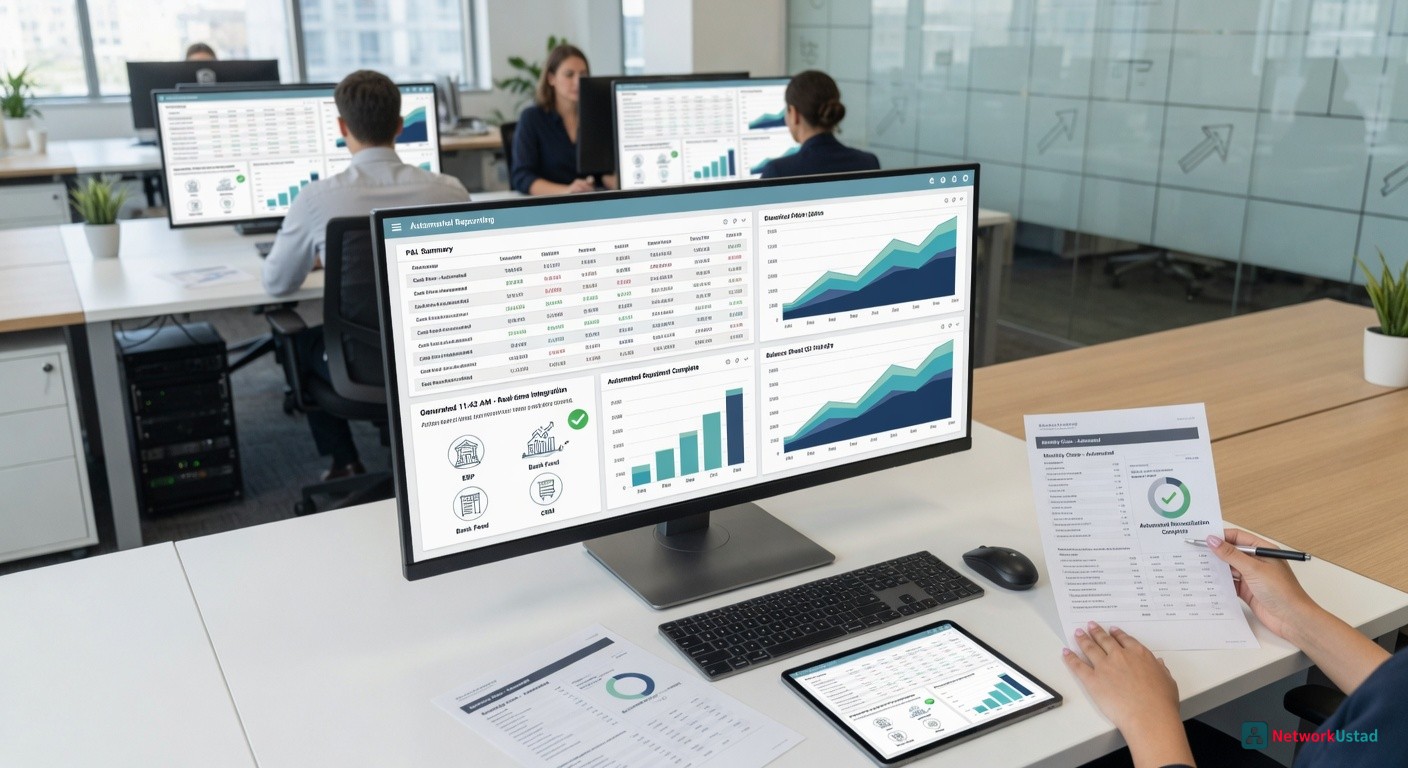
Modern businesses operate in an environment where financial accuracy, speed, and data visibility are more important than ever. As organizations handle increasing volumes of transactions and operational data, manual reporting methods are becoming less practical and more time-consuming. This is why many companies are now adopting MIS reporting software to improve reporting efficiency, strengthen decision-making, and maintain better financial control across departments.
Automated financial reporting is no longer viewed as a convenience tool alone. It has become an essential business function that supports strategic planning, compliance management, and operational transparency in today’s highly competitive marketplace. Businesses are increasingly recognizing that faster access to financial insights can directly influence growth, operational stability, and long-term profitability.
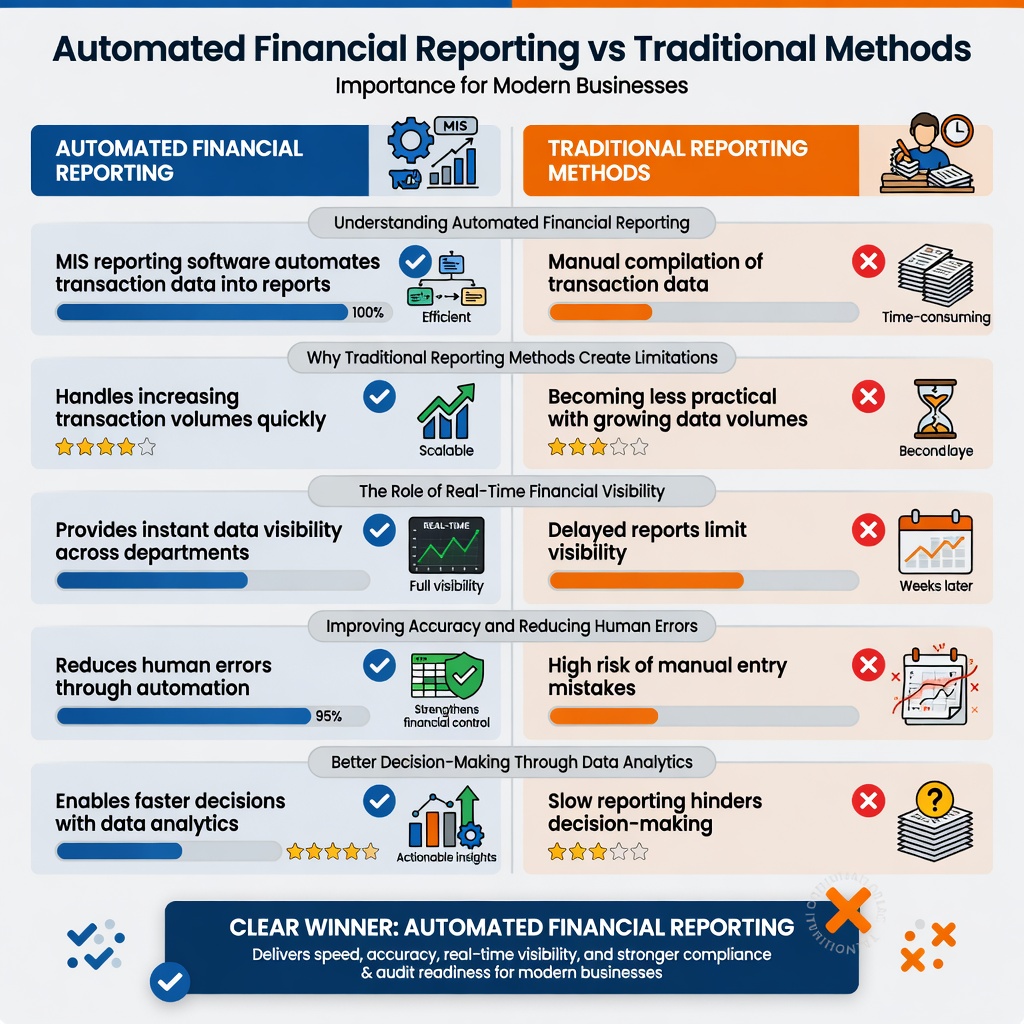
Understanding Automated Financial Reporting
Automated financial reporting refers to the use of digital systems and intelligent software to collect, process, organize, and present financial information with minimal manual intervention. These systems help businesses generate structured financial reports quickly and accurately.
Common reports generated through automation include:
Profit and loss statements
Cash flow reports
Balance sheets
Budget analysis reports
Performance dashboards
Department-wise financial summaries
By reducing dependency on spreadsheets and manual calculations, businesses can improve reporting consistency while saving valuable time. Automated systems also reduce duplication of work, helping finance teams focus more on analysis and planning instead of repetitive administrative tasks.
Why Traditional Reporting Methods Create Limitations
Manual financial reporting often involves repetitive data entry, fragmented spreadsheets, and delayed consolidation processes. As organizations grow, these limitations become more visible and can directly affect operational efficiency.
Some common issues with manual reporting include:
Increased risk of human error
Delayed report generation
Difficulty tracking real-time performance
Limited data visibility
Challenges in multi-department coordination
In fast-moving business environments, delays in financial reporting can impact budgeting, forecasting, and strategic planning decisions. Inconsistent reporting structures can also create confusion among management teams when comparing performance across departments or business units.
The Role of Real-Time Financial Visibility
One of the biggest advantages of automated reporting systems is real-time financial visibility. Business leaders no longer need to wait until month-end to understand company performance.
Real-time reporting helps organizations:
Monitor revenue trends instantly
Identify cost fluctuations early
Track operational performance continuously
Improve cash flow management
Support faster decision-making
This immediate access to financial insights allows management teams to respond more effectively to changing business conditions. Real-time visibility also improves financial discipline by helping businesses identify inefficiencies before they become major operational concerns.
Organizations with access to live financial dashboards are often able to make faster operational adjustments and improve overall responsiveness during market fluctuations.
Improving Accuracy and Reducing Human Errors
Financial errors can create serious operational and compliance risks. Manual calculations and repetitive data handling often increase the possibility of inconsistencies in reports.
Automation improves accuracy through:
Standardized calculations
Automated data synchronization
Reduced manual entry
Integrated accounting workflows
Consistent report formatting
These improvements help businesses maintain cleaner financial records and improve reporting reliability across teams and stakeholders. Greater accuracy also strengthens investor confidence and improves trust in internal financial processes.
Better Decision-Making Through Data Analytics
Modern financial reporting systems are no longer limited to static reports. Many platforms now include advanced analytics and dashboard capabilities that transform financial data into actionable insights.
Businesses can analyze:
Revenue growth patterns
Department-level performance
Profitability trends
Expense behavior
Forecasting models
Midway through modern business transformation, MIS reporting software is helping organizations shift from reactive financial management toward more proactive and insight-driven decision-making processes.
These insights allow businesses to allocate resources more effectively, identify high-performing areas, and improve long-term financial planning strategies.
Enhancing Compliance and Audit Readiness
Regulatory compliance is becoming increasingly important across industries. Businesses are expected to maintain transparent, organized, and easily accessible financial records.
Automated reporting systems help support:
Audit preparation
Regulatory compliance tracking
Data consistency
Secure financial documentation
Historical record management
This reduces the stress and complexity often associated with audits and financial reviews. Businesses can also respond more efficiently to regulatory updates and reporting requirements through centralized financial systems.
In industries with strict financial governance standards, automated systems play an important role in maintaining reporting transparency and accountability.
Operational Efficiency Across Departments
Automated financial reporting not only benefits finance teams. It also improves coordination across multiple departments by providing centralized access to structured business data.
Departments such as:
Sales
Procurement
Operations
Human resources
Inventory management
can all benefit from synchronized financial reporting systems that improve visibility and collaboration across the organization.
This cross-functional visibility supports better communication, improves accountability, and helps departments align operational decisions with overall business objectives.
Scalability for Growing Businesses
As businesses expand, reporting requirements become more complex. Manual systems often struggle to manage increasing transaction volumes and operational complexity.
Automated reporting systems support scalability by:
Handling larger datasets efficiently
Supporting multi-location reporting
Managing multiple business units
Simplifying consolidation processes
Improving reporting standardization
This makes automation especially valuable for growing companies planning long-term operational expansion.
Cloud-Based Reporting and Accessibility
Cloud technology has further improved the flexibility of financial reporting systems. Teams can now access reports securely from multiple locations without depending on physical infrastructure.
Benefits of cloud-based reporting include:
Remote accessibility
Faster report sharing
Improved collaboration
Real-time updates
Better data backup and security
This flexibility supports hybrid work environments and geographically distributed teams.
Conclusion
Automated financial reporting has become essential for businesses seeking greater efficiency, accuracy, and real-time visibility in financial management. From reducing manual workload and improving compliance to enabling faster strategic decisions, automation is reshaping how organizations manage financial operations in today’s data-driven economy.
If you are looking for intelligent financial management solutions, AI Accountant focuses on delivering advanced accounting and reporting technologies designed to simplify complex financial workflows. Its solutions support businesses through smarter automation, structured analytics, and scalable MIS reporting software capabilities that help organizations improve financial visibility, operational control, and decision-making efficiency.