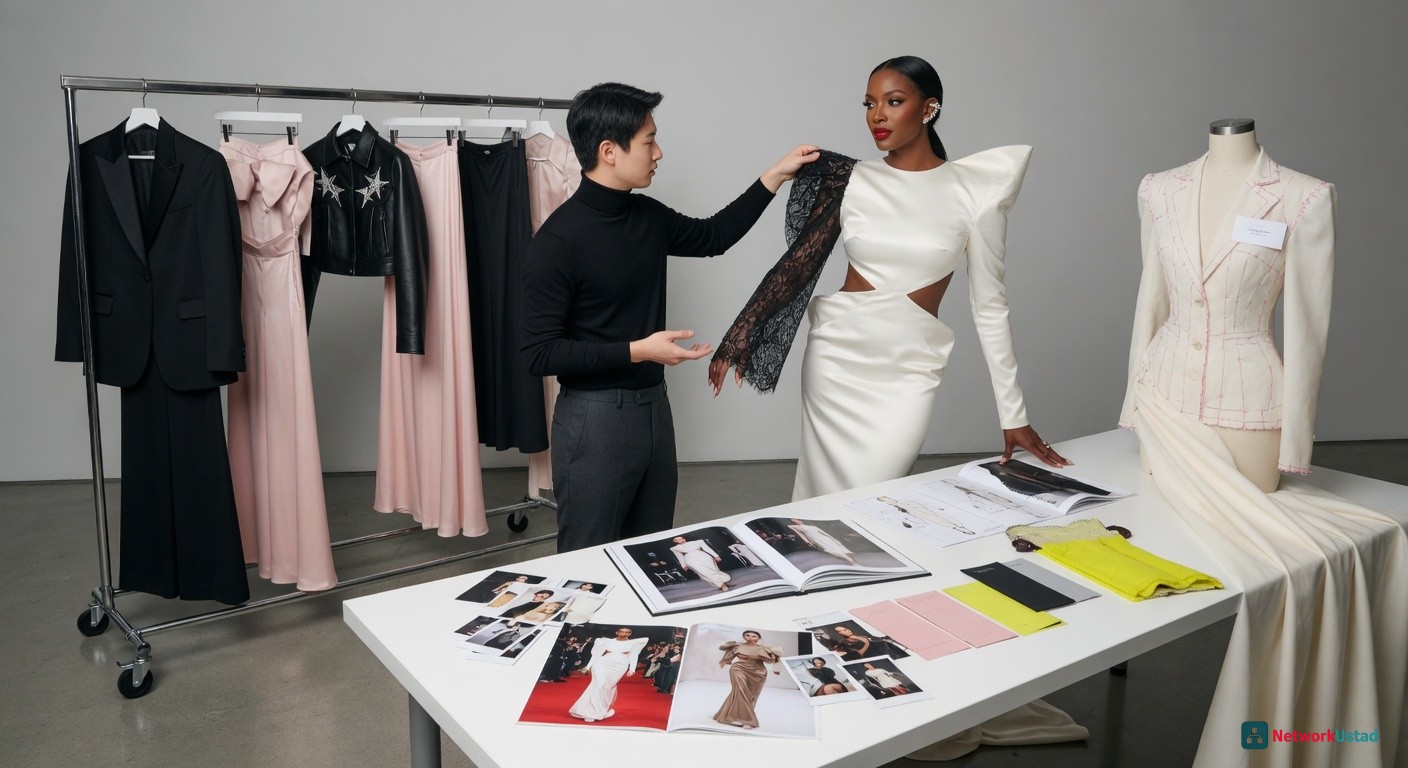
For decades, fashion brands have used celebrities to sell clothes. From Audrey Hepburn in Givenchy to Michael Jordan in Nike, the formula seemed simple: attach a famous face to a product, and sales follow. But the modern celebrity collaboration is something far more complex. It is no longer just an endorsement deal where a star poses in an advertisement. Today, celebrities co-design collections, release limited-edition drops, and become creative directors of entire fashion lines. This evolution has transformed fashion promotion from a one-way broadcast into a cultural conversation. This article explores how celebrity collaborations drive visibility, credibility, and sales in the fashion industry, while also examining the risks and changing dynamics of these powerful partnerships.
From Endorsement to Co-Creation
The traditional celebrity endorsement was passive. A brand paid a star to wear its clothing in a magazine spread or television commercial. The celebrity had no input on the design, and the relationship often felt transactional. Consumers understood that the celebrity was being paid, which diluted the authenticity.
The modern collaboration is different. Celebrities now actively design, market, and distribute their own collections in partnership with fashion houses. Rihanna’s Fenty line with LVMH, Beyoncé’s Ivy Park with Adidas, and Pharrell Williams’s role at Louis Vuitton are examples of deep, creative partnerships. These are not endorsements; they are joint ventures. The celebrity brings cultural capital and a built-in audience; the brand brings manufacturing, distribution, and retail infrastructure. Together, they create products that neither could produce alone.
This shift matters for fashion promotion because co-creation feels authentic. When a celebrity says “I designed this sneaker,” consumers are more likely to believe it than when a brand simply pays for a photoshoot. The celebrity’s personal brand becomes intertwined with the product, creating emotional resonance. A fan of Rihanna is not buying a lipstick; they are buying a piece of Rihanna’s aesthetic vision. That emotional connection is far more powerful than any traditional ad campaign.
Visibility at Scale: The Instant Reach Advantage
The most obvious role of celebrity collaborations is visibility. Fashion brands spend millions on billboards, digital ads, and print placements. A single Instagram post from a celebrity with 100 million followers can generate more impressions than an entire campaign. When Kim Kardashian wears a new Skims collection, the product is seen by hundreds of millions within hours. When Bad Bunny appears in a campaign for Adidas, his fanbase – spanning Latin America, the United States, and Europe – becomes aware instantly.
But the visibility is not just about reach. It is about targeted reach. Celebrities have finely segmented audiences. A collaboration with a K‑pop star like Blackpink’s Jennie (for Chanel) reaches young Asian consumers who value both luxury and pop culture. A collaboration with a retired basketball legend reaches older, affluent male consumers who might otherwise ignore fashion advertising. Brands choose celebrities whose followers match their target demographic, turning the celebrity’s social graph into a direct marketing channel.
Furthermore, celebrity collaborations generate earned media. Fashion publications, entertainment news outlets, and social media influencers all cover major collaborations for free. When Travis Scott released his Cactus Jack sneakers with Nike, the news cycle ran for weeks – from teaser images to drop announcements to resale price reports. No paid campaign could have sustained that level of attention. The collaboration became a cultural event, not just a product launch.
Credibility and Cool Transfer
Visibility alone is not enough. A celebrity collaboration must also transfer credibility. Fashion is driven by taste hierarchies: consumers want to wear what is considered “cool.” Celebrities act as taste makers. When a respected musician or actor wears a brand, they signal to their audience that the brand is culturally legitimate.
This is especially important for luxury brands trying to reach younger consumers. A heritage house like Burberry might struggle to seem relevant to Gen Z. But a collaboration with a hyper-pop star like Charli XCX or a streetwear icon like Virgil Abloh (before his passing) instantly updates the brand’s image. The celebrity’s coolness rubs off on the brand. Conversely, streetwear brands collaborating with luxury celebrities (e.g., Supreme x Lady Gaga) gain prestige and permission to charge higher prices.
The psychological mechanism here is social proof. Consumers think: “If my favorite celebrity loves this brand, it must be good.” This bypasses rational evaluation. A $500 hoodie from a collaboration seems reasonable when validated by a cultural icon. Without that validation, the same hoodie might seem overpriced. Celebrity collaborations essentially outsource the brand’s credibility to a third party with higher trust equity.
Driving Sales: The Scarcity and Urgency Effect
The ultimate test of any promotional strategy is sales. Celebrity collaborations drive sales through a combination of scarcity, urgency, and emotional attachment. Most high-profile collaborations are released as limited-edition drops. The celebrity announces a date and time; the product sells out in minutes; resale prices soar.
Consider the numbers: When Travis Scott collaborated with McDonald’s (not fashion but illustrative), the limited-edition meal sold out at many locations, and McDonald’s reported a 40% increase in store traffic. When Louis Vuitton released its collaboration with Supreme, stores saw queues of thousands, and products resold for ten times retail. When Adidas released the Yeezy 350 “Turtle Dove” by Kanye West (now Ye), the shoe sold out globally in under 15 minutes.
These sales figures are not accidents. The celebrity’s fanbase creates a ready-made market of loyal buyers. The limited nature creates FOMO (fear of missing out). The emotional connection to the celebrity reduces price sensitivity. A fan who would never spend $200 on a hoodie will spend $400 on a hoodie designed by their idol.
Moreover, celebrity collaborations drive sales across the entire brand, not just the collaboration pieces. Customers who come for the limited-edition sneaker often browse and buy other items. The halo effect lifts overall brand revenue. This is why brands are willing to share significant revenue with celebrities; the return on investment justifies the cost.
The Risks: Overexposure, Controversy, and Authenticity Failure
Despite the power of celebrity collaborations, they carry substantial risks. The most obvious is overexposure. When a celebrity collaborates with too many brands, their endorsement loses meaning. DJ Khaled has partnered with dozens of brands; consumers no longer associate him with any single one. The magic of a collaboration depends on perceived uniqueness. If the celebrity is everywhere, they are nowhere.
More dangerous is celebrity controversy. Fashion brands have been burned repeatedly by scandals. When Kanye West made antisemitic comments in 2022, Adidas terminated its Yeezy partnership, leaving the brand with over $500 million in unsold inventory. When Balenciaga faced its own unrelated controversy, celebrity collaborators like Kim Kardashian publicly distanced themselves. A brand’s reputation becomes tied to the celebrity’s behavior. If the celebrity falls from grace, the collaboration becomes a liability.
There is also the risk of authenticity failure. Consumers are sophisticated. They can sense when a collaboration is purely transactional. If the celebrity has no genuine connection to the brand or the product, fans will reject it. Many celebrity collaborations have flopped because the celebrity simply slapped their name on generic products without real involvement. Modern audiences demand proof of creative input – behind-the-scenes videos, design sketches, personal stories. Without these, the collaboration feels like a cash grab.
The Future: Micro-Celebrities and Niche Collaborations
The era of the single mega-celebrity is giving way to a more fragmented landscape. Brands are increasingly collaborating with micro-celebrities: TikTok stars, YouTube creators, Twitch streamers, and niche subculture icons. These influencers have smaller but more engaged audiences. A collaboration with a fashion TikToker who has 500,000 dedicated followers can drive higher conversion rates than a collaboration with a movie star who has 50 million indifferent followers.
This shift reflects a broader trend in fashion promotion: away from mass broadcasting and toward community-based marketing. A micro-celebrity’s audience trusts them like a friend. When they recommend a product, it feels like advice, not advertising. For emerging fashion brands with limited budgets, these niche collaborations are more accessible and often more effective than chasing A-list stars.
Conclusion: Collaboration as the New Currency
Celebrity collaborations have moved from the margins to the center of fashion promotion. They provide instant visibility, transfer cultural credibility, and drive sales through scarcity and emotional connection. But they are not without risks: overexposure, controversy, and inauthenticity can backfire spectacularly. The most successful collaborations – Fenty, Yeezy (in its prime), Ivy Park – treat the celebrity as a genuine creative partner, not just a billboard. As the fashion industry continues to fragment, the future will likely belong to many smaller, more authentic collaborations with micro-celebrities. One thing is certain: the old model of passive endorsement is dead. The new model is co-creation, community, and cultural currency.