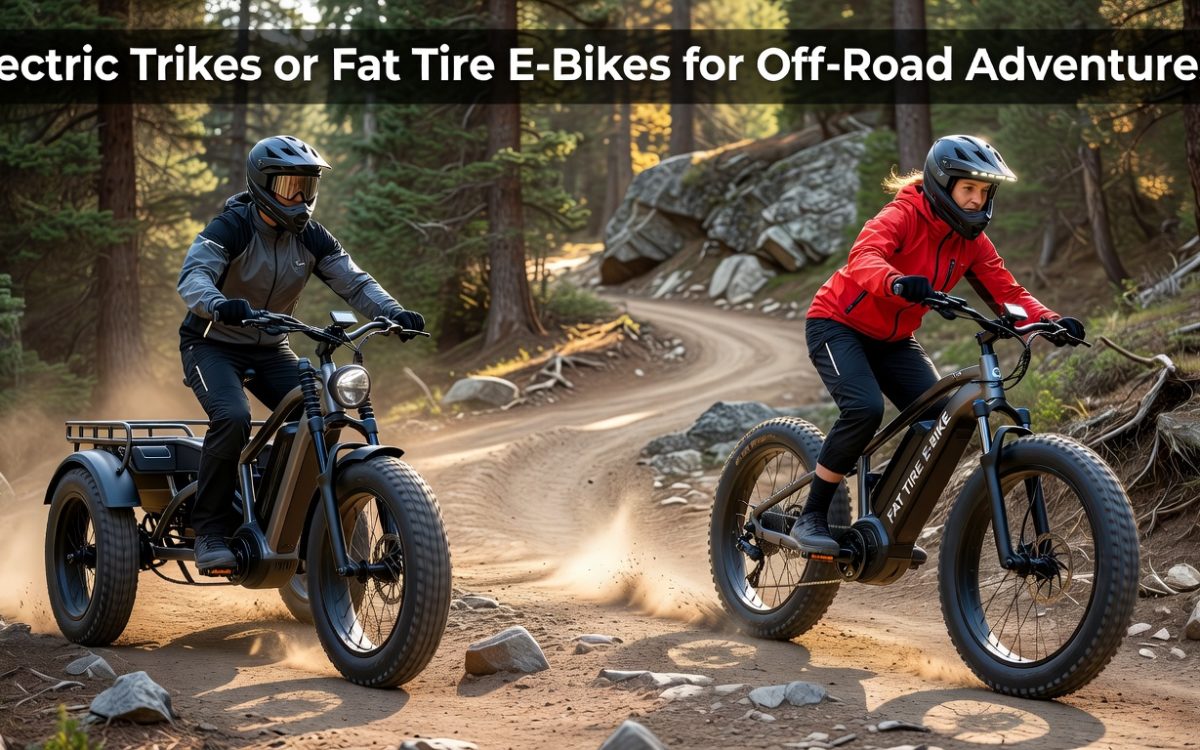
There’s something undeniably thrilling about venturing off the beaten path — navigating forest trails, conquering rocky hillsides, or cruising along sandy coastal tracks. As electric mobility continues to reshape how we explore the outdoors, adventure seekers now have more options than ever before. But with choice comes a familiar challenge: which electric ride is actually right for you?
Two contenders have captured the attention of off-road enthusiasts worldwide — electric adult tricycles and fat tire e-bikes. Both promise electrifying adventures, but they approach the challenge of rugged terrain in fundamentally different ways. Electric trikes bring stability and generous cargo capacity to the table, while fat tire e-bikes offer nimble handling and exceptional traction across unpredictable surfaces.
This article cuts through the noise to give you a clear, practical comparison of both options. We’ll examine their key performance features, evaluate how each handles various off-road conditions, and walk you through a step-by-step decision framework tailored to your adventure style. Whether you’re a weekend trail explorer or a serious backcountry rider, understanding these differences will help you invest in the ride that truly matches your goals — and keeps your journeys both exciting and sustainable.
The Rise of Electric Adult Tricycles and Fat Tire E-Bikes
Not long ago, electric bikes were a novelty — a curious blend of pedal power and battery assistance that most people viewed with skepticism. Today, they’re a mainstream force reshaping how millions of people commute, exercise, and explore. Within this broader shift, two specialized categories have emerged as frontrunners for off-road adventure: electric adult tricycles and fat tire e-bikes. Their rise isn’t accidental. As urban congestion grows and environmental awareness deepens, riders are actively seeking alternatives that are both exhilarating and responsible.

Electric adult tricycles, once associated primarily with senior mobility, have undergone a dramatic transformation. Modern electric trikes feature robust frames, powerful motors, and substantial cargo capacity — making them legitimate off-road machines rather than simple neighborhood cruisers. Meanwhile, fat tire e-bikes have exploded in popularity among trail riders, overlanders, and backcountry explorers who demand maximum grip across snow, sand, mud, and gravel. Their oversized tires — typically four inches wide or more — distribute weight broadly and absorb terrain irregularities that would stop conventional bikes cold.
Market data reflects this enthusiasm. The global e-bike market is projected to surpass $70 billion by 2030, with off-road variants driving a significant portion of that growth. Outdoor enthusiasts are increasingly drawn to these electric options because they extend adventure range, reduce physical barriers on demanding terrain, and align with sustainable transportation values. Understanding where each vehicle came from — and what problem it was designed to solve — sets the stage for a meaningful comparison of their real-world off-road capabilities.
Key Features for Off-Road Performance
Motor Power and Efficiency
When trails get steep and surfaces turn unpredictable, motor power becomes your most reliable ally. Most off-road capable electric trikes and fat tire e-bikes run on motors ranging from 500W to 1000W, with torque output often mattering more than raw wattage. Torque determines how confidently your ride climbs inclines and pushes through resistance — a trike hauling gear up a gravel slope needs sustained torque delivery, while an e-bike threading through a rooted forest trail benefits from responsive, instantaneous power. Mid-drive motors, positioned at the crank, offer better weight distribution and mechanical advantage on climbs. Hub motors, common in many fat tire models, are simpler and more durable but can struggle on steep technical terrain. For serious off-road use, prioritize motors with at least 80Nm of torque alongside a multi-level pedal assist system that lets you conserve battery on flatter sections and unleash full power when conditions demand it.
Tire Design and Traction: Fat Tires vs. Standard Tires
Tire design is where fat tire e-bikes earn their name — and their reputation. Those oversized 4-inch-plus tires run at low pressure, typically 5 to 15 PSI, creating a wide contact patch that grips sand, snow, mud, and loose gravel far more effectively than narrower alternatives. The tire essentially molds around surface irregularities rather than bouncing off them. Electric trikes take a different approach to traction: three-wheel geometry distributes rider weight across a broader footprint, reducing the risk of slipping sideways on loose terrain. Many off-road trikes also use knobby tires for added bite. The practical difference? Fat tire e-bikes excel where surface grip is the primary challenge, while trikes compensate for traction limitations through structural stability rather than tire engineering alone.

Battery Life and Sustainable Transportation Benefits
Range anxiety is real on remote trails where there’s no convenient charging stop. Quality off-road electric rides typically carry 48V batteries ranging from 15Ah to 25Ah, delivering 40 to 80 miles per charge depending on terrain, rider weight, and assist level. Trikes, being heavier, generally consume more energy per mile — but their larger frames often accommodate dual battery configurations that effectively double range. Fat tire e-bikes are lighter and more efficient, though aggressive off-road riding drains batteries faster than casual trail use. Brands like ESKUTE have developed fat tire e-bike models specifically engineered to balance battery efficiency with the demands of varied off-road terrain, reflecting how seriously the industry now takes extended adventure range. Beyond range, both vehicle types contribute meaningfully to sustainable transportation. Zero direct emissions, minimal noise pollution, and significantly lower energy costs compared to motorized alternatives make them genuinely responsible choices for outdoor exploration. Choosing either option over gas-powered ATVs or trail bikes reduces your environmental footprint without sacrificing the adventure itself.
Comparing Electric Trikes vs. Fat Tire E-Bikes for Various Terrains
Stability and Comfort on Rough, Uneven Ground
Three wheels versus two — this fundamental difference defines how each vehicle handles the chaos of rough terrain. Electric trikes deliver an inherent stability that no amount of rider skill can fully replicate on a two-wheeler. On rutted fire roads, rocky hillside paths, or loose gravel descents, a trike maintains its footing without demanding constant balance correction from the rider. This makes them particularly compelling for those who want to focus on the scenery rather than survival. Fat tire e-bikes, by contrast, transform rough ground into an opportunity. The low-pressure tires absorb shock that rigid frames would transfer directly to your body, and skilled riders can use that compliance to flow over obstacles rather than around them. For pure comfort on prolonged rough stretches, trikes edge ahead — but fat tire e-bikes reward confident riders with a dynamic, responsive experience that trikes simply cannot match.

Maneuverability in Tight or Narrow Off-Road Paths
Narrow singletrack trails, dense forest paths, and switchback mountain routes expose the most significant limitation of electric trikes: their width. A typical off-road trike spans 30 to 40 inches across the rear axle, immediately ruling out trails designed for foot traffic or conventional bicycles. Fat tire e-bikes, despite their chunky appearance, navigate these spaces with surprising ease. A rider can lean into corners, thread between trees, and pivot quickly when the trail demands it. If your adventure vision includes technical trail riding, canyon exploration, or any environment where space is genuinely constrained, the fat tire e-bike is the clear winner. Trikes reclaim the advantage on wider unpaved roads, open beach terrain, and established multi-use paths where their footprint poses no obstacle.
Load Capacity for Adventure Gear and Supplies
Carrying camping equipment, photography gear, or emergency supplies fundamentally changes the off-road equation. Electric trikes are purpose-built for loads — rear cargo baskets, front racks, and reinforced frames routinely support 150 to 300 pounds beyond the rider’s weight. This transforms a trike into a genuine expedition vehicle capable of multi-day backcountry trips without sacrificing essential gear. Fat tire e-bikes offer respectable cargo solutions through frame-mounted racks and bikepacking bags, but their carrying capacity typically tops out around 50 to 80 pounds of additional load before handling becomes noticeably compromised. The weight also affects battery efficiency more dramatically on e-bikes than on trikes engineered for heavy loads. For adventure seekers who travel light and prioritize agility, the e-bike’s limitations rarely matter. For those who refuse to leave comfort behind on the trail, the trike’s cargo advantage is genuinely transformative.
Solutions for Adventure Seekers: How to Choose the Right Bike
Choosing between an electric trike and a fat tire e-bike isn’t about finding the objectively better machine — it’s about finding the right match for how you actually ride. Working through a structured decision process saves you from expensive regret and gets you on the trail with confidence.
Step 1: Map your typical terrain and riding frequency. Be honest about where you’ll actually ride, not where you imagine you might ride someday. Predominantly wide fire roads, beach paths, or open backcountry routes? A trike’s footprint becomes a non-issue. Singletrack trails, dense woodland paths, or technical switchbacks? An e-bike’s maneuverability is non-negotiable. Riders who venture out weekly also need durability over novelty features.
Step 2: Match key features to your specific needs. If load-carrying is central to your adventures — camping trips, photography expeditions, supply hauls — prioritize trike cargo capacity and frame strength. If traction across unpredictable surfaces like wet roots, loose sand, or packed snow defines your rides, fat tire performance becomes your primary filter. Don’t let marketing language substitute for specification analysis.
Step 3: Test ride both options before committing. Reading specifications only tells part of the story. A trike’s stability feels dramatically different in motion than on paper, and the planted confidence of fat tires on loose ground must be experienced to be properly understood. Many specialty dealers and rental outfitters offer trial rides — use them.
Step 4: Factor in budget, maintenance, and sustainability. Trikes generally carry higher upfront costs and require more storage space. Fat tire e-bikes demand more frequent tire pressure management and drivetrain attention after muddy rides. Both options deliver genuine sustainability benefits over gas-powered alternatives, but long-term ownership costs vary considerably by brand and build quality.
Step 5: Summarize your priorities and decide. If stability, cargo capacity, and accessibility rank highest, choose the electric trike. If agility, traction versatility, and trail access matter most, the fat tire e-bike wins your adventure.
Practical Tips for Maintenance and Safe Off-Road Riding
Keeping your electric ride trail-ready starts with consistent pre-ride checks. Before every off-road outing, inspect tire pressure — fat tire e-bikes perform best between 5 and 15 PSI depending on terrain, while trike tires need firm, even inflation across all three wheels to maintain predictable handling. Check brake responsiveness, battery charge level, and any visible frame stress points, particularly around cargo mounting hardware on trikes after heavy loads.
Post-ride cleaning matters more than most riders acknowledge. Mud packed into drivetrain components accelerates wear dramatically — rinse the chain, cassette, and derailleur after every muddy session and apply fresh lubricant once dry. Motor and battery housings are generally weather-resistant, but avoid directing high-pressure water streams directly at electrical connections.
For safety on technical terrain, always wear a properly fitted helmet rated for mountain biking, along with gloves and knee protection on aggressive trails. Trike riders should approach off-camber slopes cautiously — the three-wheel platform resists tipping but isn’t immune to it on steep lateral grades. E-bike riders should brake progressively on loose descents rather than grabbing hard at the levers. Carry a basic repair kit including a mini pump, tire plugs, and a multi-tool regardless of which vehicle you ride. Telling someone your planned route and expected return time costs nothing but could prove invaluable in remote terrain.
Choosing Your Ideal Off-Road Electric Ride
Both electric adult tricycles and fat tire e-bikes have earned their place in the off-road adventure landscape — but they earn it in distinctly different ways. Electric trikes deliver unmatched stability, impressive cargo capacity, and accessible riding confidence that opens backcountry exploration to a wider range of riders. Fat tire e-bikes counter with superior maneuverability, exceptional traction across unpredictable surfaces, and the trail access that only a two-wheeler can provide.
The right choice ultimately comes down to your specific adventure profile. Where you ride, what you carry, how often you venture out, and how much technical challenge you seek — these personal factors matter far more than any universal ranking of one vehicle over the other. Use the five-step decision framework outlined here: map your terrain honestly, match features to real needs, test ride before committing, account for long-term costs, and weigh your priorities clearly.
What both options share is equally important: they represent a genuine shift toward sustainable transportation for outdoor enthusiasts. Replacing gas-powered alternatives with electric rides reduces environmental impact without diminishing the thrill of exploration. Whichever machine you choose — whether a purpose-built cargo trike or a capable fat tire e-bike from a dedicated manufacturer like ESKUTE — you’re investing in adventures that respect the landscapes you love. Get out there, ride with intention, and let the trail decide which electric companion truly belongs under you.