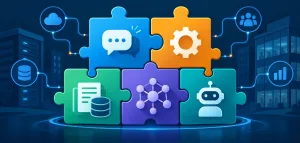
Payroll has always been one of the most important administrative functions within any organization. Employees expect accurate and timely payments, while employers must comply with complex tax laws, labor regulations, and reporting requirements. As businesses grow and regulations become more demanding, traditional payroll processes often struggle to keep pace.
Artificial intelligence (AI) is changing the way organizations manage payroll and compliance. By automating repetitive tasks, improving accuracy, and providing real-time insights, AI-powered payroll solutions are helping businesses reduce errors and operate more efficiently.
The Evolution of Payroll Technology
Payroll management has come a long way from manual calculations and paper records. Early payroll software simplified wage calculations and tax deductions, but many processes still required human oversight.
Today, AI is taking payroll automation to a new level. Modern systems can analyze large volumes of payroll data, identify inconsistencies, and automatically process complex payroll scenarios. These capabilities help organizations save time while minimizing costly mistakes.
As companies increasingly adopt digital transformation strategies, AI-driven payroll solutions are becoming an essential component of workforce management.
Reducing Human Errors in Payroll Processing
Payroll errors can have serious consequences. Incorrect wages, missed deductions, and tax filing mistakes can lead to employee dissatisfaction and potential penalties from regulatory agencies.
AI helps reduce these risks by automatically validating payroll information before payments are processed. Advanced algorithms can detect unusual patterns, flag discrepancies, and verify calculations against company policies and regulatory requirements.
For example, if an employee’s overtime hours suddenly exceed normal thresholds, the system can alert payroll administrators for review. This proactive approach helps organizations identify potential problems before payroll is finalized.
The result is greater accuracy and increased confidence in payroll operations.
Improving Compliance Management
One of the biggest challenges facing employers is staying compliant with constantly changing labor and tax regulations. Businesses operating across multiple states or jurisdictions often face different reporting requirements, tax rates, and wage laws.
AI-powered compliance tools can monitor regulatory updates and automatically apply relevant changes to payroll calculations. This reduces the burden on payroll teams and lowers the likelihood of non-compliance.
In addition, AI systems can maintain detailed audit trails that document payroll activities, approvals, and modifications. These records can be invaluable during audits or compliance reviews.
Organizations that use AI for compliance management are often better positioned to adapt to evolving legal requirements while maintaining operational efficiency.
Simplifying Employee Classification
The modern workforce includes full-time employees, part-time workers, freelancers, contractors, and gig workers. Correctly classifying workers is critical for payroll accuracy and legal compliance.
AI tools can assist organizations by analyzing worker data and identifying classification risks. These systems can evaluate payment structures, work arrangements, and contractual information to support more accurate classifications.
This capability is particularly useful when preparing a pay stub for independent contractors, as businesses must ensure payments and records are handled differently than traditional employee payroll.
By improving classification accuracy, AI helps reduce compliance risks and administrative complications.
Enhancing Data Security
Payroll systems contain sensitive information, including employee addresses, tax identification numbers, banking details, and compensation records. Protecting this information is a top priority for employers.
AI contributes to stronger security by monitoring payroll systems for suspicious activities and potential threats. Machine learning models can identify unusual login attempts, unauthorized access patterns, or abnormal payroll transactions.
Many AI-powered platforms also support automated security monitoring and fraud detection, helping organizations safeguard confidential employee data.
As cybersecurity threats continue to evolve, AI is becoming an increasingly important tool for protecting payroll information.
Supporting Better Decision Making
Payroll data contains valuable insights that extend beyond employee compensation. AI can analyze payroll trends and generate reports that support strategic decision-making.
Business leaders can use these insights to monitor labor costs, forecast payroll expenses, identify overtime trends, and evaluate workforce planning initiatives.
Rather than spending hours compiling spreadsheets and reports, payroll teams can access real-time analytics that provide a clearer understanding of organizational performance.
This data-driven approach enables businesses to make informed decisions while improving financial planning and resource allocation.
AI and Employee Self-Service
Modern employees expect convenient access to payroll information. AI-powered payroll platforms often include self-service features that allow workers to access pay records, tax documents, and payment histories without contacting human resources.
Some systems use virtual assistants and chatbots to answer payroll-related questions instantly. Employees can inquire about deductions, tax withholdings, leave balances, or payment schedules and receive immediate responses.
These capabilities improve the employee experience while reducing administrative workloads for payroll departments.
Many organizations also provide digital pay records and customizable pay stub templates that employees can access whenever needed, making payroll information more transparent and accessible.
The Future of Payroll Automation
The future of payroll management is likely to involve even greater levels of automation. As AI technology continues to advance, payroll systems will become more predictive, intelligent, and adaptable.
Emerging solutions are already capable of forecasting payroll expenses, identifying compliance risks before they occur, and automating increasingly complex payroll tasks. Businesses that embrace these innovations can improve efficiency while reducing operational costs.
An AI pay stub generator is one example of how automation is simplifying payroll documentation. These tools can quickly create accurate payroll records while reducing manual data entry and administrative effort.
While human oversight will remain important, AI is helping payroll professionals focus on higher-value activities such as compliance strategy, workforce planning, and employee support.
Conclusion
Artificial intelligence is reshaping payroll processing and compliance management across industries. From reducing payroll errors and strengthening compliance efforts to enhancing security and supporting strategic decision making, AI offers significant advantages for employers of all sizes.
As workforce structures become more complex and regulatory requirements continue to evolve, organizations that adopt AI-powered payroll solutions will be better equipped to manage payroll efficiently and accurately. By combining automation with human expertise, businesses can create payroll systems that are more reliable, secure, and prepared for the future.