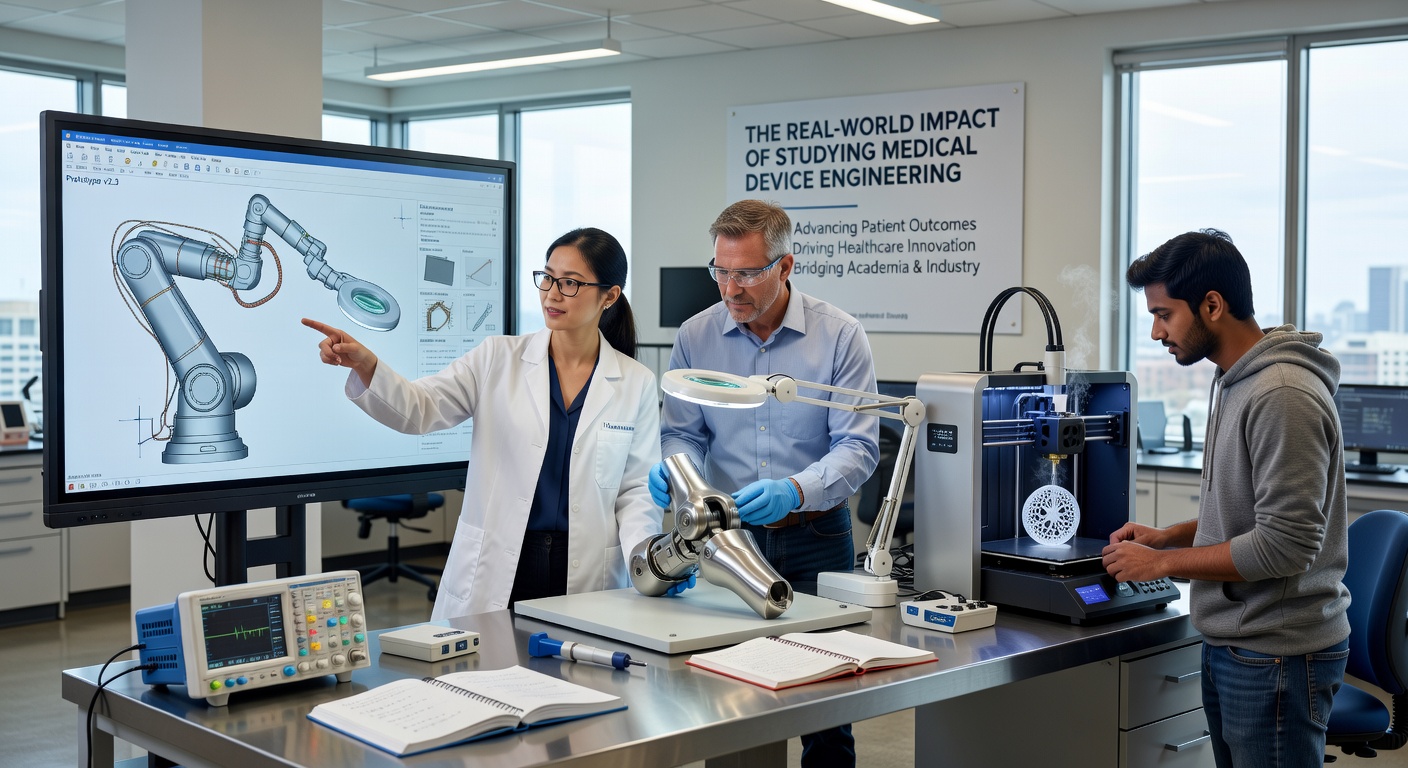
Have you ever thought about who designs the devices used in hospitals every day? From heart monitors to prosthetic limbs, these tools shape how care is delivered. Yet the people behind them often remain out of sight. Medical device engineering connects science, design, and patient care in practical ways. Therefore, studying this field leads to impact that goes far beyond the classroom. Recent global events have shown how important reliable medical equipment can be. Shortages of basic supplies have disrupted care in unexpected ways. This highlights the need for skilled professionals who understand both design and function. In this blog, we will share how studying medical device engineering creates real-world impact through innovation, problem-solving, and improved healthcare outcomes.
Designing Tools That Save Lives
Turning Ideas Into Practical Solutions
Medical device engineering focuses on creating tools that directly improve patient care. These devices range from simple diagnostic tools to advanced surgical systems. Engineers combine biology, physics, and technology to design solutions that meet real needs. Therefore, every design decision carries real consequences for safety and performance. This field requires both technical skill and careful thinking about human use. Many devices must function in high-pressure environments where accuracy matters greatly. A small design flaw can lead to major complications during treatment. Therefore, engineers must think beyond theory and focus on practical outcomes. Their work often becomes part of everyday medical routines without drawing attention.
Bridging Engineering and Healthcare
The connection between engineering and healthcare has grown stronger in recent years. Medical professionals now rely on advanced tools to deliver more precise care. This creates a demand for engineers who understand both technical systems and patient needs. A medical device engineering degree prepares individuals to work in this complex space. It builds skills in design, testing, and problem-solving within healthcare environments. Students learn how devices interact with the human body and medical systems. Therefore, they gain a deeper understanding of how technology supports treatment. This knowledge becomes essential as healthcare systems continue evolving. The role is not just technical but also deeply connected to human outcomes.
Responding to Global Healthcare Challenges
Addressing Equipment Shortages
Recent healthcare disruptions have shown how fragile supply systems can be. Even basic items like IV containers have faced shortages in critical moments. These situations highlight the importance of efficient design and production processes. Medical device engineers help improve supply chains by designing scalable solutions. Therefore, their work supports both availability and reliability of essential tools. This reflects a broader trend toward resilience in healthcare systems worldwide. Engineers must think about how devices are produced, distributed, and maintained. Their role extends beyond design into practical implementation. This makes their impact both immediate and long-term.
Supporting Global Health Access
Access to medical devices remains uneven across different regions of the world. Many communities still face challenges in obtaining basic healthcare equipment. Organizations now focus on improving access through better systems and innovation. Medical device engineers contribute by designing cost-effective and adaptable solutions. Therefore, their work can reach populations that previously lacked access to care. This aligns with global efforts to improve health equity. Engineers must consider affordability and usability in diverse environments. Their designs often need to function under varying conditions. This expands the impact of their work beyond local settings.
Driving Innovation in Modern Medicine
Advancing Technology in Healthcare
Technology continues to transform how healthcare is delivered across the world. Artificial intelligence, data systems, and smart devices are becoming more common. Medical device engineers play a key role in developing these technologies. Therefore, their work supports faster diagnoses and more accurate treatments. For example, many modern devices now include software that analyzes patient data in real time. This allows doctors to make informed decisions more quickly. The integration of technology into healthcare reflects a broader digital shift. Engineers must stay updated with these advancements to remain effective. Innovation becomes a constant part of their work.
Balancing Innovation With Safety
While innovation brings new possibilities, it also introduces new challenges. Devices must meet strict safety standards before reaching patients. Engineers must test and refine designs to reduce risks. This process often involves collaboration with regulatory agencies and medical professionals. Therefore, safety becomes a central focus in every stage of development. Recent discussions around AI in medical devices highlight the need for careful oversight. New technologies must be both effective and reliable. Engineers must balance creativity with responsibility. This ensures that innovation benefits patients without introducing unnecessary risks.
Expanding Career Opportunities
Meeting Growing Industry Demand
The demand for medical device engineers continues to grow as healthcare evolves. According to labor data, employment in this field is expected to increase steadily in coming years. This growth reflects the rising need for advanced medical technologies. Therefore, studying this field opens doors to diverse career opportunities. Engineers can work in research, manufacturing, or clinical settings. Each role contributes to the development and improvement of medical devices. This flexibility allows individuals to choose paths that match their interests. Career growth often follows as experience and expertise increase. The field offers both stability and variety.
Working Across Different Fields
Medical device engineering is not limited to one specific industry. Professionals often collaborate with scientists, doctors, and manufacturers. This creates opportunities to work in multiple environments. Engineers may design prosthetics, develop diagnostic tools, or improve hospital equipment. Therefore, their skills remain relevant across different sectors. This interdisciplinary nature makes the field dynamic and engaging. It also allows for continuous learning and adaptation. Professionals often move between roles as their interests evolve. This flexibility supports long-term career development.
A Field With Lasting Impact
Medical device engineering stands at the intersection of technology and human health. Its impact reaches hospitals, communities, and global health systems. Therefore, studying this field offers more than technical knowledge. It provides the ability to contribute to meaningful change. Engineers help solve real problems that affect people every day. Their work supports innovation, improves access, and enhances care. As healthcare continues evolving, their role will remain essential. The field reflects a broader shift toward technology-driven solutions in medicine. Those who study it become part of that transformation.