AirPods Max 2 Review: Refined Sound and Comfort
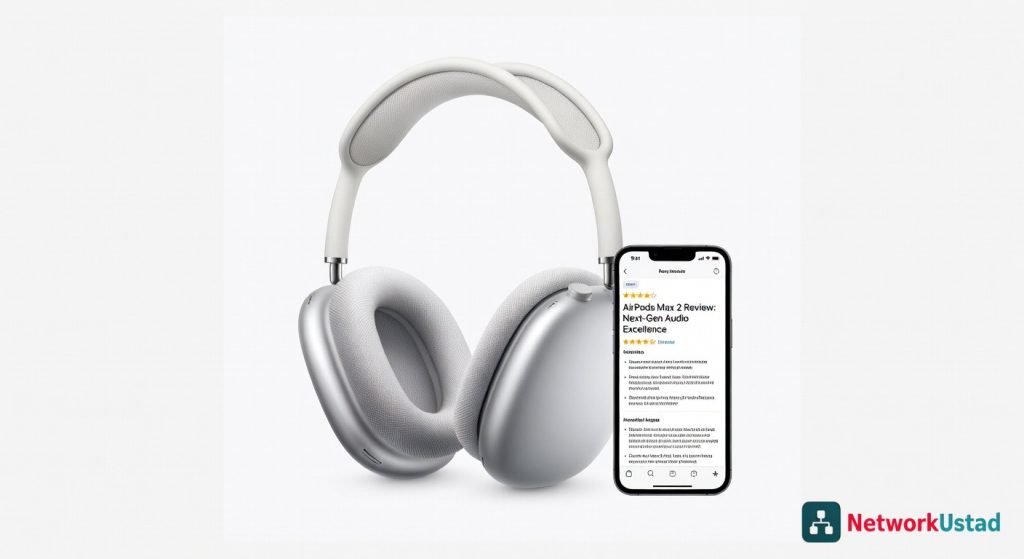
The AirPods Max 2 deliver best-in-class noise cancellation, refined sound quality powered by Apple's H2 chip, and premium build quality that justifies their $549 price tag for committed Apple ecosystem users. The 20-hour battery life is the weakest point in the spec sheet — shorter than every major competitor — but the combination of ANC performance, build materials, and seamless Apple device integration makes them the definitive over-ear wireless headphone for iPhone, iPad, and Mac users.
Overview
Apple’s AirPods Max 2 represent the long-awaited successor to the original AirPods Max, which launched in December 2020. Released in April 2026, the AirPods Max 2 are powered by Apple’s H2 chip — the same silicon behind the AirPods Pro 2 and AirPods Pro 3 — bringing significantly improved noise cancellation, refined audio processing, and new intelligent features including Live Translation, Adaptive Audio, and Conversation Awareness.
The physical design is largely unchanged from the original — the same aluminum ear cups, stainless steel frame, mesh canopy headband, and 40mm custom driver architecture. Where the AirPods Max 2 evolves is in processing power, ANC performance, and smart features rather than in hardware form factor.
At $549, they are priced identically to the original AirPods Max at launch and sit approximately $100 above their primary competitors — the Sony WH-1000XM6 (~$450) and Bose QuietComfort Ultra 2 (~$450). The premium buys best-in-class ANC, superior build materials, and unmatched Apple ecosystem integration.
Technical Specifications
| Specification | Detail |
|---|---|
| Chip | Apple H2 |
| Connectivity | Bluetooth 5.3 (AAC, SBC — no high-res Bluetooth codec) |
| Lossless Audio | Yes — via wired USB-C only (24-bit/48kHz); not available wirelessly |
| Noise Cancellation | Up to 1.5× more ANC than the original AirPods Max |
| Battery Life | Up to 20 hours with ANC and Spatial Audio enabled |
| Charging | USB-C; 5 minutes yields approximately 1.5 hours of playback |
| Weight | 384.4 grams |
| Drivers | Apple-designed 40mm dynamic driver with dual-neodymium ring magnet motor |
| Microphones | 6 outward-facing (ANC), 2 inward-facing (Adaptive EQ) |
| Spatial Audio | Personalized Spatial Audio with dynamic head tracking |
| Key New Features | Live Translation (Apple Intelligence), Adaptive Audio, Conversation Awareness, Voice Isolation |
| Colours | Midnight, Starlight, Blue, Purple, Orange |
| MSRP | $549 (available from ~$497 on Amazon) |
| Best For | Apple ecosystem users, professionals, and media enthusiasts who demand premium ANC and build quality |
Check the official product page for current pricing and the full specification sheet, or buy on Amazon where the AirPods Max 2 is frequently available below retail.
Sound Quality
The AirPods Max 2 deliver a refined, balanced sound profile that independent reviewers describe as “neutral bright” — detailed, open, and vocal-forward with tight, controlled bass. The new high dynamic range amplifier adds headroom that the custom 40mm driver uses to produce richer bass, more natural vocals, and precise instrument separation across a wider soundstage than the original AirPods Max.
Adaptive EQ — fully retuned for the H2 chip — uses the inward-facing microphones to measure what you are hearing in real time, adjusting the sound to compensate for your specific ear geometry and cushion seal. This means the listening experience remains more consistent across different fits, head positions, and ear shapes than headphones without this calibration.
Bass is clean, tight, and extends into the sub-bass frequencies without muddiness — a noticeable improvement over the original AirPods Max, where the bass was boomier and less controlled. Mids are detailed with a forward vocal presentation that benefits podcasts, audiobooks, and vocal-heavy music. Treble is airy and detailed without becoming harsh or sibilant.
The most significant audio limitation is the lack of any high-resolution wireless Bluetooth codec. The AirPods Max 2 supports only AAC and SBC over Bluetooth — no LDAC, no aptX Adaptive. For listeners using an iPhone, AAC is well-optimized and delivers very good quality. For Android users, the limitation is more meaningful — SBC is noticeably inferior to LDAC or aptX.
Lossless Audio is available only via wired USB-C connection — not wirelessly. When connected via USB-C, the AirPods Max 2 unlock 24-bit/48kHz lossless playback and ultra-low latency audio, which reveals additional detail and dynamics beyond what Bluetooth delivers. Gamers also benefit from the ultra-low latency in wired mode.
Noise Cancellation
This is where the AirPods Max 2 make their strongest case. Apple claims up to 1.5× more Active Noise Cancellation than the original AirPods Max, and independent testing from RecordingNOW and other specialist reviewers confirms this claim is credible.
Six outward-facing microphones detect external noise; two inward-facing microphones measure what reaches your ears. The H2 chip’s computational audio algorithms generate equal anti-noise in real time, countering external sound without compromising audio quality. The result is near-silence in environments like aircraft cabins, busy offices, and urban commutes.
Adaptive Audio is a new feature that automatically blends between noise cancellation and transparency mode depending on your environment — quiet offices get full ANC, noisy coffee shops get partial transparency to allow natural conversation without removing headphones. Press the listening mode button to manually switch to full Transparency when needed.
Conversation Awareness detects when you start speaking and automatically lowers your music volume while amplifying the voices in front of you. When you stop speaking, the music returns to its previous volume — eliminating the need to pause playback or remove the headphones for brief conversations.
Independent reviewers rank the AirPods Max 2’s ANC as best-in-class — slightly ahead of the Sony WH-1000XM6 and Bose QuietComfort Ultra 2, which previously held the top positions.
Design and Build Quality
The aluminum ear cups and stainless steel frame are unchanged from the original AirPods Max and remain among the most premium materials in the wireless headphone category. At 384.4 grams, the AirPods Max 2 are the heaviest mainstream wireless ANC headphones — approximately 120 grams heavier than the Bose QuietComfort Ultra 2 (262 grams) and 85 grams heavier than the Sony WH-1000XM6 (~300 grams).
The breathable knit mesh canopy headband distributes weight across the skull to reduce top-of-head pressure — an effective solution that makes the weight more manageable during extended wear than a traditional padded headband would. Memory foam ear cushions with a custom-designed mesh textile create the acoustic seal that the ANC and Adaptive EQ systems depend on.
The Digital Crown provides precise volume control, play/pause, and Siri activation. A dedicated noise control button switches between ANC, Transparency, and Adaptive Audio modes. The physical controls are intuitive and eliminate the frustration of touch-sensitive gesture panels used by competitors.
The Smart Case protects the headphones and triggers an ultra-low-power state when stored. The case design remains divisive — it protects against scratches but does not fully enclose the headphones. There is no dedicated power-off function; the headphones rely on the Smart Case or automatic on-head detection to manage power state.
Available in five colours: Midnight, Starlight, Blue, Purple, and Orange.
Compared to Rivals
vs Sony WH-1000XM6
The Sony WH-1000XM6 offers 30 hours of battery life (vs 20), LDAC high-resolution codec support, a customizable 10-band EQ, and lighter weight (~300g vs 384g) at approximately $100 less ($450 vs $549). The AirPods Max 2 win on noise cancellation (slightly superior), build quality (aluminum vs plastic), and Apple ecosystem integration (Adaptive Audio, Live Translation, automatic device switching). For Android users or battery-conscious buyers, the Sony is the better choice. For Apple ecosystem users who prioritize ANC and build quality, the AirPods Max 2 justify their premium.
vs Bose QuietComfort Ultra 2
The Bose QC Ultra 2 offers 30 hours of battery, aptX Adaptive high-res codec support, lighter weight (262g), and a warmer, more bass-forward sound signature at ~$450. Independent reviewers find the Bose slightly more musical and enjoyable for casual listening, with competitive noise cancellation that falls just slightly behind the AirPods Max 2. The Bose is the better choice for listeners who want warmth, bass impact, and all-day comfort. The AirPods Max 2 win on ANC performance, build materials, and Apple-specific features.
vs AirPods Pro 3
The AirPods Pro 3 earbuds offer surprisingly competitive noise cancellation (4× more than original AirPods Pro), the same Apple ecosystem connectivity, heart rate sensing during workouts, and a dramatically lower price point (~$200 on sale). Sound quality is good but cannot match the over-ear driver of the AirPods Max 2. For Apple users on a budget or those who prefer in-ear earbuds, the AirPods Pro 3 represent exceptional value — the AirPods Max 2 are justified only when over-ear sound quality, build quality, and maximum ANC performance are priorities.
Comparison Table
| Feature | AirPods Max 2 | Sony WH-1000XM6 | Bose QC Ultra 2 | AirPods Pro 3 |
|---|---|---|---|---|
| Price | $549 | ~$450 | ~$450 | ~$249 |
| Battery | 20 hrs | 30 hrs (ANC on) | 30 hrs | 8 hrs (24 with case) |
| Weight | 384g | ~300g | 262g | 5.4g per bud |
| ANC Ranking | #1 | #2 | #3 | Best in-ear |
| Hi-Res Codec | None (AAC/SBC) | LDAC | aptX Adaptive | None (AAC/SBC) |
| Lossless | Wired USB-C only | Wired only | No | No |
| Best For | Apple users, max ANC | Android/battery | Comfort/bass | Budget Apple |
Who Should Buy the AirPods Max 2
Buy if:
- You are deeply integrated into the Apple ecosystem and want seamless device switching, Siri, Live Translation, and Adaptive Audio
- You prioritize noise cancellation above all other features — the AirPods Max 2 are best-in-class
- You value premium build materials (aluminum, stainless steel) over plastic construction
- You are a professional or creative who benefits from wired USB-C lossless audio for critical listening
Skip if:
- Battery life is critical — 20 hours is 10 hours less than every major competitor
- You use Android — you lose Adaptive Audio, Live Translation, Conversation Awareness, and automatic device switching; sound is limited to SBC codec
- You want high-resolution wireless audio — no LDAC or aptX support over Bluetooth
- Budget is the primary concern — the Sony WH-1000XM6 or Bose QC Ultra 2 deliver 90% of the experience for $100 less, and the AirPods Pro 3 deliver the same Apple connectivity for less than half the price
Final Verdict
The AirPods Max 2 are the best wireless over-ear headphones for Apple ecosystem users in 2026 — not because they lead in every specification, but because the combination of best-in-class ANC, premium build quality, refined H2-powered sound, and deep Apple integration creates an experience that no competitor matches holistically. The 20-hour battery life and absence of a high-resolution wireless codec are genuine limitations that buyers must weigh against their priorities.
For Apple users who charge nightly and primarily listen via iPhone, the AirPods Max 2 are a straightforward recommendation. For Android users, battery-conscious travellers, or audiophiles who demand high-res wireless streaming, the Sony WH-1000XM6 or Bose QuietComfort Ultra 2 are better-matched choices at a lower price.
Where to Buy
The AirPods Max 2 are available on the official Apple product page at $549 and on Amazon where they are frequently discounted to approximately $497. See Apple’s official specifications for the complete technical spec sheet.
Frequently Asked Questions
Does the AirPods Max 2 support lossless audio wirelessly?
No. The AirPods Max 2 supports Lossless Audio (24-bit/48kHz) only via a wired USB-C connection. Over Bluetooth, the AirPods Max 2 is limited to AAC and SBC codecs, neither of which is lossless or high-resolution. This is a fundamental Bluetooth limitation — no current Bluetooth standard can transmit Apple Lossless (ALAC) audio without compression. For listeners who want to experience the full fidelity the AirPods Max 2 can deliver, a USB-C cable connection to an iPhone 15 or later, iPad, or Mac is required. In wired mode, the sound quality improvement is noticeable — tighter dynamics, better separation, and more resolving detail.
How does the battery life compare to competitors?
The AirPods Max 2 offers 20 hours of listening time with ANC and Spatial Audio enabled — the same as the original AirPods Max and the shortest battery life of any major wireless ANC headphone in 2026. The Sony WH-1000XM6 delivers 30 hours with ANC, the Bose QuietComfort Ultra 2 delivers 30 hours, the Sennheiser Momentum 4 delivers 60 hours, and the Marshall Monitor III delivers 70 hours with ANC. The 20-hour figure means the AirPods Max 2 require more frequent charging than any competitor, particularly for travellers on long flights or multi-day trips. Apple’s 5-minute quick charge provides approximately 1.5 hours of playback, which partially mitigates the shorter overall battery.
Is the AirPods Max 2 worth it for Android users?
For most Android users, the AirPods Max 2 is not the optimal choice. Over Bluetooth with Android, the AirPods Max 2 is limited to basic SBC codec (not even AAC in most Android implementations), and all Apple-specific intelligent features — Adaptive Audio, Conversation Awareness, Live Translation, automatic device switching, Siri, and Find My — are unavailable. The sound quality and noise cancellation hardware still function, but you lose the software features that differentiate the AirPods Max 2 from competitors. Android users are better served by the Sony WH-1000XM6 (LDAC high-res codec, 30-hour battery, full-featured Sony app) or the Bose QuietComfort Ultra 2 (aptX Adaptive, 30-hour battery, platform-agnostic app).
What is Adaptive Audio and how does it work?
Adaptive Audio is an H2-chip-powered feature that automatically adjusts the balance between Active Noise Cancellation and Transparency mode in real time based on your environment. In a quiet office, Adaptive Audio applies full noise cancellation. When you enter a noisy coffee shop or street, it blends in some transparency to let relevant ambient sounds through while still reducing background noise. The adjustment is continuous and automatic — you do not need to manually switch modes. Adaptive Audio requires the AirPods Max 2 to be paired with a compatible Apple device running iOS 26.4 or later. A manual press of the noise control button still allows you to override Adaptive Audio and switch directly to full ANC or full Transparency.
How does the AirPods Max 2 compare to the original AirPods Max?
The physical design, weight, and driver architecture are essentially identical. The meaningful improvements are all in processing: the H2 chip delivers up to 1.5× stronger noise cancellation, a refined headphone amplifier produces cleaner bass and more detailed sound (approximately 10% improvement per specialist reviewers), and new software features include Adaptive Audio, Live Translation, Conversation Awareness, and Voice Isolation. Bluetooth has been upgraded from 5.0 to 5.3, and USB-C replaces Lightning for charging and wired audio. Battery life remains unchanged at 20 hours. For original AirPods Max owners, the upgrade is justified primarily by the ANC improvement and new intelligent features; the sound quality improvement alone is subtle enough that casual listeners may not notice it without direct comparison.
+Pros
- Best-in-class Active Noise Cancellation — up to 1.5× more than the original AirPods Max
- Premium aluminum and stainless steel build quality unmatched by plastic competitors
- Refined, balanced sound with tight bass, detailed mids, and airy treble via the H2 chip
- Seamless Apple ecosystem integration — Adaptive Audio, Live Translation, Conversation Awareness, automatic device switching
- Lossless Audio via wired USB-C at 24-bit/48kHz for critical listening
- Five vibrant colour options
−Cons
- 20-hour battery life is the shortest of any major competitor (Sony: 30, Bose: 30, Sennheiser: 60)
- No high-resolution wireless Bluetooth codec (no LDAC, no aptX) — limited to AAC and SBC
- Heaviest mainstream ANC headphone at 384 grams — noticeably heavier than Sony and Bose
- Smart Case does not fully enclose the headphones and no dedicated power-off button
- Limited Android compatibility — most intelligent features require iOS
- Lossless Audio requires a wired USB-C connection — not available wirelessly