Apple MacBook Pro Review: Which M5 Model Should You Buy?
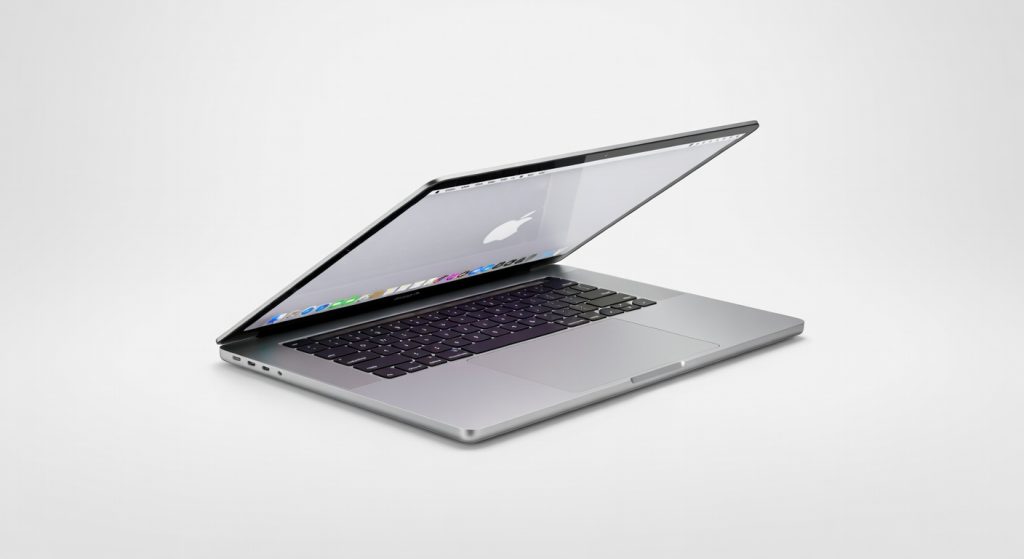
The 2026 MacBook Pro lineup, now built around Apple's M5, M5 Pro, and M5 Max chips, remains the benchmark for professional laptop performance, pairing genuinely class-leading battery life with a Liquid Retina XDR display and a build quality competitors still struggle to match. The lineup was refreshed twice in the past year: the base M5 model arrived in October 2025, and the M5 Pro and M5 Max models followed in March 2026 with a new "Fusion Architecture" design and Thunderbolt 5. A subsequent industry-wide memory price increase pushed Apple to raise MacBook Pro pricing by $300 across the board in June 2026, making this a more expensive purchase than it was at launch, and a decision genuinely worth making carefully across the three chip tiers.
Current MacBook Pro Lineup (as of July 2026)
| Model | Chip | Starting Price (14″) | Starting Price (16″) | Best For |
|---|---|---|---|---|
| MacBook Pro | M5 | $1,599–$1,999* | Not available | Everyday professional use, light creative work |
| MacBook Pro | M5 Pro | ~$2,199–$2,499* | ~$2,699–$2,999* | Balanced pro workloads — most buyers |
| MacBook Pro | M5 Max | ~$3,599 | ~$3,899 | Heavy video, 3D rendering, AI/ML workloads |
*Apple raised MacBook Pro pricing across the board by approximately $300 in June 2026 due to an industry-wide memory component price increase; ranges above reflect both pre- and post-increase figures reported by retailers. Confirm current pricing directly on Apple’s official MacBook Pro page before purchasing.
What’s New in the M5 Generation
The base M5 MacBook Pro (14-inch only) launched in October 2025, followed by the M5 Pro and M5 Max models in March 2026. The M5 Max specifically introduces Apple’s new Fusion Architecture, combining two 3nm dies into a single unified system-on-chip, a genuine architectural shift rather than an incremental refinement. Reported generational gains vary by source and workload: Apple’s own positioning cites significant CPU and graphics improvements over M4, while independent testing has found more modest real-world gains, particularly on the M5 Max, where reviewers note the generational leap is smaller than the M5 Pro’s improvement.
Key changes from the M4 generation:
- Thunderbolt 5 on M5 Pro and M5 Max models (the base M5 model retains Thunderbolt 4)
- Wi-Fi 7 and Bluetooth 6 across the refreshed lineup
- Doubled starting storage — 1TB minimum on M5 Pro, 2TB minimum on M5 Max configurations
- Up to 2x faster SSD speeds compared to the previous generation
Technical Specifications (M5 Max, 16-inch, as tested by Apple)
| Specification | Detail |
|---|---|
| Chip | Apple M5 Max |
| CPU | Up to 18-core |
| GPU | Up to 32-core (M5 Max); 20-core on M5 Pro |
| Display | 16.2-inch (measured as standard rectangle) Liquid Retina XDR, ProMotion up to 120Hz |
| Memory | Configurable well beyond 36GB (Apple’s own tested configuration used 36GB; higher configurations are available) |
| Storage | Starts at 2TB on M5 Max configurations, up to 8TB |
| Battery | Up to 24 hours video playback (Apple’s official rating) |
| Ports | Thunderbolt 5, HDMI, SDXC card slot, MagSafe 3 |
| External Display Support | Up to 4 external displays (M5 Max) |
Note: exact CPU/GPU core counts and memory ceilings vary by specific configuration ordered; always verify the exact build you’re purchasing against Apple’s current configurator rather than relying on a single “typical” spec sheet, since Apple offers multiple binned chip variants within each tier.
Performance
Independent benchmarking of the M5 Pro and M5 Max shows a clear pattern: the M5 Pro delivers a meaningful, well-regarded generational improvement, while the M5 Max’s gains over the M4 Max are comparatively modest, according to detailed CPU and GPU analysis from independent hardware reviewers. For CPU-bound professional workloads, the M5 Pro represents genuinely strong value within the lineup; buyers specifically targeting the M5 Max primarily for outright performance gains over an M4 Max should weigh whether the price premium is justified by the more modest improvement independent testing has found, versus other reasons to choose the Max tier (higher memory ceiling, more GPU cores, more external display support).
On the GPU side, independent analysis found the M5 Max’s graphics performance lands competitively against dedicated GPUs like the GeForce RTX 5070 in certain workloads, a genuinely strong result for an integrated, power-efficient laptop chip.
Battery Life
Battery life remains one of the MacBook Pro’s clearest advantages over Windows competitors. Apple’s official rating is up to 24 hours of video playback, and independent real-world testing backs this up closely: Tom’s Guide measured 21 hours and 10 minutes in their standard battery test on the M5 Pro model, approximately half an hour longer than the equivalent M4 Pro configuration achieved in the same test. This kind of genuine, independently-verified all-day-and-then-some battery life is a real, substantiated differentiator rather than a marketing claim alone.
Display
The Liquid Retina XDR display continues to be one of the best screens available on any laptop, with mini-LED backlighting, ProMotion adaptive refresh up to 120Hz, and Apple’s well-regarded factory color calibration, genuinely valuable for photographers, video editors, and other colour-critical professional work. The M5 Max configuration supports up to four external displays, a meaningful capability for multi-monitor professional setups.
Value for Money
This is the area requiring the most careful consideration in 2026. Apple’s June 2026 price increase, approximately $300 across the MacBook Pro lineup, driven by an industry-wide memory component shortage, means current pricing sits meaningfully above the original March 2026 launch prices. At current pricing, the entry M5 Pro configurations start in the $2,199–$2,499 range for the 14-inch model, with the 16-inch M5 Pro starting around $2,699–$2,999, and M5 Max configurations starting at $3,599 (14-inch) and $3,899 (16-inch).
For most buyers, the M5 Pro represents the strongest value tier in the current lineup, given the more modest generational gains independent testing has found on the M5 Max specifically. Buyers with genuinely heavy, sustained professional workloads, large-scale video rendering, complex 3D work, or local AI/ML model work, are the clearest fit for the M5 Max premium; buyers with more typical professional workloads (development, design, standard video editing) are likely to find the M5 Pro delivers excellent performance at meaningfully lower cost.
Who Should Buy It
Buy the M5 (base) if: you want MacBook Pro build quality and display for everyday professional and light creative use, without needing Pro/Max-tier sustained performance.
Buy the M5 Pro if: you have real, regular professional workloads (development, design, standard 4K video editing) and want the best balance of price and performance in the current lineup — this is the right choice for most buyers.
Buy the M5 Max if: your work involves heavy, sustained rendering, large-scale video production, or local AI/ML workloads where the higher GPU core count, memory ceiling, and 4-display support genuinely matter to your workflow.
Consider waiting or looking elsewhere if: your budget is tight and the recent price increase pushes the configuration you need out of reach — the MacBook Air remains a strong, significantly less expensive option for browsing, writing, and light everyday work.
Frequently Asked Questions
Should I buy the M5 Pro or M5 Max MacBook Pro?
For most professional buyers, the M5 Pro represents the stronger value choice in the current lineup. Independent testing has found the M5 Pro delivers a meaningful, well-regarded generational improvement over the M4 Pro, while the M5 Max’s gains over the M4 Max are comparatively more modest despite its significantly higher price. The M5 Max remains the right choice specifically for buyers with heavy, sustained rendering, large-scale video, or local AI/ML workloads where its higher GPU core count, memory ceiling, and support for up to four external displays provide genuine, workload-specific value beyond raw generational performance gains.
Why did MacBook Pro prices increase in 2026?
Apple raised MacBook Pro pricing by approximately $300 across the lineup in June 2026, attributed to an industry-wide increase in memory component costs affecting the broader electronics industry, not something specific to Apple’s own manufacturing. This means current MacBook Pro pricing sits above the prices reported at the original March 2026 launch of the M5 Pro and M5 Max models, and buyers comparing older reviews or price references should account for this increase when budgeting.
How is the MacBook Pro’s battery life in real-world use?
Independent testing by Tom’s Guide measured the M5 Pro MacBook Pro at 21 hours and 10 minutes in their standard battery test, approximately half an hour longer than the equivalent M4 Pro configuration achieved, and closely tracking Apple’s official 24-hour video playback rating. This is a genuinely strong, independently verified result that holds up well against the vast majority of competing Windows laptops in real-world testing.
What is Apple’s Fusion Architecture in the M5 Max?
Fusion Architecture is a new chip design introduced with the M5 Max in March 2026, combining two separate 3-nanometer dies into a single unified system-on-chip. This represents a genuine architectural shift for Apple rather than an incremental update, allowing Apple to scale performance and efficiency differently than the single-die designs used in previous M-series generations. Independent GPU analysis found the M5 Max’s graphics performance competitive with dedicated discrete GPUs like the GeForce RTX 5070 in certain workloads, a notable result for an integrated laptop chip.
Is the base M5 MacBook Pro worth buying over the M5 Pro?
The base M5 MacBook Pro, available only in a 14-inch configuration starting around $1,599–$1,999, is well suited to everyday professional use, writing, browsing, standard office work, and light creative tasks, without the sustained performance demands that justify the Pro or Max tiers. Buyers with genuine, regular professional workloads, software development, design work, or video editing, are likely to find the M5 Pro’s meaningfully stronger and well-reviewed performance improvement worth the price step up, while buyers whose needs are closer to everyday computing may find the base M5 model, or even the significantly less expensive MacBook Air, a better value fit.
+Pros
- Genuinely class-leading, independently verified battery life (21+ hours in real-world testing)
- Excellent Liquid Retina XDR display with strong factory colour calibration
- M5 Pro delivers a meaningful, well-regarded generational performance improvement
- Thunderbolt 5, Wi-Fi 7, and doubled starting storage on Pro/Max models
- M5 Max GPU performance competitive with dedicated discrete graphics in some workloads
−Cons
- Recent $300 price increase (June 2026) makes this a more expensive purchase than at original launch
- Independent testing found the M5 Max's generational gains over M4 Max more modest than the M5 Pro's improvement
- Entry pricing puts the platform out of reach for casual or budget-conscious buyers
- Exact configuration specs (CPU/GPU core counts, memory) vary significantly by build ordered — always verify your specific configuration rather than a general spec sheet