Dell 16 Plus (DB16250) Review: A Solid Mid-Range Productivity Laptop, Honestly Assessed
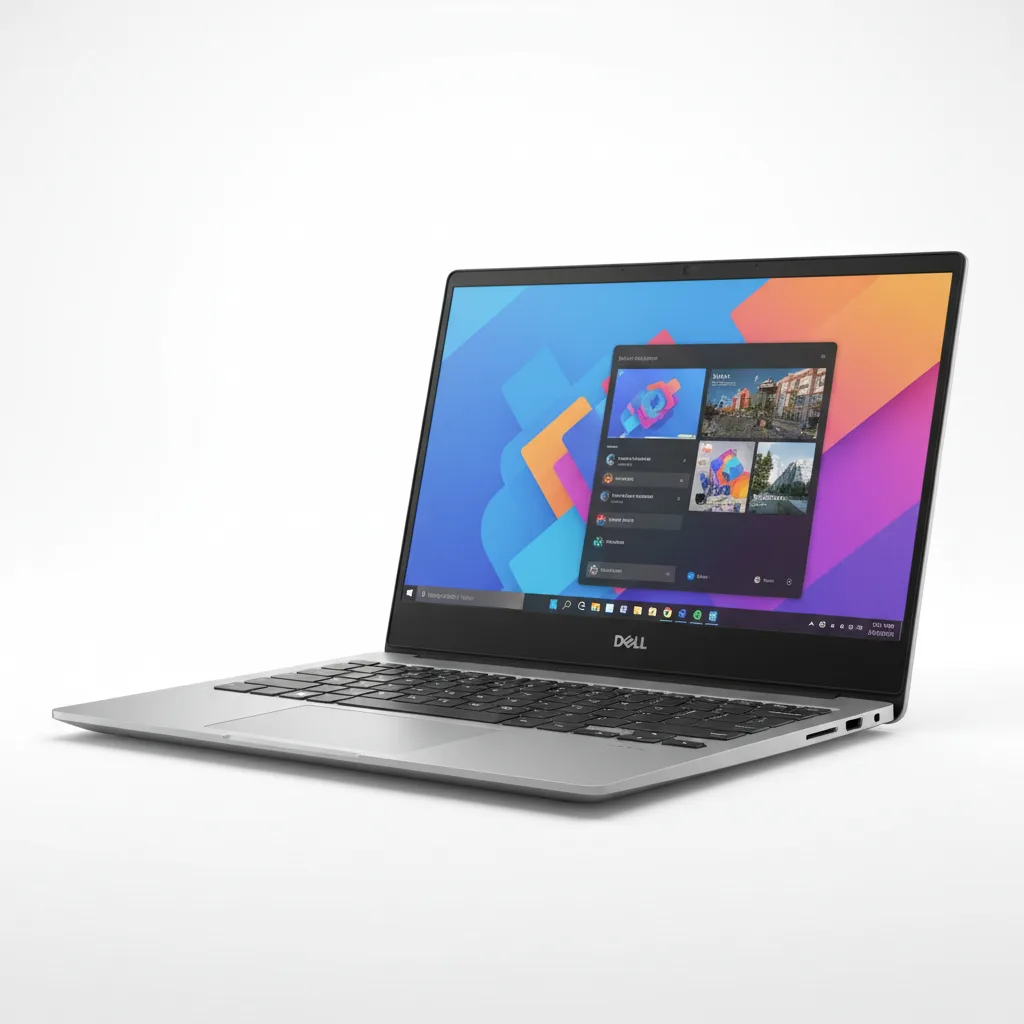
The Dell 16 Plus is a solid, sensible mid-range 16-inch laptop that does the fundamentals well: it's efficient, it lasts all day, its screen is sharp, and it's pleasant to work on. Its limits are equally clear and honest — modest sustained multithreaded performance, no real gaming, limited upgradability, and a value proposition that lives and dies by the sale price. Judged as what it actually is — an everyday productivity machine rather than the "powerhouse" some listings claim — it's a genuinely good choice for the right buyer at the right price. Catch it on sale near $799 and it's easy to recommend; pay full freight and you should shop around first.
The Dell 16 Plus is Dell’s 2025/26 mainstream 16-inch laptop — the machine that replaced the long-running Inspiron 16 Plus line under Dell’s simplified naming. It’s aimed squarely at everyday productivity: big screen, long battery life, efficient modern silicon, and a price that (on sale) is genuinely competitive. It is not a gaming laptop or a heavy-workload workstation, and understanding that boundary is the key to judging it fairly. This review covers what the real machine actually is, what it does well, where it falls short, and who should buy it. (For more of our tested, sourced write-ups, see the full reviews section.)
A note up front, because it matters for accuracy: the Dell 16 Plus ships in several configurations, and some older write-ups describe the wrong hardware entirely (a “12th Gen Core i7 with Iris Xe” — that’s the previous Inspiron generation, not this laptop). The current Dell 16 Plus runs Intel’s newer Core Ultra (Lunar Lake) platform with Intel Arc graphics. Everything below reflects the real, current machine.
Specifications (from Dell’s official documentation)
The mainstream clamshell model (Dell’s model code DB16250) is built around:
Processor: Intel Core Ultra Series 2 (“Lunar Lake”), with configurations spanning roughly the Core Ultra 7 256V up to the Core Ultra 9 288V, each including an integrated NPU for Copilot+ PC AI features.
Graphics: Intel Arc integrated graphics (no discrete GPU on this model).
Memory: LPDDR5X, soldered to the board — commonly 16GB, with 32GB configurations available. Because it’s soldered, RAM is not user-upgradeable, so choose your capacity at purchase.
Storage: A single M.2 2230 PCIe NVMe SSD, in capacities up to 1TB (2TB on higher configs). Per Dell’s manual, there’s one storage slot.
Display: A 16-inch 16:10 panel. The standard configuration is a 2,560 × 1,600 (2.5K/1600p) IPS display with a 120Hz refresh rate and roughly 300 nits brightness (a Mini-LED panel appears on certain 2-in-1 variants). Dell notably makes the sharp 1600p panel standard rather than offering a poor “base” screen.
Battery: A 4-cell, 64 Wh battery, charged over USB Type-C with the included 65W adapter.
Ports (exactly as Dell lists them): one USB 3.2 Gen 1 (5 Gbps) Type-A; one USB 3.2 Gen 2 (10 Gbps) Type-C with DisplayPort 1.4 and Power Delivery; one Thunderbolt 4 port with DisplayPort 2.1 and Power Delivery; one HDMI 2.1; and a 3.5mm headset jack. Two things worth flagging, because older reviews get them wrong: Dell’s manual explicitly lists no media-card (SD) reader and no security-cable (Kensington) slot on this model — both were dropped from the previous Inspiron generation.
Other: Wi-Fi 7 and Bluetooth 5.4, a 1080p/2MP webcam with IR (Windows Hello) and a physical privacy shutter, a backlit keyboard with a Copilot key and numeric pad, and a fingerprint reader integrated into the power button.
Performance: efficient and smooth for everyday work — with a real limit
For the workloads this laptop is built for, it performs well. Independent testing and hands-on reviews consistently report that it handles heavy multitasking — dozens of browser tabs, Office apps, PDFs, email, and light photo editing — smoothly and without slowdown, helped by the efficient Lunar Lake platform and Dell’s Optimizer power management. In everyday productivity terms, it’s snappy and more than adequate. TechRadar’s review recorded a Geekbench 6 result of roughly 2,718 single-core / 10,914 multi-core on the Core Ultra 7 256V configuration, reflecting strong single-threaded responsiveness.
Here is the honest limitation, and it’s the most important performance caveat: Lunar Lake trades heavy multithreaded muscle for efficiency. In sustained, heavily multithreaded workloads (video encoding, rendering), the Dell 16 Plus falls behind — PCWorld found it slower in Cinebench R20 and Handbrake than last year’s Meteor Lake Inspiron, and Notebookcheck measured roughly a 20% performance drop over time under sustained load in a CineBench loop, indicating the cooling can’t hold peak clocks indefinitely. So for spreadsheets, browsing, writing, and light creative work it’s excellent; for professional 4K video editing or CPU-heavy batch jobs, it’s not the right tool, and a Core-H or discrete-GPU machine would serve better.
Gaming is limited, as expected of integrated Arc graphics. It’s fine for light and older titles and CPU-driven games (reviewers report Civilization VII playable at 1080p), but demanding modern AAA games like Cyberpunk 2077 are not a realistic prospect. Don’t buy this as a gaming laptop.
AI features: the NPU enables Copilot+ PC capabilities, though, as PCWorld notes, Microsoft hasn’t yet made those a must-have reason to upgrade — treat them as a nice-to-have rather than a headline selling point today.
Battery life: a genuine strength
Battery life is one of the Dell 16 Plus’s best qualities. Across independent tests it comfortably delivers all-day endurance: TechRadar squeezed about 13 hours on a charge, PCWorld measured just over 14 hours in local video playback, and Micro Center’s PCMark office-battery run hit about 12.5 hours. Dell’s own “up to 20 hours” claim is best-case and won’t hold in mixed use, but the real-world numbers are strong for a 16-inch laptop, easily covering a full workday and then some. Charging over USB-C is reasonably quick (TechRadar: ~0–50% in about 40 minutes, full charge in a little under two hours), and USB-C charging means you can top up from a compatible power bank or monitor.
One fair critique from reviewers: at 64 Wh, the battery is on the smaller side for a 16-inch machine — Lunar Lake’s efficiency is doing the heavy lifting, and last year’s larger-battery model actually ran longer. The result is still very good, just not the efficiency showcase it might have been with a bigger cell.
Design, display, and build
The Dell 16 Plus has a clean, understated aluminum design (in finishes like Ice Blue or cloud gray) — professional rather than flashy, at home in an office, café, or lecture hall. At around 4+ lbs it’s a large 16-inch laptop that leans “desk-and-occasional-travel” rather than ultraportable.
The display earns consistent praise: the standard 2.5K 120Hz IPS panel is sharp and vibrant with good color for a matte, anti-glare screen, though at ~300 nits it’s fine outdoors only out of direct sun, and the bezels are chunkier than Dell’s premium XPS line. The 120Hz refresh makes everyday scrolling and UI feel smooth. The keyboard (full-size with number pad) and trackpad are well regarded; reviewers note the trackpad’s physical click could be a touch more refined, and the speakers are merely okay.
A practical serviceability note: the RAM is soldered and there’s a single M.2 slot, so post-purchase upgrades are limited to swapping the SSD — plan your memory needs before buying.
Price and value: good, but strongly price-dependent
This is where judgment matters most. The Dell 16 Plus’s value swings heavily on the price you pay. Configurations have been seen roughly $799 to $1,400+ in the US depending on chip, RAM, and storage. The consensus from reviewers is emphatic and worth repeating: it’s an excellent buy at sale prices around $799, and much less compelling at full prices near $1,150–$1,400. PCWorld put it plainly — enthusiastic at $799, “a lot less excited” at $1,149. At the higher end, machines with faster multithreaded CPUs or discrete graphics become competitive.
So the smart-shopper takeaway: the Dell 16 Plus is a genuinely good-value productivity laptop when bought on sale, and a merely okay one at full price. Check the current price against what you’re getting before deciding.
Frequently Asked Questions
How to set up the Dell 16 Plus laptop for the first time?
What is the Dell 16 Plus laptop used for?
Why is the Dell 16 Plus laptop so popular?
How long does the Dell 16 Plus laptop battery last?
+Pros
- Efficient Core Ultra (Lunar Lake) performance that's smooth for everyday productivity
- Excellent real-world battery life (~13–14 hours in independent tests)
- Sharp, standard 2.5K 120Hz IPS display
- Clean, solid build with a good keyboard, Wi-Fi 7, Thunderbolt 4, and Windows Hello (IR + fingerprint)
- Strong value at sale prices
- NPU for Copilot+ AI features
−Cons
- Weak sustained multithreaded performance (a Lunar Lake trait); throttles ~20% under prolonged load
- Not suitable for demanding gaming or heavy 4K video/rendering work
- Soldered RAM and a single SSD slot limit upgrades
- No SD card reader and no security-lock slot (dropped this generation)
- Only ~300-nit brightness; chunky bezels; average speakers
- Value drops off at full (non-sale) pricing