Gigabyte Radeon RX 9070 XT Gaming OC Review: AMD’s Best Value GPU in Years
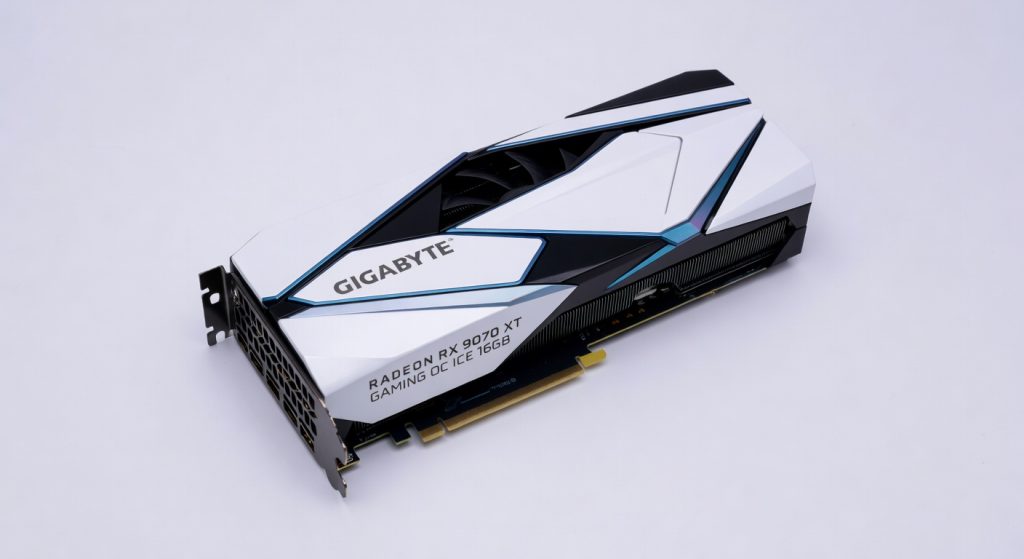
The Gigabyte Radeon RX 9070 XT Gaming OC is the best value graphics card available in 2026 for 1440p gaming. At its MSRP of $599 — or the Gigabyte Gaming OC's typical street price of $650–$700 — it consistently matches the RTX 5070 Ti across the majority of rasterized titles, a card AMD's competitor sells for $999 or more. Ray tracing remains NVIDIA's advantage, and the Gigabyte Gaming OC runs hotter and louder than the premium Ice variant. But for the price, no GPU delivers more playable performance per pound. ---
The Card AMD Needed: RX 9070 XT Gaming OC Review
The AMD Radeon RX 9000 series has had a rocky arrival — announced in early 2025, delayed repeatedly, and constrained by supply issues that pushed street prices well above AMD’s stated $599 MSRP. But the RX 9070 XT itself is not the problem. The underlying GPU is the most competitive mid-to-high-end AMD has shipped since the RX 6800 XT, and the Gigabyte Radeon RX 9070 XT Gaming OC represents one of the more straightforward partner card implementations available.
For context on where this card sits: the RX 9070 XT launched on March 5/6, 2025, alongside the non-XT RX 9070. The Gaming OC reviewed here is one of two Gigabyte variants — a more basic triple-fan model, in contrast to the premium Ice model (white finish, lower temperatures, higher price around $750). Both use the same GPU and the same factory overclock figures.
The RDNA 4 architecture inside represents AMD’s most significant generational leap since RDNA 2. The 3rd-generation Ray Accelerators promise up to 2× the ray tracing throughput of RDNA 3’s implementation — a claim that benchmark data partially supports, though NVIDIA maintains an advantage in the heaviest RT workloads.
1440p Performance: The Benchmark That Matters
At 1440p rasterized (without ray tracing), the RX 9070 XT Gaming OC is the story of the GPU market in 2025. GamersNexus found the 9070 XT and RTX 5070 Ti within 6% of each other in F1 24, Cyberpunk 2077, Resident Evil 4, Starfield, Total War: Warhammer 3, and Dragon’s Dogma 2 — alternating which card won depending on the title.
The RTX 5070 Ti retails for approximately $999. The RX 9070 XT MSRP is $599. This performance-per-dollar gap is the core of the 9070 XT’s value proposition, and it holds up across independent testing from TechSpot’s 14-card roundup, TechRadar’s Gaming OC Ice review, and Digital Citizen Life’s Gaming OC coverage.
At 4K native rasterized, the 9070 XT remains competitive — typically around 80–90 FPS in demanding titles. Activating FSR 4 in high-quality mode pushes many games past 100 FPS at 4K with minimal visual degradation, which is where the card’s 16 GB of VRAM proves its value over cards with 8 or 12 GB.
Ray Tracing: Improved, But Still Behind NVIDIA
The 3rd-generation Ray Accelerators in RDNA 4 deliver a genuine step forward. AMD’s RT performance relative to NVIDIA has improved meaningfully compared to RDNA 3’s often embarrassing RT numbers. In mixed-load RT games — titles that blend rasterization and ray tracing without going all-in — the 9070 XT is now genuinely competitive with the RTX 5070 Ti.
In fully RT-dependent titles like Black Myth: Wukong with Path Tracing enabled, the gap widens considerably in NVIDIA’s favour. This is consistent with GamersNexus’s assessment: AMD gets “crushed” in the most RT-heavy scenarios, but the gap has meaningfully closed in moderate RT usage. For the majority of gamers who use RT as a visual enhancement rather than a primary workload, the 9070 XT’s RT capability is now acceptable rather than embarrassing.
Cooling and Acoustics: The Gaming OC’s Weakness
This is the area where choosing a Gigabyte Gaming OC versus a premium model like the Sapphire Nitro+, PowerColor Red Devil, or even Gigabyte’s own Ice variant makes a meaningful difference. TechSpot’s 14-card roundup found the Gaming OC among the hottest and loudest cards under sustained load — temperatures reaching toward the upper end of the 80–85°C range that most RX 9070 XT cards occupy, with fan noise to match.
Switching to Silent BIOS mode reduces noise meaningfully — TechRadar’s Ice variant testing showed Silent mode dropping fan noise below 30 dB — but peak temperatures rise to around 65°C in that configuration (Ice variant) or higher on the standard Gaming OC. For a build where acoustics matter, the Gaming OC is not the recommended Gigabyte variant; the Ice costs more but runs measurably cooler and quieter.
Gigabyte Gaming OC vs Ice: Which to Buy?
The standard Gaming OC and Ice share identical GPU specs, factory clock speeds, and feature sets including dual BIOS and dual HDMI outputs. The differences: the Ice has a white and silver finish suited to light-themed builds, slightly lower peak temperatures, and slightly lower noise. The Ice retails around $750 versus the Gaming OC’s $650–$700.
If you have a dark build or budget is the priority: Gaming OC. If you have a white or windowed build and want the best thermal performance from a Gigabyte RX 9070 XT: Ice. If thermal performance is the absolute priority regardless of brand: Sapphire Nitro+ or PowerColor Red Devil, which TechSpot’s roundup places as top thermal performers.
Verdict
The AMD Radeon RX 9070 XT is the GPU market’s most important product in years — a genuine high-performance option from AMD that makes NVIDIA defend a $999 price point for the RTX 5070 Ti. The Gigabyte Gaming OC delivers that performance with a factory overclock, dual HDMI, and a competent but not exceptional cooling solution at $650–$700. The thermal performance is the card’s meaningful weakness versus premium alternatives.
For 1440p gaming — the target resolution for the majority of PC gamers with high-refresh monitors — no card at this price delivers comparable performance. At 4K with FSR 4, it is competitive. In ray tracing, NVIDIA leads in heavy workloads. For everything else, this is the card the performance-per-dollar chart demands.
Rating: 4.5 / 5 — The best value GPU for 1440p gaming in 2026, with caveats for thermal-sensitive builds and ray tracing enthusiasts.
Frequently Asked Questions
How does the Gigabyte RX 9070 XT compare to the RTX 5070 Ti?
Does the RX 9070 XT support FSR 4?
What power supply do I need for the Gigabyte RX 9070 XT?
Is the Gigabyte Gaming OC or Gaming OC Ice better?
Does the RX 9070 XT work well for content creation?
+Pros
- Matches RTX 5070 Ti in most 1440p rasterized benchmarks — at $300 less
- 16 GB GDDR6 VRAM is class-leading at sub-$700 pricing
- Factory overclock delivers ~5% better performance than reference RX 9070 XT
- Dual HDMI outputs — useful for multi-monitor setups or TV + monitor configurations
- Dual BIOS allows switching between Performance and Silent modes without software
- Full aluminum backplate is premium for this price tier
- PCIe 5.0 support for maximum bandwidth with current-gen platforms
- FSR 4 + AMD Fluid Motion Frames make 4K gaming viable in most titles
- 3rd-generation Ray Accelerators mark genuine RDNA 4 improvement over RDNA 3
- 64 MB Infinity Cache effectively boosts bandwidth at 4K without memory bandwidth penalty
−Cons
- Gigabyte Gaming OC runs hotter than competing models — among the worst in TechSpot's 14-card roundup
- Noise levels higher than average under load in Performance BIOS mode
- Ray tracing still lags behind NVIDIA RTX 5070 Ti — gap widens in RT-heavy titles
- Street prices significantly above $599 MSRP at launch due to limited availability
- Three 8-pin power connectors required — older PSUs may need adapter cables
- No USB-C display output
- 2.8-slot design requires checking case clearance before purchase
- AMD software (Adrenalin) less polished than NVIDIA GeForce Experience for some users