Motorola Razr Fold: A Versatile and Durable Foldable Smartphone
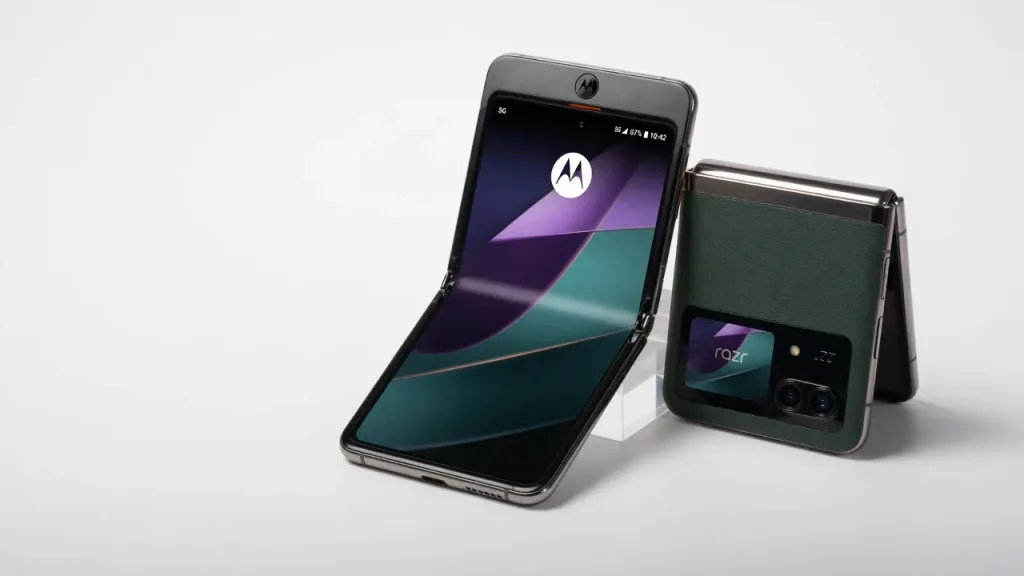
Motorola's first book-style foldable is a genuinely impressive debut — outstanding battery life, a triple 50MP camera system with DXOMARK's Gold Rating, and two of the brightest foldable displays available. It undercuts the Galaxy Z Fold 7 by $100 while matching or beating it in most categories. The Snapdragon 8 Gen 5 (not Elite) and the stylus living outside the phone are the headline compromises. For anyone who has been waiting for a credible alternative to Samsung in the large foldable space, the wait is over. ---
A First Attempt That Doesn’t Feel Like One
Motorola has been building flip-style foldables since 2019, and that years of hinge-engineering experience shows in the Razr Fold. This is Motorola’s first book-style foldable — the kind that opens like a small tablet rather than folding vertically — and it arrives with a level of polish that first-generation devices rarely achieve.
Announced at CES 2026 in January, shown in full at MWC on March 1, and on shelves from May 21, the Razr Fold enters a US market where it has exactly one direct competitor: the Samsung Galaxy Z Fold 7 at $1,999. The Pixel 10 Pro Fold sits at $1,799, making the Razr Fold’s $1,899 price the midpoint of the three. That positioning is deliberate — Motorola is not trying to undercut the category, but to compete on merit while costing slightly less than Samsung.
After extended testing, the verdict is that it succeeds — not by outrunning Samsung in every specification, but by making different trade-offs that many buyers will find more liveable.
Design: Approachable Where Competitors Are Clinical
The Razr Fold is 9.89mm thick when closed and 4.55mm unfolded — measurements that place it among the slimmer large foldables available. At 243g, it is not light, but the weight is distributed well enough to avoid discomfort during extended use. The rounded corners and softer silhouette stand apart from the more angular Pixel 10 Pro Fold and Galaxy Z Fold 7, giving the device a more premium, less utilitarian feel.
Gorilla Glass Ceramic 3 protects the outer display — a debut on this device and the Razr Ultra 2026 — while an anti-shock film covers the inner panel. The stainless steel hinge with titanium inner plate is engineered to withstand ten years of folding without degradation, according to Motorola’s own stress testing. IP48 and IP49 ratings provide both dust resistance and water resistance, though long-term durability confidence still trails Samsung’s hardware slightly based on the shorter track record.
The camera bump is a gradual slope rather than a hard island, which improves grip when holding the phone one-handed. Two colourways are available — Pantone Blackened Blue and Lily White — with the Lily White model using a silicone back with a silk-inspired finish that feels genuinely different in hand.
Displays: Two Genuinely Excellent Screens
The cover display is where most book-style foldables disappoint, offering a narrow secondary panel that is more ornamental than functional. The Razr Fold’s 6.6-inch, 165Hz cover display is the exception. It is wide enough to handle full messaging, web browsing, and social media comfortably without ever opening the phone. This matters for day-to-day use more than any single specification.
The inner 8.1-inch 2K LTPO display matches the Pantone colour validation and Dolby Vision support of the cover screen. Both panels are capable of 6,000+ nits peak brightness in manufacturer testing. Real-world measurements tell a slightly different story — independent testing found the inner display topping out at just over 2,000 nits at 20% white level, which is competitive but below what the marketed headline suggests. In practice, outdoor visibility is strong, and colour accuracy is excellent. The crease, visible under angled light, is less pronounced than earlier foldable generations.
Opening an app on the cover screen and continuing on the inner display creates one of the more seamless transition experiences available in a foldable. Triple-app split-screen is accessible by dragging from the taskbar. Proactive Split-Screen suggests opening two apps simultaneously when Hello UI detects you are switching between them repeatedly.
Performance: Capable, Not Class-Leading
The Snapdragon 8 Gen 5 in the Razr Fold is Qualcomm’s 2026 mainstream flagship chip — the same generation as Samsung’s and Google’s best, but without the “Elite” designation that the Galaxy Z Fold 7 and Pixel 10 Pro Fold carry. In practice, the difference matters for sustained gaming and heavy AI workloads but is largely invisible in everyday use. Forbes Vetted benchmarked the Razr Fold using Geekbench 6 and found performance comparable to Samsung Galaxy S26 Ultra in general computing tasks.
For productivity, creative work, and even demanding mobile games, the Razr Fold is more than sufficient. For buyers who expect to push the hardware to its limits with AI-heavy tasks or high-frame-rate gaming, the gap to the Elite chip becomes more relevant over time.
16GB of RAM ensures aggressive app retention and smooth multitasking across the large inner display. The single 512GB storage configuration is generous but limits flexibility — there is no lower-cost entry tier and no 1TB option for heavy users.
Camera System: The Headline Feature, For Good Reason
Three 50MP cameras on a foldable is genuinely unusual. Most competitors compromise on the secondary sensors — Motorola does not. The main 50MP Sony Lytia 828 sensor with OIS handles low-light and portrait work with the kind of detail retention that placed the Razr Fold in DXOMARK’s top tier for foldable devices, earning the Gold Rating in March 2026. Motorola’s own materials describe it as the “#1 foldable camera system” at that point.
The 50MP ultrawide doubles as a macro sensor, a combination that eliminates the need for a dedicated macro camera. The 50MP periscope telephoto with 3x optical zoom and up to 100x digital zoom rounds out a system that is genuinely versatile rather than merely complete on paper.
Two selfie cameras — 32MP on the cover display and 20MP inside — mean there is always a high-quality option regardless of how the phone is being held. Video includes Dolby Vision recording support.
The Moto Pen Ultra ($99 separately) supports stylus input on both screens, with tilt detection, pressure sensitivity, and palm rejection. The absence of a garage inside the phone is the significant practical limitation — most reviewers found themselves leaving the stylus at home, which is the predictable outcome for any stylus that requires its own carrying case.
Battery and Charging: The Razr Fold’s Clearest Advantage
6,000mAh is the largest battery in any book-style foldable available today. The Galaxy Z Fold 7 carries 4,400mAh — a 36% difference. The Pixel 10 Pro Fold has 5,015mAh. Under heavy use — unfolded display, active multitasking — Forbes Vetted found approximately 8% battery consumption during two hours of Netflix streaming combined with wireless display use, suggesting all-day endurance even for demanding users.
80W wired TurboPower charging can add twelve or more hours of use in under ten minutes of charging. 50W wireless charging is the fastest in the book-style foldable category. Combined with the large battery, the Razr Fold largely eliminates charging anxiety — one of the more practical quality-of-life advantages in the device’s favour.
Software: Clean, Practical, and Occasionally Behind
Android 16 runs under Motorola’s Hello UI skin, which is closer to stock Android than Samsung’s One UI. The trade-off is fewer foldable-specific refinements — the Galaxy Z Fold 7's app drawer flexibility and some multitasking gestures are absent from the Razr Fold experience. Moto AI features — Catch Me Up for notification summaries, Next Move for context-aware suggestions, Sketch to Image for AI-generated illustrations — are present but feel less polished than Samsung Galaxy AI or Google’s Gemini integration.
The software highlight is the seven-year update commitment. Motorola’s flip-style Razr lineup (including the Razr 2026, Razr Plus 2026, and Razr Ultra 2026) gets only three years of OS updates. The Razr Fold, alongside the Motorola Signature, is the exception — seven years of both OS and security updates, matching Samsung and Google. For a device at this price point, that commitment is table stakes, and Motorola has delivered it.
How It Compares
The Galaxy Z Fold 7 at $1,999 is faster (Snapdragon 8 Elite), has a more mature software ecosystem, and has a proven durability track record. It costs $100 more and has a significantly smaller 4,400mAh battery. The Pixel 10 Pro Fold at $1,799 saves $100 and carries the Elite chip, but its camera and battery do not match the Razr Fold’s numbers.
For most buyers in 2026, the choice between the Razr Fold and Galaxy Z Fold 7 comes down to priorities. If battery life and camera versatility are paramount, and the slightly slower chip is an acceptable trade, the Razr Fold makes a compelling case — especially at $100 less. Samsung loyalists who value One UI depth and the brand’s multi-year hardware track record will remain where they are.
One caveat: Samsung’s Galaxy Z Fold 8 series is expected later in 2026. Buyers in no immediate rush may benefit from waiting to see how the competitive landscape shifts.
Verdict
The Motorola Razr Fold is not the perfect foldable, but it is the most complete alternative to Samsung that the US market has ever had. The 6,000mAh battery is class-defining. The triple 50MP camera system delivers at a level that earned independent verification from DXOMARK. The displays are large, bright, and practically sized. Seven years of software support confirms this is a device Motorola built to last.
The Snapdragon 8 Gen 5 (not Elite) and the ungaraged stylus are real compromises. At $1,899, neither is disqualifying. If you have been waiting for a book-style foldable that is not a Galaxy, the Razr Fold is the answer — and it arrives more ready than anyone had a right to expect from a first attempt.
Rating: 4.3 / 5 — The best book-style foldable alternative to Samsung available in 2026.
Frequently Asked Questions
How does the Motorola Razr Fold compare to the Samsung Galaxy Z Fold 7?
Does the Motorola Razr Fold come with the Moto Pen Ultra stylus?
Is the Razr Fold available on all US carriers?
What is the real-world battery life of the Motorola Razr Fold?
Does the Razr Fold support 4K video recording?
Is the Motorola Razr Fold worth buying in mid-2026 with Samsung's Galaxy Z Fold 8 coming later this year?
What does IP48 + IP49 mean for the Razr Fold?
How long will Motorola support the Razr Fold with software updates?
+Pros
- Largest battery of any book-style foldable — 6,000mAh vs Galaxy Z Fold 7's 4,400mAh
- All three rear cameras are 50MP — no compromised "secondary" sensors
- DXOMARK Gold Rating, confirmed as "#1 foldable camera system" in March 2026
- 7 years of OS and security updates — matches Samsung and Google's commitments
- Cover display is genuinely useful at 6.6 inches, 165Hz, 6,000 nits peak brightness
- 80W wired + 50W wireless charging — fastest charging in the book-style foldable category
- $100 cheaper than Galaxy Z Fold 7 at launch
- Moto Pen Ultra works on both inner and cover displays
- Clean, lightweight Hello UI skin on Android 16 — close to stock experience
- Rounded, approachable design — less industrial than Pixel 10 Pro Fold or Galaxy Z Fold 7
−Cons
- Snapdragon 8 Gen 5 (not Elite) — the chip Samsung and Google use in their 2026 flagships
- Stylus is not garaged — must be carried separately, reducing practical daily use
- Only available at T-Mobile in the US — AT&T and Verizon largely absent at launch
- 512GB is the only storage option — no 256GB entry tier or 1TB premium option
- Measured real-world brightness (~2,000 nits) falls short of the marketed 6,200 nit headline figure
- No expandable storage (no microSD)
- Camera crease remains visible under certain lighting — foldable physics, not a flaw unique to Motorola
- Heavier than flagship slab phones at 243g
- Moto AI features less refined than Samsung Galaxy AI or Google's Gemini integration