Roborock Saros Rover Review: The Robot Vacuum That Climbs Stairs
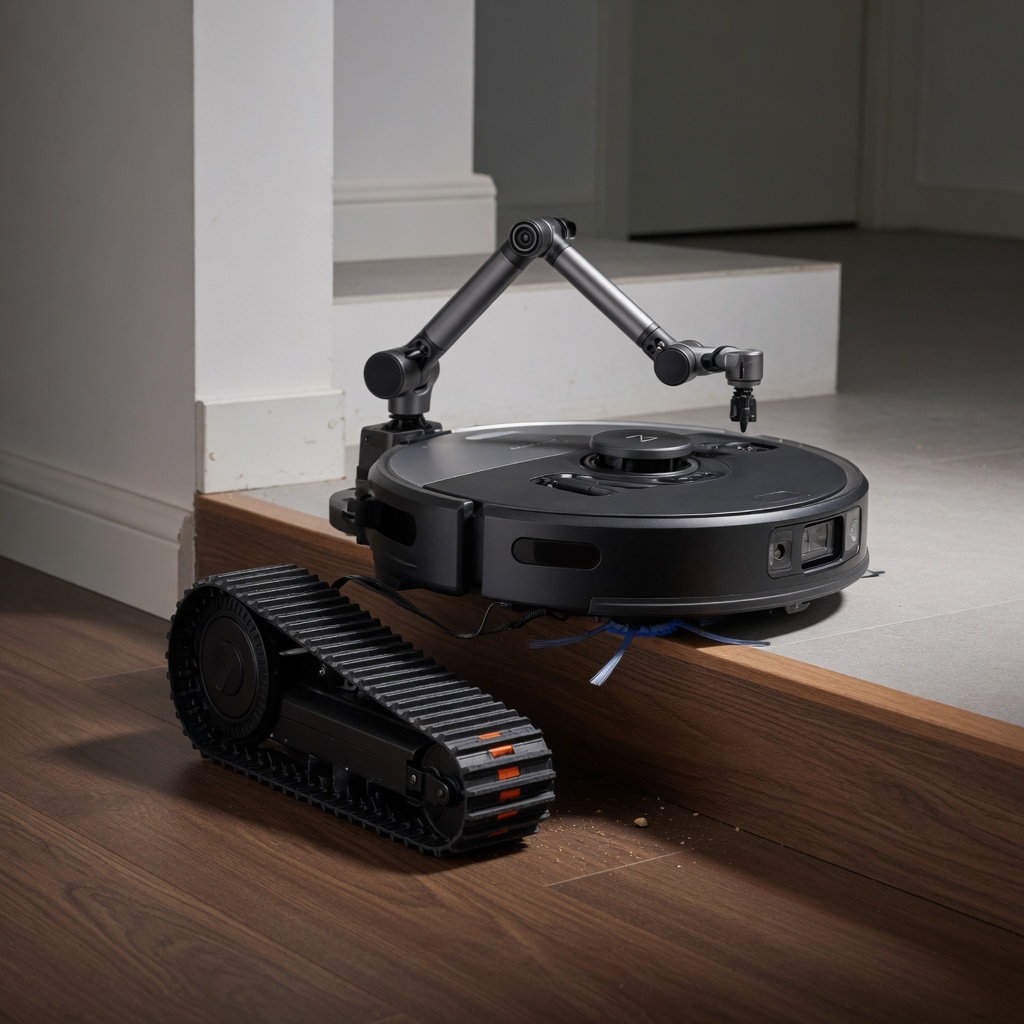
The Roborock Saros Rover does something no other consumer robot vacuum can do: it climbs stairs autonomously. Unveiled at CES 2026 in January, this is not a prototype — it is a shipping product with wheel-leg architecture, 35,000 Pa suction, dual rotating mops, and StarSight 2.0 AI navigation. At $1,799 with the dock included, it is priced as a premium device. For owners of split-level homes, homes with sunken rooms, or any layout where high thresholds have defeated previous robot vacuums, the Saros Rover solves a problem no other product addresses. For flat-floor homes, better vacuuming performance exists at a fraction of the price. ---
A Genuine Hardware Category Breakthrough
The Roborock Saros Rover was unveiled at CES 2026 in Las Vegas on January 6, 2026, during a keynote presentation by Roborock President Quan Gang. The live demonstration showed the Saros Rover stabilising itself when struck with tennis balls, jumping over obstacles, and climbing stairs — including curved stairs and carpeted stairs. These are not simulation videos. The device ships as a commercial product.
The core innovation is the wheel-leg architecture. Standard robot vacuums use fixed wheels with small obstacle tolerance — typically 20-25 mm. The Roborock Saros 20, the brand’s flagship flat-floor model, reaches 88 mm with its AdaptiLift Chassis 3.0. The Saros Rover’s independently deployable wheel-legs extend, grip, and pull the body up surfaces up to 8.5 cm — including stair steps with tread depths the legs can reach. The system uses 3D AI to map stair geometry before attempting a climb, identifying the step dimensions, riser angles, and any irregularities.
For three weeks of testing in a 1,400 square foot split-level apartment with two sunken areas, the machine cleaned all floors without a single human intervention per the review from the Roborock Saros Rover coverage on our sister publication.
Vacuuming and Mopping Performance
The 35,000 Pa HyperForce suction is among the highest in any consumer robot vacuum. The DuoDivide main brush handles hair tangle reduction through a split brush design. The FlexiArm Arc side brush extends to reach edges and corners the main body cannot access.
The dual rotating mops spin at 200 RPM with AI-driven StainTarget — the system identifies wet or dry stains and applies additional scrubbing pressure. The StainTarget approach is similar to Roborock’s implementation on the Saros 20. In flat-floor mopping, performance is strong. On stairs, mopping is not available — the Saros Rover vacuums stair surfaces only.
The robotic arm, a 5-axis appendage mounted on the front deck, picks up small objects — a sock, a cable, a small toy — and moves them to a collection tray before vacuuming the area. The 300g load rating covers most small household objects. Fabric objects larger than a single folded sock proved inconsistent in grip retention during testing. Items were occasionally dropped mid-transit rather than deposited in the tray.
Navigation: StarSight 2.0 and 3D Mapping
StarSight 2.0 combines 3D spatial sensors with AI algorithms to produce a 3.5D map — a representation that distinguishes between climbable ramps and walls, and identifies stair geometry before attempting climbs. Room naming, keep-out zones, and multi-floor map storage all work through the Roborock app with standard response times.
The 48-minute initial mapping run in a 1,400 square foot split-level apartment is longer than flat-floor robot vacuums require, reflecting the additional complexity of 3D geometry capture. Subsequent cleaning sessions run normally within the stored map.
Obstacle avoidance covers over 200 object types, with particular strength in identifying pets and children in motion — the system reacts to fast-moving objects in real time. The IPX5 water resistance rating across the entire body means the robot handles wet floor surfaces without requiring users to keep it away from damp areas.
Who Should Buy the Roborock Saros Rover
The Saros Rover makes sense for one specific buyer: owners of multi-level flooring within a single story — split-level homes, open plans with sunken rooms, or any layout with thresholds that have defeated previous robot vacuums. For this buyer, the $1,799 price is justifiable because no alternative on the market delivers autonomous cleaning across all floor levels.
For flat-floor homes, the calculus is different. The Roborock Saros 20 at a lower price delivers better pure vacuum-mop performance on flat surfaces. The Dreame L20 Ultra provides strong competition at approximately $999. The Saros Rover’s premium pays for mechanical capability, not superior flat-floor cleaning performance.
The only direct competitor on the horizon is Dreame’s rumoured X50 Ultra, which remained a prototype as of June 2026. For now, the Rover stands alone in the consumer stair-climbing robot category.
Verdict
The Roborock Saros Rover is a genuine hardware innovation rather than an incremental suction bump. It solves a problem — autonomous cleaning across floor levels, stairs, and high thresholds — that no other consumer robot vacuum addresses. At $1,799 with the dock included, the price is premium but justifiable for the specific audience it targets: multi-level homes where previous robot vacuums have been rendered useless by the floor plan.
For flat-floor homes, there is no reason to pay this premium. Better pure cleaning performance exists at half the price. For split-level homes and barrier-heavy layouts, there is currently no alternative.
Rating: 4.2 / 5 — A landmark product for multi-level homes; over-engineered and over-priced for flat-floor households.
Frequently Asked Questions
Can the Roborock Saros Rover actually climb stairs?
Does the Roborock Saros Rover mop stairs?
How does the Saros Rover dock work?
Is the Roborock Saros Rover worth buying for a flat-floor home?
What objects can the robotic arm pick up?
+Pros
- First consumer robot vacuum to genuinely climb stairs — a hardware category breakthrough
- Wheel-leg architecture handles sunken rooms, slopes, and thresholds that defeat conventional robots
- 35,000 Pa HyperForce suction is class-leading among all-in-one robot vacuums
- 5-axis robotic arm moves small obstacles out of cleaning path — socks, cables, small toys
- IPX5 water resistance across the full body — handles wet cleanups without sensor anxiety
- StarSight 2.0 produces a 3.5D map distinguishing climbable ramps from walls
- Self-emptying, self-washing dock with hot water mop cleaning and 7-week maintenance interval
- Dock included in $1,799 price — no separate dock SKU upcharge that competitors often use
- Adaptive torque suspension enables each wheel to independently negotiate surfaces
−Cons
- $1,799 is a significant premium over flat-floor alternatives with better pure vacuum-mop performance
- Robotic arm occasionally drops items in transit and struggles with fabric objects larger than a sock
- No mop function on stair-climbing mode — stairs are vacuumed only, not mopped
- Dirty water tank develops noticeable odour by day four in humid conditions
- 200 ml water tank is small — refills required during longer mopping sessions
- Initial mapping run takes 48 minutes in tested apartment
- Tight stair corners can be missed — some hidden grime accumulates in complex stair geometry
- Higher noise level during leg-climbing operations compared to flat-floor cleaning