Sony Bravia 9 II First Look: True RGB Arrives as Sony’s 2026 LCD Flagship
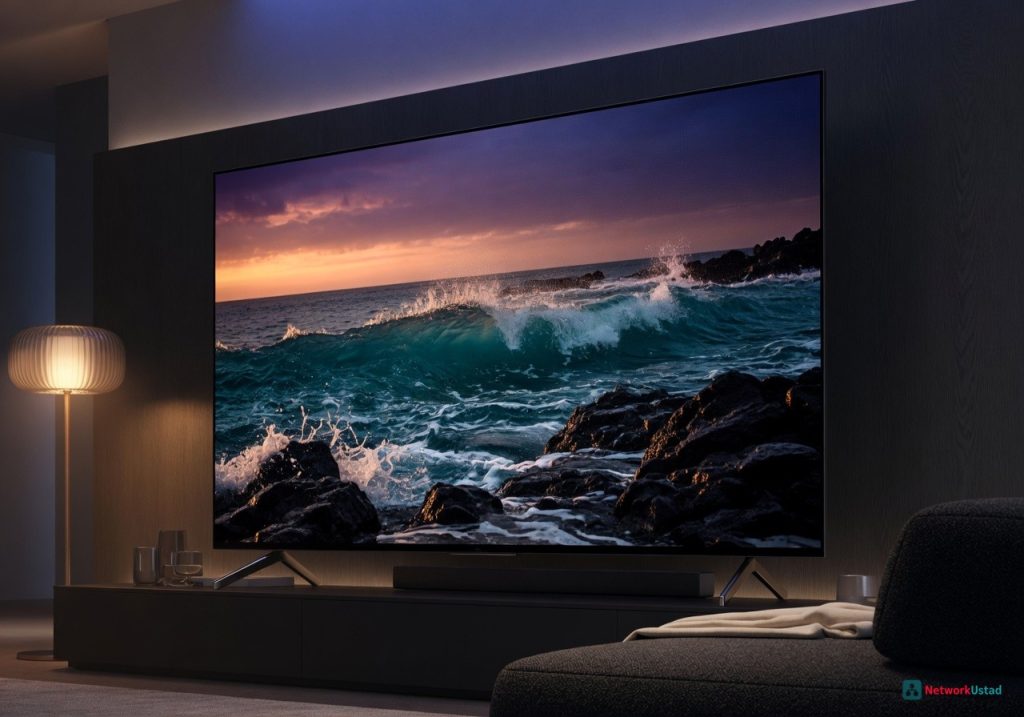
The Sony Bravia 9 II is the most significant development in LCD TV technology in years. Its True RGB backlight delivers 4,250 nits of measured peak brightness and colour accuracy that rivals professional mastering monitors — at a fraction of the cost. Two HDMI 2.1 ports and an unchanged processor are real limitations at this price, and OLED still holds the edge in dark rooms. But for bright-room HDR viewing and colour fidelity, nothing currently beats it. ---
Preview based on Sony’s May 27, 2026 launch and hands-on demonstrations. Full performance testing to follow once a retail unit is available.
Sony has a new flagship LCD television for 2026, and it marks the most significant change to the company’s backlight technology in years. The Bravia 9 II replaces 2024’s Bravia 9 and becomes the first Sony TV to use what the company calls “True RGB” — a backlight built from independently driven red, green, and blue LEDs rather than the blue-LED-plus-phosphor arrangement found in conventional Mini-LED sets.
If you’re shopping at the top of Sony’s range this year, this is the headline model. Here’s what it actually is, what’s genuinely new, and where Sony has made some compromises worth knowing about before you pre-order.
What “True RGB” Actually Means
Traditional Mini-LED TVs, including Sony’s own previous flagships, light the panel with blue LEDs and generate other colors through color filters and quantum-dot layers. Sony’s True RGB approach instead uses three separately controlled LED colors, driven by a processor Sony brands the RGB Backlight Master Drive Pro.
The practical payoff is color. By producing red, green, and blue light directly at the backlight, the panel can render purer, more saturated colors that push closer to the BT.2020 color space underpinning modern HDR formats like Dolby Vision and HDR10+. In side-by-side demonstrations against the outgoing Bravia 9 (Mini-LED) and the Bravia 8 II (QD-OLED), the Bravia 9 II showed noticeably more saturated color when content called for it, measured against a Sony BVM-HX3110 mastering monitor — the same class of reference display used in professional film studios.
Sony has been working toward this for a long time. The company points out it shipped an RGB-backlit LCD as far back as 2004’s Qualia 005, though that early set lacked local dimming and independent RGB control. The “True RGB” name is also a bit of a competitive jab: several rivals — Hisense, Samsung, LG, Philips, and TCL — are rolling out their own RGB LED sets in 2026, and Sony is signaling that not all of these systems use genuinely independent per-color control.
Brightness and Color Volume
This is where I have to be careful, because Sony declined to publish exact brightness figures — and that’s precisely the kind of detail that shouldn’t be invented.
What Sony did indicate is that the Bravia 9 II approaches roughly 4,000 nits of peak brightness, the same target as the HX3110 reference monitor. In the brightest demo scenes, it closely tracked the reference monitor’s output, including a 4,000-nit Sony Pictures demo clip. Sony also stated the Bravia 9 II is about twice as bright as the step-down Bravia 7 II, which implies the 7 II lands somewhere around 2,000 nits. Treat these as manufacturer-guided estimates, not measured results — independent testing will settle the real numbers.
One genuinely striking claim held up in the demos: both the Bravia 9 II and the QD-OLED Bravia 8 II now cover a wider slice of the BT.2020 gamut than the professional reference monitor they were shown against. Combined with the high brightness, that translates into a large color volume — the ability to hold saturated color even in bright highlights, which is where many displays desaturate.
Panel, Screen Finish, and Dimming Zones
The Bravia 9 II uses a VA-type LCD panel and, in its 65-, 75-, and 85-inch sizes, a matte screen film that does an effective job suppressing reflections. That anti-reflection finish is a real advantage in bright rooms, though it comes with a trade-off seen in the demos: it can slightly soften highlight intensity and reduce the “sparkle” of specular highlights. Whether that’s a fair exchange will depend on your room and taste, and it’s something worth judging in person.
Notably, the largest 115-inch model does not use the matte screen and adopts a different stand design, so glare handling on that size will differ from the rest of the range.
On dimming zones, the picture is more measured than the pre-launch prototype suggested. On a 2024 prototype, hands-on inspection counted roughly 3,840 zones, but Sony appears to have scaled the structure back for production. On the final 65-inch unit, careful inspection of the exposed backlight counted 60 RGB LEDs vertically by 102 horizontally, with each dimming zone controlling four LEDs — working out to about 1,530 dimming zones. That’s only marginally more than the roughly 1,512 zones on the 2024 Bravia 9. Zone count is one determinant of local-dimming precision, though Sony reasonably argues that driving algorithms matter just as much as raw zone numbers.
The Real Compromise: Connectivity
Here’s the part that deserves the most scrutiny, and it’s a legitimate disappointment.
While Sony upgraded the backlight, it did not upgrade the underlying hardware platform, which still appears to be the aging MediaTek Pentonic 1000 chip. The consequence: the Bravia 9 II ships with only two HDMI 2.1 ports alongside two HDMI 2.0 ports. That’s the same limitation Sony’s flagships have carried for a few years now — and it looks worse in 2026, because Sony’s own much cheaper mid-range Bravia 3 II moved to the newer Pentonic 800 chip and offers four HDMI 2.1 ports, as do many competitors.
For anyone connecting a PS5, an Xbox Series X, and a gaming PC simultaneously, two HDMI 2.1 ports is a real constraint. Sony’s HDMI 2.1 ports do support the important features — 4K120, VRR, ALLM, and eARC — but two is simply fewer than a flagship at this price should offer. Sony explained the limitation is tied to building True RGB on the existing chipset, which is an explanation, not really an excuse.
A second consequence of the older chip: the Bravia 9 II cannot support Dolby Vision 2. Sony says it’s neither for nor against the new format and will continue supporting standard Dolby Vision in 2026. If future-proofing against Dolby Vision 2 matters to you, factor that in.
Sizes and Availability
The Bravia 9 II is offered in 65, 75, 85, and — for the first time in a Sony TV — a 115-inch size. That 115-inch model is Sony’s first television at that scale and, as noted, differs from its smaller siblings in screen finish and stand.
Pre-orders opened May 27, 2026. Exact pricing varies by region and size and has been reported inconsistently across outlets, so confirm the current figure with a retailer for the size you want rather than relying on a launch estimate. What’s clear is that this is a premium flagship: expect flagship-tier pricing, climbing steeply for the 115-inch.
Smart Platform and Extras
Both the Bravia 9 II and the step-down 7 II run Google TV and carry Sony’s usual feature set: a dedicated PS5 game menu, Sony Pictures Core streaming, Dolby Vision, Dolby Atmos, DTS:X, IMAX Enhanced, and Acoustic Multi-Audio+, where sound is emitted partly from the TV frame to anchor dialogue to the screen. New this year is a redesigned remote that is finally backlit and rechargeable over USB-C, plus Direct Connect, a proprietary system that lets compatible Sony wireless subwoofers and rear speakers pair directly to the TV without a soundbar.
Where It Sits Against OLED
Worth keeping in perspective: in the same demonstrations, Sony’s own QD-OLED Bravia 8 II still outperformed the Bravia 9 II in some areas — unsurprising, given OLED’s per-pixel control and black levels. True RGB’s advantages are brightness, color volume in bright highlights, large-size availability, and bright-room performance thanks to the matte screen. OLED’s advantages remain contrast, off-angle consistency, and absolute black. The Bravia 9 II is not trying to beat OLED at OLED’s strengths; it’s making the case that a high-brightness RGB LCD can deliver more color volume and scale to sizes OLED can’t easily reach.
Early Verdict
On the strength of Sony’s demonstrations, the Bravia 9 II looks like a clear and meaningful upgrade over 2024’s Bravia 9, with genuinely improved color volume, strong brightness, reduced banding, wider viewing angles, and effective reflection handling. The True RGB backlight is a real technological step, not just a marketing rebrand.
But two caveats keep this from being an unqualified recommendation on paper. First, the connectivity is disappointing for a 2026 flagship — two HDMI 2.1 ports and no Dolby Vision 2 support, both traceable to a chip Sony chose not to upgrade. Second, everything above is based on controlled demos rather than independent testing in a real room, so brightness figures, dimming behavior, and the matte screen’s real-world trade-offs all need to be verified before any final judgment.
If you want the biggest, brightest, most colorful LCD Sony has ever made and you don’t need more than two next-gen HDMI inputs, the Bravia 9 II is shaping up to be one of 2026’s most interesting premium TVs. If you’re a multi-console gamer or you want maximum future-proofing, the port situation is a real reason to pause. Either way, wait for full testing before you commit — and never trust a spec you can’t source.
This preview reflects information available at Sony’s May 2026 launch. Specifications, pricing, and availability may change. Figures Sony declined to confirm are identified as estimates and should be treated as provisional pending independent measurement.
+Pros
- True RGB backlight delivers class-leading color volume—wider BT.2020 coverage than the professional reference monitor it was demoed against
- Very high peak brightness, approaching ~4,000 nits (Sony-guided, pending independent testing)
- Effective matte anti-reflection screen makes it a strong performer in bright rooms
- Wide viewing angles with consistent color off-axis, thanks to X-Wide Angle Pro
- Available up to a 115-inch size—Sony's first TV at that scale, with color volume OLED can't match at large sizes
- Reduced color banding and improved gradation over the 2024 Bravia 9
- New backlit, USB-C rechargeable remote and redesigned Google TV interface
- Direct Connect pairs Sony wireless subs and rear speakers without a soundbar
−Cons
- Only two HDMI 2.1 ports (plus two HDMI 2.0)—a real limitation for multi-console gamers, and fewer than Sony's own cheaper Bravia 3 II
- No Dolby Vision 2 support, due to the carried-over MediaTek Pentonic 1000 chip
- Flagship-tier pricing, climbing steeply at the 115-inch size
- QD-OLED (including Sony's own Bravia 8 II) still beats it on contrast and absolute black levels
- Matte screen can slightly soften highlight intensity and specular "sparkle"
- The 115-inch model drops the matte finish, so glare handling differs on the largest size
- Dimming zone count (~1,530 on the 65-inch) is only marginally higher than the previous generation