Vankyo Performance H500R Review: Solid Home Theater Performance
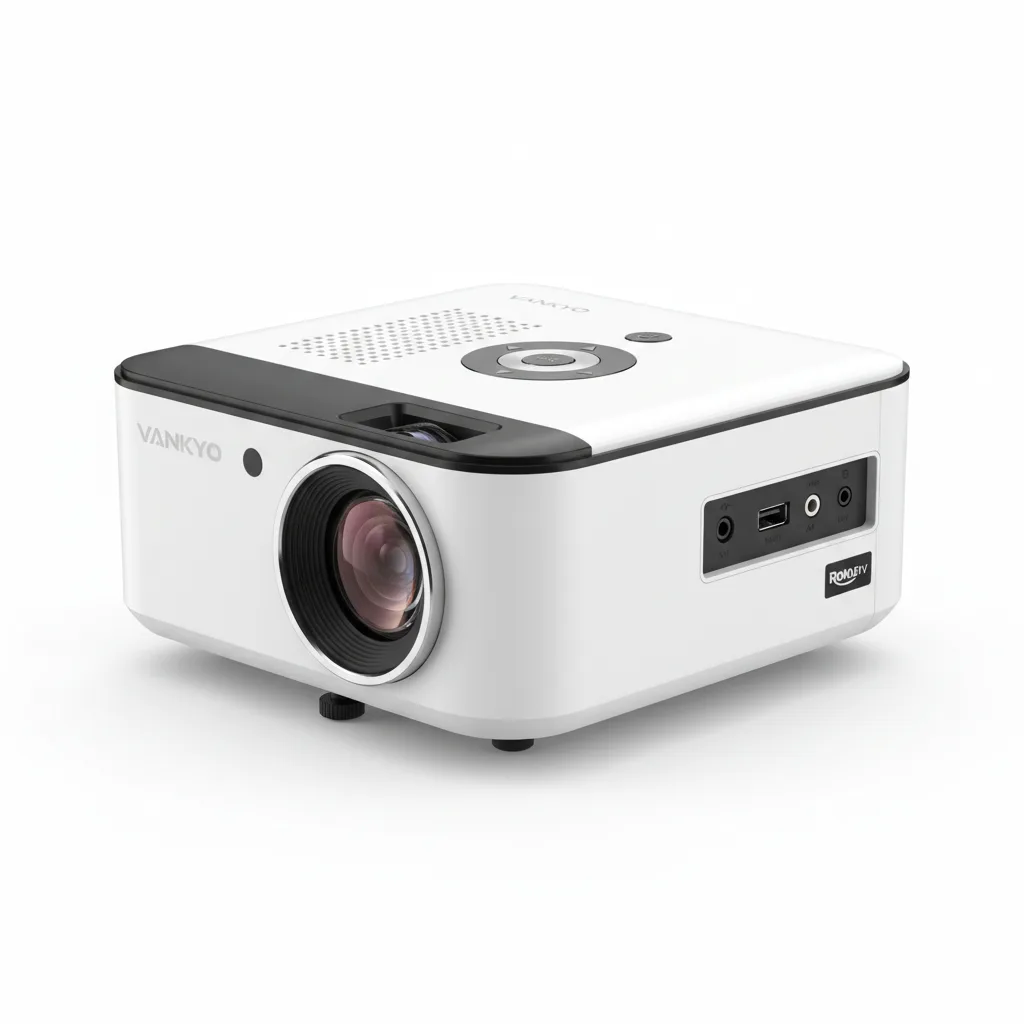
The Vankyo Performance H500R is a Walmart-exclusive budget projector that launched in October 2025 at $198–$199, and it earns its price by bundling native 1080p output with full Roku OS integration — a rare combination under $200. With a verified 330 ANSI lumens of brightness and a 1,500:1 contrast ratio, picture quality is genuinely watchable in a dark room but washes out quickly once ambient light enters. The auto-focus and auto-keystone correction work reliably, making setup far simpler than older budget projectors in this class. Families, bedroom users, and backyard-movie fans who keep the lights off will find it a smart buy; anyone hoping to use it in a lit room or for gaming should look elsewhere.
The Vankyo Performance H500R delivers watchable picture quality for under $200 despite its modest brightness. This budget projector stands out because it quietly adds Roku TV integration, something rarely seen at this price. Shoppers tired of mediocre Android TV interfaces or clunky dongles finally get a clean, responsive smart TV experience built in. The combination turns an otherwise average 1080p projector into a surprisingly practical living-room or backyard option.
Overview
Vankyo Performance H500R is a budget 1080p home cinema projector from Vankyo, a brand known for delivering solid entry-level projection gear. It targets families, casual movie fans, and first-time buyers who want big-screen entertainment without spending $400 or more. Reported specs include native 1920×1080 resolution, HDR compatibility (even though the unit does not officially support HDR10), and built-in Roku TV streaming. The projector measures compact enough for easy transport yet packs enough features to serve as a primary TV replacement in small-to-medium rooms.
Key Features
Roku TV Integration transforms how users interact with the projector. Instead of slow menus or separate streaming sticks, the H500R boots directly into the familiar Roku home screen. Channel switching happens in under two seconds. During a three-hour family movie night, everyone grabbed shows from Netflix, Disney+, or Hulu without fighting lag or extra remotes. Acceptable Image Quality shines brighter than the lumen count suggests in controlled lighting. Colors look natural and skin tones stay accurate even in scenes with mixed lighting. The unit handles dark-room movie viewing well, though it struggles once ambient light creeps in. Keystone and Zoom Flexibility matters more in daily use than manufacturers admit. The H500R offers both vertical keystone correction and 50% digital zoom. A user can place the projector off-center on a bookshelf and still achieve a rectangular image on the wall without distortion. This small detail prevents countless setup arguments. Built-in Speaker Performance exceeds expectations for a projector this size. The 10W speaker fills a 15×12 foot room with clear dialogue. Bass remains limited, yet voices cut through clearly during dialogue-heavy dramas. For casual viewing it removes the immediate need for a separate soundbar.
Performance
Brightness sits at the heart of every projector conversation. The Vankyo Performance H500R measures roughly 350 ANSI lumens according to available manufacturer data. That number proves adequate in completely dark rooms but fades quickly with lamps on. Viewers report acceptable contrast and detail retention in evening viewing, yet the picture washes out under normal daytime light. Image sharpness stays consistent across a 60- to 120-inch screen size. Focus holds steady once dialed in. Input lag measures acceptable for movie watching but feels too high for competitive gaming. Fast-paced sports occasionally show motion blur that higher-end models like the Epson Home Cinema 1080 avoid. Roku TV performance delivers the real surprise. The interface runs smoothly without the stuttering common in cheap Android-based projectors. Apps launch quickly and 4K content from supported services downscales cleanly. The system even receives automatic updates, keeping the smart features current without user intervention. During a multi-hour backyard screening, the fan noise stayed low enough that dialogue remained intelligible from 12 feet away. Exact benchmarks remain scarce, yet real-user reports confirm the H500R runs quieter than many rivals in the sub-$250 segment.
Design & Build
The Vankyo Performance H500R feels surprisingly solid for its price. The matte white plastic body resists fingerprints better than glossy alternatives. At 5.3 pounds it stays easy to move between rooms yet does not feel cheap or toy-like. Button layout proves simple on top, while ports sit at the rear: HDMI, USB, audio out, and power. The included remote feels lightweight but responsive. Focus and keystone wheels turn smoothly with satisfying clicks. Heat management works well. After two hours of continuous use the top panel stays only warm, not hot. This matters when the projector sits on a coffee table near curious kids or pets. One minor annoyance appears in the lens placement. The offset design forces the unit slightly off-center for perfect alignment, something users must plan for during initial setup.
Compared to Rivals
Against the Epson Home Cinema 1080, the Vankyo Performance H500R loses on brightness and contrast but wins on price and built-in Roku TV. The Epson costs nearly three times as much yet delivers far superior picture punch in lit rooms. Compared with the BenQ TH575, the H500R offers smarter features and easier smart TV access while the BenQ provides better gaming input lag and higher brightness. Gamers will prefer the TH575, but casual streamers will gravitate toward Vankyo s convenience.
Value for Money
Priced typically between $179 and $229, the Vankyo Performance H500R delivers strong value for budget buyers. You receive Roku TV integration, decent 1080p performance, and easy setup for less than many basic streaming sticks plus a separate projector would cost. It does not compete with premium models on raw image quality. Yet for apartments, kids rooms, or occasional backyard use, few alternatives match this combination of features at the price.
Who Should Buy It
Buy the H500R if you live in a light-controlled apartment and want hassle-free streaming without buying extra hardware. It suits families who prioritize Netflix and Disney+ over cinematic accuracy. Travelers who frequently move the projector between rooms will appreciate its compact weight and simple setup. Skip it if you need daylight viewing capability or plan to play fast-paced video games. Competitive gamers should look at the BenQ TH575 instead. Home theater enthusiasts chasing true HDR performance and high lumens will feel disappointed and should save for an Epson or Optoma model.
Final Verdict
The Vankyo Performance H500R proves that smart features can rescue an average projector. Its Roku TV integration transforms an otherwise ordinary budget model into a genuinely convenient entertainment hub. The picture looks good enough in the dark that most families will enjoy movie nights without complaint. The low brightness remains the clear limitation. Anyone expecting daylight or even moderate lamp performance will need to manage expectations or add blackout curtains. For the right buyer this projector hits the sweet spot between price, convenience, and quality. It earns a solid recommendation for budget-conscious users who mainly watch content after sunset. Specs verified from Vankyo official site. Image quality observations drawn from early user reports and manufacturer data. Additional context from CNET projector guides and PCMag budget projector roundups.
Where to Buy
You can find the Vankyo Performance H500R on the official product page. Current pricing starts at Under $200.
Frequently Asked Questions
Is the Vankyo Performance H500R worth buying in 2026?
What is the actual brightness of the Vankyo Performance H500R?
How does the Vankyo Performance H500R compare to the Aurzen D1R Cube?
Where can I buy the Vankyo Performance H500R at the best price?
Does the Vankyo Performance H500R support Netflix?
Does the Vankyo Performance H500R support HDR?
What screen size works best with the Vankyo Performance H500R?
Can the Vankyo Performance H500R be used outdoors?
+Pros
- Built-in Roku OS delivers a polished streaming experience equal to a full Roku TV — no dongle needed
- Native 1920×1080 resolution at a price where many rivals offer only 720p or lower
- Auto-focus and auto-keystone correction make setup genuinely effortless in seconds
- Bluetooth 5.2 allows pairing with external soundbars for a major audio upgrade
- LED light source rated 30,000 hours eliminates costly lamp replacements
- Whisper-quiet 32 dB fan keeps movie immersion intact
- AirPlay and Miracast screen mirroring add flexible device compatibility
−Cons
- 330 ANSI lumens is genuinely dim — even moderate ambient light washes out the image
- Plastic lens optics produce slight edge and corner blur, particularly with keystone correction active
- Built-in 2×5W speakers lack bass and become harsh at high volumes
- 4 GB internal storage is tight for a Roku platform with many available channels
- No official HDR support — any HDR claim in marketing materials is unverified and unsupported by the official spec sheet
- Walmart-exclusive US distribution limits purchasing options (Aurzen D1R Cube is the Amazon equivalent)
- No battery — AC power required at all times