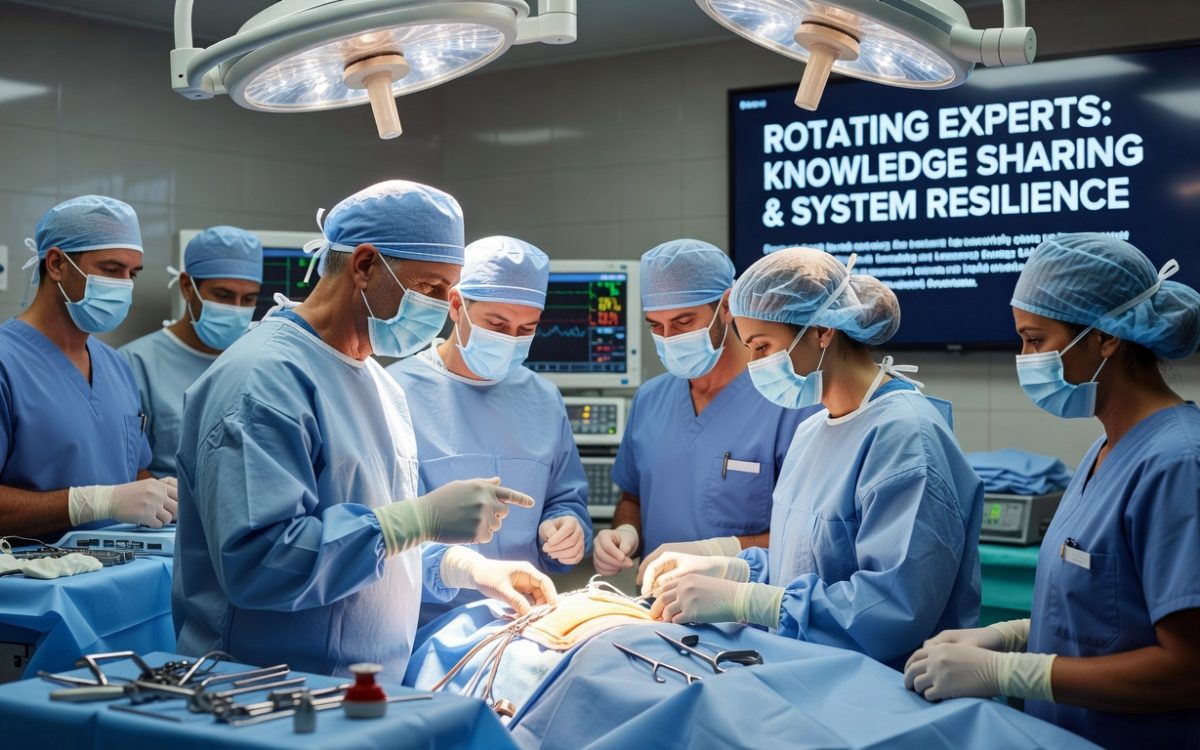
Something interesting is happening in hospitals that doesn’t make many headlines. It’s not a new drug or a breakthrough device. It’s simply this: healthcare systems are moving their best surgeons around on purpose. Rotating surgical experts between departments and facilities sounds like a logistical headache, and sure, the scheduling alone could make an administrator cry. But the results speak for themselves. Patient care improves. Staff get better. And hospitals — even the ones in the middle of nowhere — start punching well above their weight.
Knowledge Travels With the Surgeon
A surgeon like those over at Weatherby Healthcare doesn’t just bring their hands into a new operating room. They bring everything they’ve ever learned. Every tricky case, every technique picked up from a mentor, every hard lesson earned at two in the morning. When that surgeon rotates into a new facility, all of that experience walks in with them. The local team picks things up just by working side by side with someone who does things differently. Nobody schedules a seminar. Nobody assigns a training module. It just happens, the way good learning usually does — in the middle of actual work, between actual people.
Smaller Hospitals Stop Getting Left Behind
This one matters a lot, and it deserves more attention than it gets. The best surgical talent tends to concentrate in big cities. Major academic medical centers pull in the specialists, and smaller rural hospitals are often left making do with whoever they can attract and keep. Rotating experts changes that equation. When a skilled specialist spends a few months at a community hospital, the patients there get access to care they would otherwise drive three hours to receive. That’s not a minor improvement. For a family in a small town facing a serious diagnosis, it can mean everything.
Burnout Gets a Fighting Chance
Surgeons burn out. That’s not a controversial statement — it’s a well-documented crisis in medicine. The hours are brutal, the pressure is relentless, and the emotional weight of the job doesn’t clock out when the surgeon does. Rotating positions won’t solve all of that, but they help more than most people expect. New environment, new colleagues, different cases — it breaks up the grind in a real way. Surgeons who rotate tend to stay more engaged. They stay curious about their work instead of just grinding through it. And healthcare systems that keep their surgeons curious tend to keep their surgeons, period. Turnover in surgical departments is expensive in ways that go far beyond the recruiting budget.
Raising the Floor on Quality
One thing rotation does quietly and consistently is pull care quality upward across an entire network. A surgeon moving between facilities can’t help but notice when one place does something smarter than another. They carry that better approach with them to the next stop. Over time, this creates a kind of slow, organic standardization that no policy memo could ever fully achieve. Facilities start doing things more consistently. Gaps in protocol get spotted by someone with fresh eyes rather than buried under institutional habit. The patients at every facility end up better off, not just the ones lucky enough to land at the flagship hospital.
A System That Can Actually Handle Pressure
Every healthcare system eventually faces a moment that tests it — a bad flu season, a mass casualty event, an unexpected staffing collapse. The systems that handle those moments best are the ones built on adaptable people. Surgeons who have rotated through multiple settings know how to walk into an unfamiliar room and perform. They’ve already done it. They know how to read a new team quickly, work with different equipment, and find their footing without a long runway. That kind of flexibility isn’t something you can manufacture overnight. It comes from experience, and rotation builds it steadily, one assignment at a time.
Rotating surgical experts is, at its core, a simple idea. Move talented people around. Let knowledge spread. Give every patient — not just the ones in the right zip code — a real shot at excellent care. The logistics are real, but so are the results.