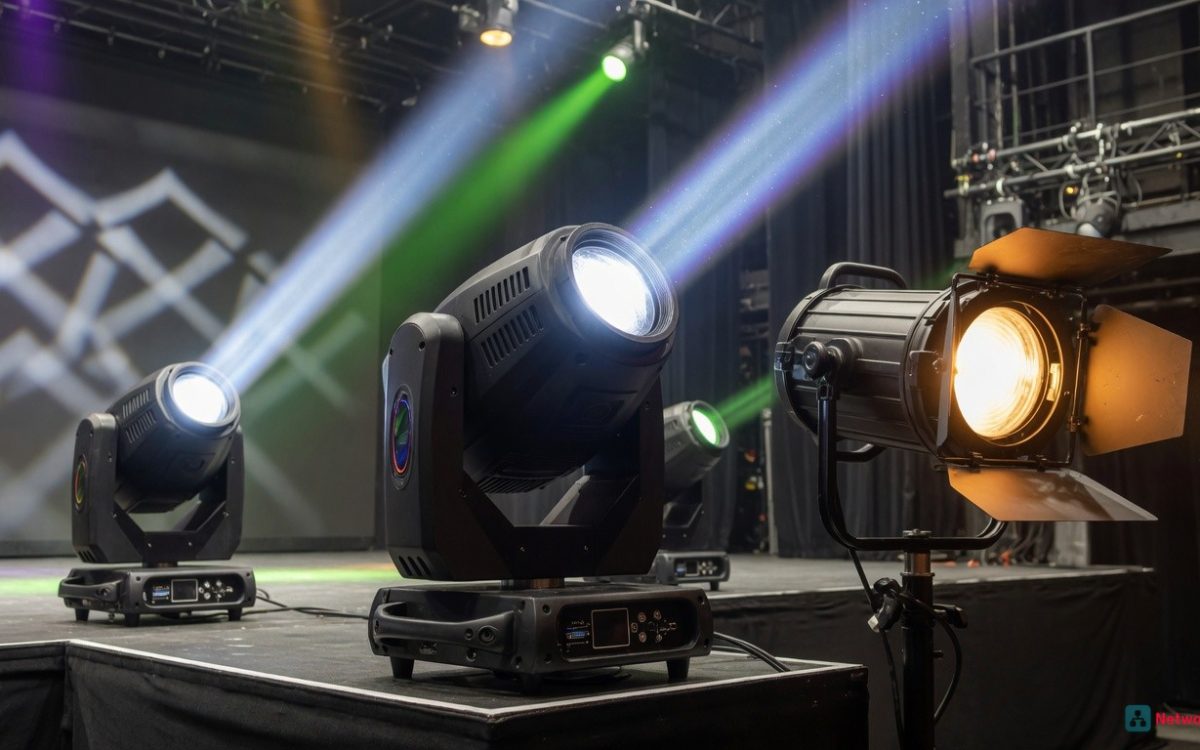
Whether you’re outfitting a concert venue, a theatrical stage, a nightclub, or a corporate event space, understanding the right lighting fixtures can make or break the visual impact of any performance. Two of the most essential and widely used fixtures in modern stage lighting are the moving head lamp and the stage spot light. Both tools serve distinct purposes, yet together they create the dynamic, immersive lighting environments audiences have come to expect from world-class productions.
What Is a Moving Head Lamp?
A moving head lamp is a motorized lighting fixture capable of panning, tilting, and rotating to project light across a wide area. Unlike traditional static fixtures, moving head lamps can be programmed via a lighting console (such as a DMX controller) to follow performers, sweep across audiences, or create complex color and pattern effects — all in real time.
Modern moving head lamps come in two primary variants: spot and wash. The spot variant produces a tight, focused beam ideal for highlighting performers or objects. The wash variant emits a broader, softer beam used to bathe large sections of the stage in color. High-end models combine both functions in a single unit, offering enormous flexibility for lighting designers.
Key features to look for in a quality moving head lamp include pan and tilt range (typically 540° and 270° respectively), color mixing systems (CMY or RGBW), gobo wheels for pattern projection, prism effects, strobe capabilities, and fixture dimming curves. Brightness is measured in lumens or lux, and professional-grade fixtures often output 15,000–30,000 lumens or more.
Popular applications for the moving head lamp include live concerts, theatre productions, broadcast studios, nightclubs, awards shows, and architectural installations. Their ability to create movement and drama in lighting makes them indispensable in any high-production-value event.
What Is a Stage Spot Light?
The stage spot light is one of the oldest and most fundamental fixtures in the world of stage lighting. At its core, it projects a focused, controllable beam of light onto a specific area or subject on stage. Unlike the broad ambient wash of a flood fixture, a spot light is designed to draw attention — isolating a performer, highlighting a set piece, or punctuating a dramatic moment with a sharp cone of illumination.
Traditional stage spot lights used tungsten halogen or HMI lamps, but the industry has largely transitioned to LED and laser-based sources for their energy efficiency, longevity, and color versatility. Contemporary LED stage spot lights offer full RGBW color mixing, silent operation, near-zero heat output, and lifespans exceeding 50,000 hours.
One of the defining characteristics of a stage spot light is its beam angle control. Most professional units include iris diaphragms to sharpen or soften the beam edge, shutters or barn doors for shaping the light, and gobo holders for projecting patterns or textures. These features give lighting designers precise control over exactly what is illuminated and how.
Stage spot lights are used in theatre for following lead actors, in corporate events for presenter highlighting, and in broadcast environments for key lighting and fill. When combined with a moving head lamp, they offer a complementary toolkit: the spot provides precision and intimacy, while the moving head adds energy, movement, and spectacle.
Choosing the Right Fixtures for Your Production
Selecting between a moving head lamp and a stage spot light — or determining how many of each to use — depends on the nature of your production, venue size, budget, and creative intent.
For large-scale concerts and festivals, moving head lamps dominate the rig. Their ability to reposition rapidly, create aerial beam effects, and sync to music via DMX automation makes them the workhorse of high-energy live events. A typical arena show might deploy dozens of moving heads, arranged in trusses above and around the stage.
For theatre and more intimate productions, stage spot lights take center stage. The precision and warmth of a well-focused spot can evoke emotion in a way that sweeping automated fixtures cannot. Follow spots — manually operated stage spot lights that track performers across the stage — remain a staple in theatrical productions worldwide.
Hybrid productions, such as televised award shows or multimedia corporate presentations, often blend both fixture types. Moving head lamps handle background atmosphere and color washes, while static or semi-static spot lights anchor key performers and presenters in well-defined pools of light.
Technical Considerations and Setup Tips
When rigging moving head lamps, always verify the truss or mounting structure’s load capacity. Moving heads are significantly heavier than conventional fixtures, and safety chains or secondary safety cables are mandatory. Ensure sufficient power supply — professional moving heads can draw 400–1,000W each, so circuit planning is critical.
For stage spot lights, consider the throw distance (the distance between the fixture and the subject) when selecting a lens. A longer throw requires a fixture with a higher lumen output and a narrower beam angle to maintain intensity. Most manufacturers publish photometric data sheets that make this calculation straightforward.
Both fixture types benefit enormously from DMX-controlled dimming and color management. Programming your show on a modern lighting console — whether an Avolites, grandMA, or ETC EOS — allows precise cue-by-cue control and ensures repeatability across multiple performances.
Conclusion
The moving head lamp and the stage spot light represent two pillars of professional stage lighting. One delivers dynamic motion and spectacle; the other provides focused precision and intimacy. Mastering both — understanding their strengths, limitations, and ideal applications — is what separates a competent lighting designer from a great one. Whether you’re outfitting a small black-box theatre or a 20,000-seat arena, investing in quality fixtures and taking the time to understand their capabilities will pay dividends in every performance you light.