ipv4 classes
Classful vs. Classless IP Addressing: A Complete CCNA Guide
IP addressing is the foundation of every network. Every device — a laptop, a server, an IoT sensor — needs an IP address to send and receive data. But the way those addresses are organized has changed fundamentally since the early internet. The original system, classful addressing, divided the address space into rigid classes and...
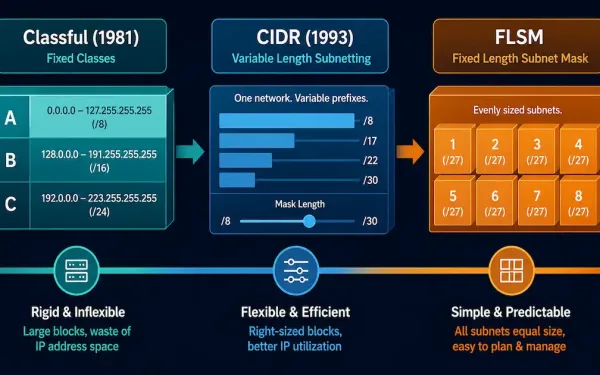
From Classful Network Addressing to CIDR and Fixed-Length Subnet Masking
IPv4 addressing didn’t arrive in its modern form all at once. It started as a rigid, class-based system, was replaced by a far more flexible scheme called CIDR, and along the way developed subnetting techniques — starting with Fixed-Length Subnet Masking (FLSM) — for splitting a network into smaller pieces. Understanding this progression matters for...
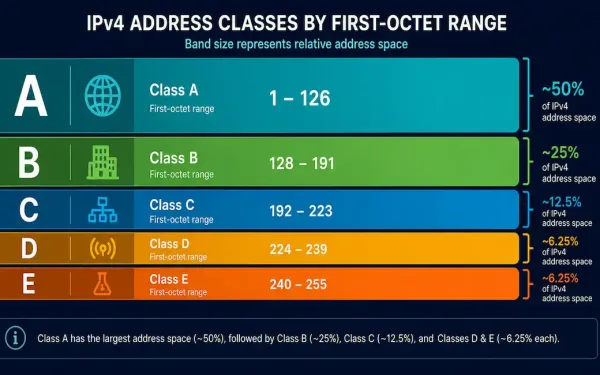
IPv4 Address Classes Explained: A, B, C, D, and E
An IPv4 address identifies a device on a network, similar to how a street address identifies a physical location. Every device on an IP-based network, including the internet, needs one to communicate. This guide covers the five IPv4 address classes, how to identify each one from its first octet, and the specific network and host...