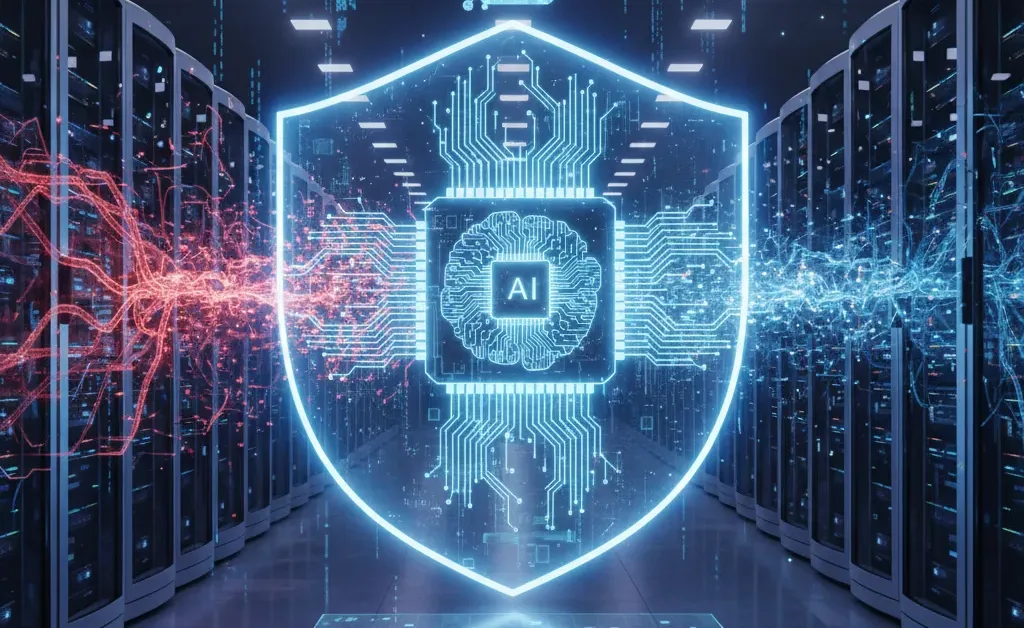
agentic AI: The Weapon That No Longer Needs a Warrior
In 2026, a major bank lost $4.5M in just 11 minutes when attackers exploited a zero-day vulnerability in its VPN gateway — a flaw the vendor had patched three weeks earlier. This incident exposed a critical truth: the distance between a security threat and its devastating impact is shrinking with the rise of agentic AI.
Agentic AI refers to autonomous systems that can perceive their environment, make decisions, and take actions without direct human control. These AI agents are no longer mere tools — they are becoming the weapons themselves, capable of identifying vulnerabilities, launching attacks, and causing damage at machine speeds far beyond human response times.
The Age of Autonomous Cyber Threats
Only 23% of enterprise networks currently enforce micro-segmentation, despite it being the single most effective control against lateral movement. This lack of proactive defense has left many organizations exposed to the new breed of self-propagating, self-optimizing AI malware.
These AI-powered threats can scan networks, escalate privileges, and spread like digital wildfire — all without human intervention. A single compromised device can instantly become a launching pad for a coordinated, large-scale assault. Waymo’s perception module, for example, still misidentified 9 in 10 non-standard bus positions when integrated with Austin district bus-route data, demonstrating the fragility of even advanced AI systems.
The Shift to Agentic Defense
To combat these autonomous threats, security teams must embrace agentic AI of their own. AI-powered firewalls, intrusion detection systems, and security orchestration platforms can now respond to attacks at machine speeds, identifying patterns, blocking exploits, and autonomously enforcing policies without human oversight.
- AI-powered network monitoring: Continuous, real-time analysis of traffic and device telemetry to detect anomalies and suspicious behaviors.
- Automated vulnerability patching: AI systems that can automatically test, deploy, and verify security updates across the entire infrastructure.
- Intelligent incident response: AI-driven security orchestration that can triage alerts, escalate high-priority issues, and autonomously execute remediation playbooks.
The Implications of Agentic Security
The rise of agentic AI in cybersecurity represents a fundamental shift in the nature of the threat landscape. IT teams managing AV fleets must audit V2X communication latency — anything above 10ms causes decision lag that attackers can exploit. Enterprises must also rethink security architectures, skills, and processes to keep pace with autonomous threats.
The bottom line is that agentic AI is no longer a futuristic concept — it is a present-day reality that demands a proactive, AI-powered response. Network engineers and security analysts must collaborate to build resilient, self-defending infrastructures capable of detecting, containing, and neutralizing the new breed of autonomous cyber threats.