Upgrading a truck is one of those areas where the internet will happily help you spend unlimited money in unlimited directions.
The aftermarket is enormous. The marketing is good. And the distinction between upgrades that deliver genuine, measurable value and those that mostly look impressive on the lot isn’t obvious until you’ve owned a truck long enough to understand what you actually need from it.
This guide is about the practical side of that decision — the upgrades that earn their cost through real function, genuine durability, and the tangible difference they make in how the truck works every day.
Tonneau Covers: The Highest Return Category
If there’s one truck accessory category with the best ratio of everyday utility to cost, it’s the tonneau cover.
The case is simple: protection for the bed and cargo from weather and theft, improved aerodynamics that reduce fuel consumption at highway speeds, and a cleaner truck profile. But deciding which type of cover to buy involves real tradeoffs that are worth understanding before committing.
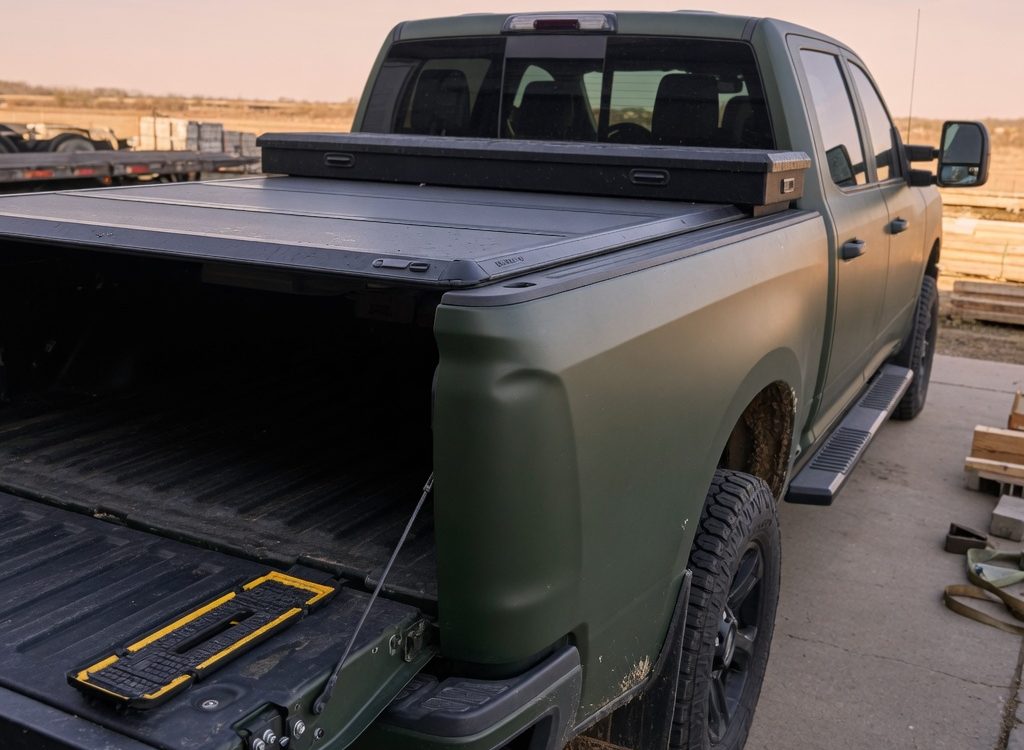
The case for a cover is straightforward, and for retractable designs, Extang’s hard-folding aluminum designs are among the most respected — aluminum construction, weather seals that hold up in real conditions rather than just showroom demonstrations, locking mechanisms that are substantial rather than decorative. The opening and closing action stays smooth over years of use, which matters when you’re operating the cover multiple times daily.
For trucks used regularly for hauling, the ability to fully open the cover without removing it is a functional requirement. Designs that require disassembly for full bed access get in the way of the truck’s primary job.
Running Boards and Step Systems
Factory side steps, when they exist at all, are typically narrow, slippery when wet, and positioned in ways that don’t account for how people actually get in and out of lifted trucks.
The quality range in the aftermarket step category is wider than most buyers realize. Inexpensive step bars look similar to well-engineered ones until they’ve been used seriously for a few years, at which point the finish fails, the mounting hardware loosens, and the structural integrity becomes questionable. The opposite standard — welded steel construction, powder-coat finishes that actually resist road salt and UV exposure, mounting brackets engineered for the specific vehicle application — is what N-Fab steps deliver. Step surface texture matters here too: a step that’s slippery in rain or mud is worse than no step at all.
This is the category where buying once and buying right pays dividends in avoided replacement costs and in not having to revisit the decision.
Lighting Upgrades That Change Daily Utility
Work lighting for the truck bed and undercarriage is one of the practically most useful upgrade categories and one of the most consistently overlooked.
LED bed lighting makes loading and unloading after dark significantly easier. Anyone who has tried to find a specific item in an unlit truck bed at 10pm in a dark parking lot understands the problem immediately. Rock lights improve visibility in off-road situations that headlights don’t address. Auxiliary driving lights extend effective vision on unlit rural roads at highway speeds.
These are function-first upgrades. They don’t require any particular aesthetic agenda to justify — they make the truck more useful in specific, frequent situations.
The wiring approach matters. Upgrades tied into a dedicated switch on the dash are far more useful than those requiring separate battery connections every time. Quality wiring harnesses with proper fusing protect the truck’s electrical system from the additional load.
Suspension and Lift: When It Makes Sense
Suspension upgrades are where the cost-benefit analysis gets more complex and where honest self-assessment matters most.
A lift improves ground clearance and changes the truck’s visual stance. It also affects handling characteristics, puts additional stress on drivetrain components, and typically requires additional work to be done correctly — alignment, extended brake lines, and potentially CV joint attention depending on the lift height and vehicle.
The case for a suspension upgrade is strongest when off-road use is genuine and regular. For trucks that are primarily daily drivers that occasionally leave paved surfaces, a leveling kit or modest lift offers most of the practical benefit without the full complexity and cost.
The honest question: what does the truck actually do? Not what you’d like it to do, not what it looks like it should do — what does it actually do most of the time? That answer should drive the decision about how much suspension work is justified.
Electronics and Connectivity
The truck’s electrical system supports an expanding range of useful upgrades beyond lighting.
Backup camera systems have moved from luxury to standard expectation, and third-party options offer resolution and coverage that factory systems in older trucks don’t. Tire pressure monitoring systems provide information that affects both safety and fuel economy. Portable power outlets and USB charging hubs address the practical reality of trucks that serve as mobile offices or workstations.
None of these are dramatic upgrades. Combined, they make the truck significantly more functional as a daily tool.
The Practical Principle
Every upgrade worth making improves the truck’s ability to do what it’s actually used for.
That’s not a dismissal of aesthetic choices — there’s nothing wrong with wanting the truck to look good. But the upgrades that earn their cost and stay on the truck for the long term almost always have a clear functional case behind them first.
Cover the bed properly. Step in and out safely. Light what needs to be lit. Go as far off-road as the use actually demands. Do those things well and the truck rewards the investment every day it’s used.
Sequencing Upgrades Intelligently
The order in which upgrades are made matters as much as which upgrades are made.
Start with what changes daily use most immediately: the bed cover for weather protection, quality step access for safety and convenience, and basic lighting for functional visibility. These are the upgrades that pay dividends on every single use.
From there, add based on how the truck actually gets used. Frequent off-road driving justifies suspension investment and recovery gear. Regular hauling of tools and equipment justifies cargo management systems and secure locking. Building the truck to match real use rather than imagined use produces a setup that works rather than one that looks the part.