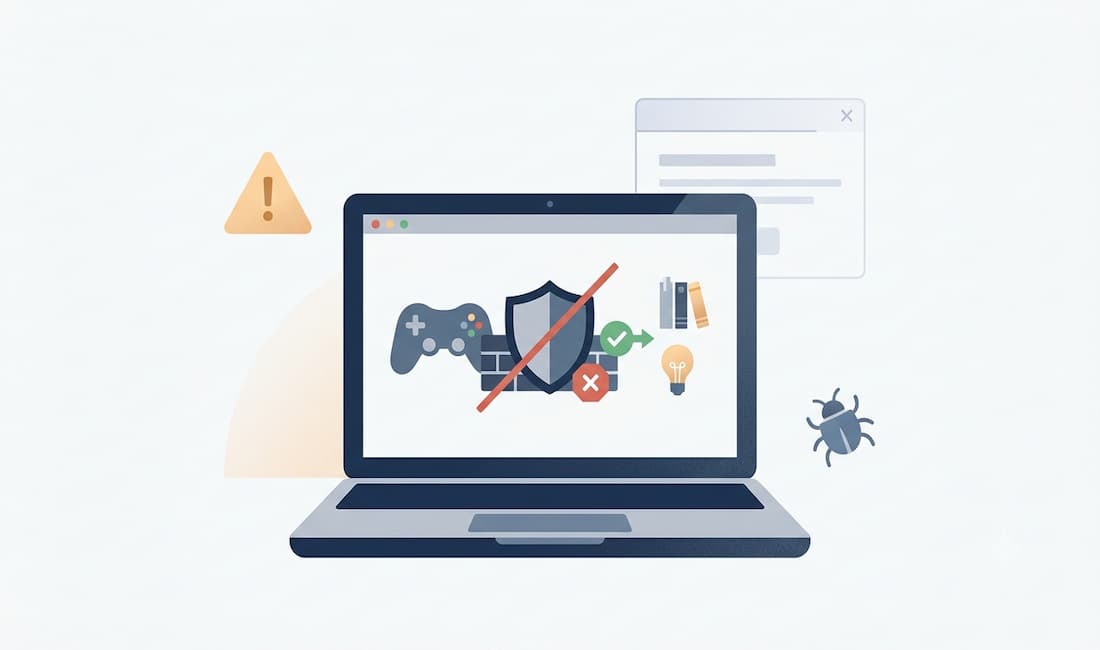
Quick summary: Despite how it sometimes gets written up, “Classroom 6x” is not a version or product from Google. It’s one of many “unblocked games” sites — pages students use to play browser games on school networks that would otherwise block them. This guide explains honestly what these sites are, how they slip past school filters, and the genuine security, privacy, and policy risks involved — for students, parents, and school IT staff alike.
If you searched “Classroom 6x” or “Google Classroom 6x” expecting a new Google education tool, it’s worth clearing that up first: no such product exists. Google Classroom is Google’s free learning-management tool, and Google doesn’t release it as numbered versions like “6x.” The “6x” name comes from a completely different corner of the internet — the world of unblocked-games sites — and some articles blur the two together, sometimes to capture search traffic. This piece treats the topic honestly.
So What Is “Classroom 6x”?
“Classroom 6x” is a name used by a class of websites — alongside labels like “Unblocked Games 6x,” “Unblocked Games 66,” “76,” and “G+” — that host browser-based games and are designed to remain reachable on restricted networks such as school or workplace Wi-Fi. The “classroom” framing is deliberate camouflage: it makes the site sound education-related so it’s less likely to be blocked and less conspicuous on a student’s screen.
These sites exist because most schools filter “non-educational” categories like gaming, streaming, and social media to keep students focused, protect limited bandwidth, and — in the U.S. — comply with rules like the Children’s Internet Protection Act (CIPA). Unblocked-games sites are the student response to those filters, and there’s a constant cat-and-mouse dynamic between the two.
How These Sites Get Around School Filters
Understanding the mechanics matters, especially if you’re on the IT or parenting side. A few common techniques:
- Constantly rotating domains and mirrors. When a school blocks one URL, operators register new ones, so the same content reappears under a fresh address. Bookmark lists and “mirror” links exist precisely because any single domain is expected to get blocked.
- Hosting on trusted platforms. Some versions run on services like Google Sites or GitHub Pages. Because schools can’t block those wholesale without breaking legitimate teacher and classroom tools, game pages hosted there can slip through.
- Lightweight HTML5/WebGL games. Modern browser games use simple web technology that loads quickly, needs no download, and is harder for traditional URL-based filters to categorize.
- Proxies, VPNs, and DNS changes. Beyond the sites themselves, students sometimes layer on proxy sites, VPN browser extensions, alternate DNS servers, or a phone hotspot to bypass the network entirely. Note that many schools now use deep packet inspection (DPI) and VPN/proxy detection that defeats the simpler tricks.
An important point for everyone: a game working on a school network does not mean it’s approved or safe. It usually just means the filter hasn’t caught it yet.
The Real Risks
This is where the honest, brand-relevant part comes in. These sites aren’t automatically catastrophic, but the risks are real and worth understanding rather than glossing over.
1. Malware and malicious ads
Many unblocked-games sites are heavily ad-supported, and the ad networks they rely on are the main hazard. Aggressive pop-ups, pop-unders, full-page redirects, and fake “Download” or “update” buttons are common, and some ads carry malware or lead to phishing pages. The game itself may be harmless while its ad layer is the actual threat. Larger sites in this category are widely noted for being ad-heavy, with some ads pushing malware or phishing.
An ad/pop-up blocker and a firm habit of never accepting an unprompted download handle most of this — but not all of it.
2. Fake clones and lookalike sites
Because these site names are popular search terms, scammers set up clones with slightly altered URLs that mimic a known “unblocked games” page but serve malware, fake download buttons, or phishing redirects instead. “Unblock everything” links found through random searches are a frequent trap. The name being familiar is not a safety guarantee.
3. Data harvesting and trackers
Free gaming portals often monetize through third-party trackers that quietly collect data on browsing behavior, device information, and history. Because many of these operators run outside standard regulatory jurisdictions, there’s little accountability for how that data is used or sold. Even when no login is requested, the site still sees the visitor’s IP address and activity.
4. Risky browser extensions
Some “unblock games” browser extensions are genuinely spyware disguised as helpful tools. Installing an extension that promises to unblock sites — without understanding what data it collects — is one of the higher-risk moves a student can make, because extensions can have broad access to browsing activity across every site.
5. Inappropriate or unmoderated content
These sites are rarely moderated, so alongside harmless puzzle and arcade games there can be titles with violent or otherwise age-inappropriate content — a particular concern on devices used by younger students.
6. Policy violations and consequences
The games themselves are usually legal browser software, and simply playing a public browser game generally isn’t illegal. But two real consequences apply:
- Acceptable-use-policy violations. Bypassing a school’s firewall or filters typically breaches its acceptable-use policy, and schools can treat that as subverting their rules — leading to disciplinary action (warnings, suspension, device restrictions) even when the game itself is harmless.
- Copyright gray areas. Some unblocked sites host cloned or replicated copies of games without proper licensing, which is a copyright issue for the operators.
Guidance by Audience
For students
If you just want a short, low-risk break: stick to browser-based, HTTPS games with no downloads and no logins, and keep an ad blocker on. Never install an “unblocker” extension you don’t understand, never enter passwords or personal details on these sites, and never accept a download you didn’t start. And be realistic — bypassing the school filter can breach the acceptable-use policy you (or your parents) agreed to, with real consequences. If a genuinely useful site is blocked by mistake, the better move is to ask a teacher or IT to whitelist it.
For parents
The practical concerns here are malware exposure, trackers, inappropriate content, and time spent gaming during class. Useful steps: keep device antivirus and browsers updated, use a reputable ad/content blocker, and consider device-level parental controls that filter by keyword and title rather than just URL (since these sites change addresses constantly). Most valuable of all is a conversation about why the school filters exist, paired with pointing kids toward genuinely safe, vetted options.
For school IT and administrators
Traditional URL blocklists alone can’t keep up with rotating domains, mirrors, and trusted-host workarounds like Google Sites and GitHub Pages. More durable approaches include DNS-level and category-based filtering, DPI and VPN/proxy detection, controlling which browser extensions can be installed on managed devices, and endpoint monitoring that flags activity even on “stealth” mirror sites. Pair enforcement with a clear, communicated acceptable-use policy so consequences are understood in advance.
Safer Alternatives
If the goal is a harmless brain break, several genuinely safe, education-friendly options are widely permitted and don’t carry the same risks: vetted platforms like Coolmath Games, Hooda Math, Funbrain, ABCya, PBS Kids Games, and Scratch (which also teaches coding). Offline or downloaded puzzle games from official app stores are another low-risk route, since they avoid network-based threats entirely. Games installed from the Apple App Store or Google Play are also more rigorously screened for malware than random web pages.
Bottom Line
“Classroom 6x” isn’t a Google product — it’s an unblocked-games site in an education-flavored wrapper, and it sits in a genuine gray zone. The games are usually legal, but the sites carry real risks: malware-laden ads, lookalike clones, trackers, sketchy extensions, unmoderated content, and — for students — acceptable-use-policy violations that can bring disciplinary action. The safest path is to use vetted educational game platforms, keep protective tools running, and treat any site that survives a school filter as unproven rather than trustworthy.
Frequently Asked Questions
Is “Google Classroom 6x” a real Google product?
No. Google Classroom exists and is Google’s free learning tool, but there is no “6x” version. “Classroom 6x” refers to unblocked-games sites, not anything Google makes or endorses.
Why is it called “Classroom 6x”?
The “classroom” label is camouflage that makes a gaming site sound education-related, so it’s less likely to be blocked and less obvious on a school screen. “6x” is one of several numeric labels (66, 76, and so on) used by these sites.
Are unblocked-games sites illegal?
The games themselves are usually legal browser software, and playing one generally isn’t illegal. But bypassing a school’s filters typically violates its acceptable-use policy, and some sites host copyrighted games without a license — a legal issue for the operators.
Can you get in trouble at school for using them?
Yes. Circumventing network filters usually breaches the acceptable-use policy, which schools can treat as a rules violation — potentially leading to warnings, suspension, or device restrictions, even if the game is harmless.
Are these sites safe?
Not reliably. The main risks are malicious ads and pop-ups, fake clone sites, data-harvesting trackers, spyware browser extensions, and unmoderated content. A game loading on a school network doesn’t mean it’s safe — it often just means the filter hasn’t caught it.
What are safer alternatives?
Vetted educational game platforms (Coolmath Games, Hooda Math, Funbrain, ABCya, PBS Kids Games, Scratch) or offline/app-store games, which avoid most network-based risks. If a legitimate site is blocked by mistake, ask a teacher or IT to whitelist it rather than bypassing the filter.
This article is for general information, digital-safety awareness, and school-network policy education. It does not provide instructions for bypassing school or workplace network filters.