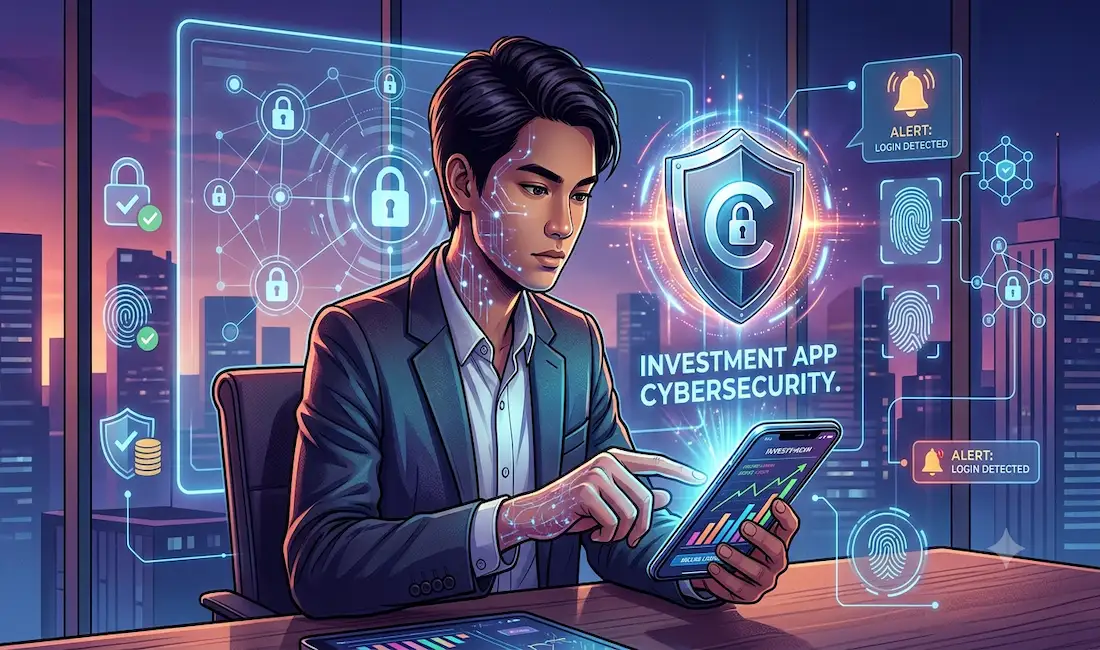
Fintech apps have made investing feel almost too easy. Open an account, link a bank card, scan a few charts, tap a button, and suddenly money is moving. That speed is useful. It also creates risk.
Investors often spend hours comparing fees, returns, charts, and asset classes, then spend very little time thinking about account security. Bad trade. A weak password or rushed login can do more damage than a poor market call.
The app may look clean. The interface may feel smooth. The brand may sound trustworthy. None of that proves the account is safe. Cybersecurity starts before the first deposit.
Know What the App Actually Protects
Not every fintech app protects users in the same way. Some offer strong encryption, biometric login, passkeys, device alerts, withdrawal locks, and transaction notifications. Others provide the basics and leave the rest to the user.
That gap matters.
Investors should check how the app secures logins, stores personal data, handles bank connections, and verifies withdrawals. It’s not exciting reading, sure. Terms and security pages are nobody’s idea of weekend fun. Still, they reveal a lot. A serious platform usually explains its security standards clearly. A vague “we use advanced protection” line should raise eyebrows.
Also, look at the recovery process. If someone can reset an account with only an email address and a few weak personal details, that’s a soft door. Attackers love soft doors.
Passwords Still Matter More Than People Think
Passwords feel old-school, but they still sit at the front gate of many investment accounts. A reused password is one of the easiest ways to lose control of an account.
Here’s the usual problem. A user signs up to a random online store years ago. That store gets breached. The password leaks. The same password also opens a fintech account. Then the attacker doesn’t need to “hack” anything. They just log in.
Use a password manager. Use a long, unique password for every financial app. No pet names. No birthdays. No clever variations like adding “123!” to the end. Attackers have seen that movie before.
Two-Factor Authentication Is Not Optional
Two-factor authentication, or 2FA, should be turned on before any money goes into a fintech app. It adds a second check beyond the password, such as a code, authenticator app, biometric prompt, or hardware key.
Authenticator apps are usually safer than SMS codes because phone numbers can be hijacked through SIM swap scams. That doesn’t mean SMS is useless. It’s still better than nothing. But for investment accounts, “better than nothing” feels like a low bar.
Investors who hold stocks, crypto, managed funds, or even use apps to research assets like gold bullion investment should treat account access like a bank vault, not a social media login. A single compromised account can expose banking details, tax records, portfolio balances, and identity documents.
Watch Out for Fake Apps and Clone Websites
Fake fintech apps can look convincing. Some copy the name, logo, layout, and even the color scheme of legitimate platforms. Others run ads that push users to cloned websites where login details get stolen.
The safest habit is simple: download apps only from official app stores, then verify the developer name. For web platforms, type the address directly or use a saved bookmark. Don’t follow random links from emails, text messages, social posts, or “urgent” investment alerts.
That last one is common. An investor sees a message claiming there’s a problem with an account, a delayed withdrawal, or a limited-time offer. Panic kicks in. Click. Login. Gone.
Slow down. Cybercriminals rely on speed, pressure, and distraction.
Public Wi-Fi Is a Bad Place to Move Money
Checking a portfolio at a cafe is one thing. Moving money over public Wi-Fi is another.
Public networks can expose users to man-in-the-middle attacks, fake hotspots, and session hijacking. A network named “Free Airport WiFi” may not belong to the airport at all. It could belong to the person sitting three tables away with a laptop and too much time.
Investors should use mobile data or a trusted private network when accessing fintech apps. A reputable VPN can help, but it shouldn’t become an excuse for careless behavior. Security works best in layers.
Identity Verification Cuts Both Ways
Fintech apps often ask for passports, driver’s licenses, tax details, facial scans, and proof of address. These checks help prevent fraud and meet regulatory requirements. They also create a bigger privacy concern.
Investors should ask one question before uploading documents: what happens if this platform gets breached?
A good app should explain how it stores identity data, how long it keeps it, and whether users can request deletion when an account closes. This is especially important for investors who use multiple financial services across different regions, including those comparing storage or wealth protection options such as private vaults Melbourne in Victoria, Australia, where physical asset security and digital account security can overlap in the same financial plan.
Device Security Is Part of Investment Security
A fintech app is only as safe as the phone or laptop it runs on. If the device has malware, outdated software, or no screen lock, the app’s built-in protections may not be enough.
Keep the operating system updated. Remove apps that look suspicious or haven’t been used in years. Don’t jailbreak or root devices used for banking or investing. Use biometric locks where possible. Set the device to wipe after repeated failed login attempts, especially if it stores financial apps and identity documents.
Tiny habits help too. Lock the screen in public. Don’t let browsers save financial passwords on shared computers. Never install “investment tools” from unknown sources. That free trading calculator may come with a nasty little bonus.
Alerts Can Catch Trouble Early
Transaction alerts, login alerts, withdrawal notifications, and new-device warnings are simple but powerful. They won’t stop every attack, but they can shorten the damage window.
Investors should turn on every useful alert the platform offers. The faster a suspicious login or withdrawal attempt gets spotted, the faster the account can be locked.
It’s also smart to review account activity regularly. Not obsessively. Just often enough to notice strange behavior, like a changed bank account, unfamiliar device, or small test transaction. Attackers sometimes start small to see if anyone is paying attention.
Security Should Influence Platform Choice
Fees matter. Product range matters. User experience matters. But security should sit near the top of the list when choosing a fintech app.
A strong platform will make security visible without making the app painful to use. It will support modern authentication, explain data protection clearly, monitor suspicious activity, and give users control over devices and withdrawals.
The best fintech app isn’t always the one with the slickest dashboard. It’s the one that helps investors move confidently without handing attackers an easy win.