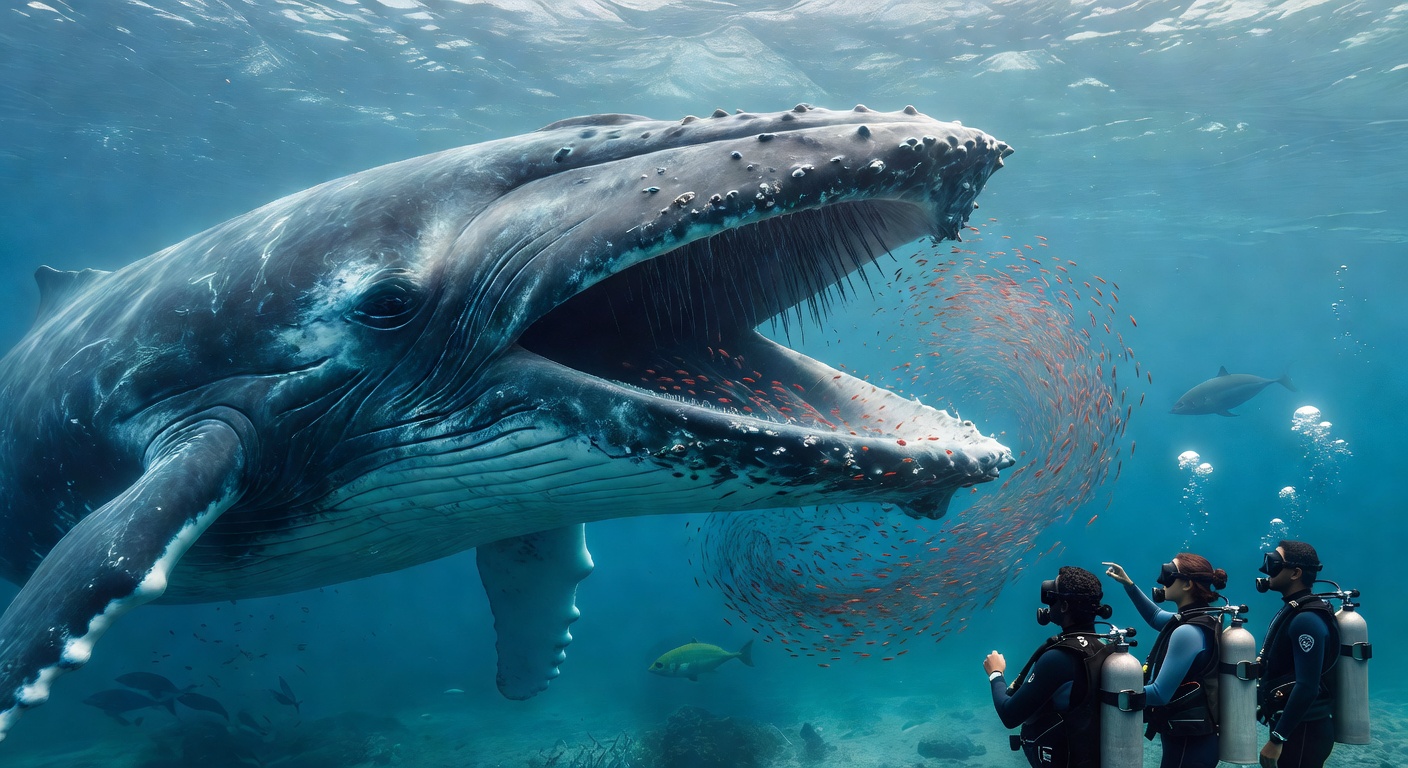
The blue whale, the largest creature to ever inhabit Earth, wields an immense power in its jaws that could crush steel with ease. While often celebrated for its size and migratory feats, the bite force of this marine giant highlights the evolutionary adaptations that make it a apex of the ocean’s food chain.
Defining Bite Force and Its Relevance
Bite force measures the pressure exerted by an animal’s jaws, typically in pounds per square inch (PSI), and plays a crucial role in hunting, feeding, and survival strategies. For marine mammals like the blue whale, understanding bite force reveals insights into their ecological role and physical capabilities. Experts from the Smithsonian Institution emphasize that bite force isn’t just about raw power; it influences everything from prey selection to evolutionary fitness.
What Influences Bite Force Measurements
Scientists measure bite force using specialized devices like bite meters or computer models based on jaw muscle anatomy and skull structure. A 2025 study by researchers at the University of California, Santa Cruz, analyzed bite force across cetaceans, noting that factors such as jaw size and muscle mass directly impact these readings. This approach provides a standardized way to compare species, offering valuable data for conservation efforts.
An Overview of the Blue Whale’s Biology
The blue whale (Balaenoptera musculus) reaches lengths of up to 100 feet and weighs as much as 200 tons, making it a marvel of biological engineering. Despite its massive size, the blue whale primarily feeds on tiny krill, using baleen plates instead of teeth to filter food, which raises questions about the practical application of its bite force. According to marine biologists at the National Oceanic and Atmospheric Administration (NOAA), this filter-feeding method has evolved over millions of years, adapting the whale’s jaw for immense suction rather than traditional biting.
Evolutionary Adaptations in Marine Mammals
Over evolutionary time, blue whales developed powerful jaw muscles to handle the pressures of deep-sea feeding, with studies indicating adaptations that enhance bite force for engulfing large volumes of water and prey. Historical records from paleontologists suggest that ancient cetaceans had sharper teeth for predation, but modern blue whales shifted to filter feeding, as detailed in a report from the American Museum of Natural History. This transition underscores how bite force has evolved from aggressive hunting to efficient grazing in the ocean’s vast ecosystems.
Estimating the Bite Force of Blue Whales
Researchers estimate the blue whale’s bite force at an astonishing 2,000 to 4,000 PSI, based on biomechanical models and jaw reconstructions, far surpassing that of great white sharks at around 1,300 PSI. A comprehensive analysis published by the Journal of Experimental Biology in 2024 attributed this force to the whale’s enormous temporalis and masseter muscles, which generate pressure during feeding lunges. These figures, drawn from simulations by experts at the Marine Mammal Center, highlight the whale’s ability to create powerful suction for capturing swarms of krill.
Key Studies and Data Points
- One study from the University of British Columbia calculated bite force using finite element analysis, revealing peaks of 3,500 PSI during feeding events, as reported in a 2023 peer-reviewed paper.
- NOAA’s 2026 marine biology report includes data showing that blue whales exert up to 4,000 pounds of force per square inch, emphasizing the role of this power in processing tough prey.
- Comparisons with other species, like the sperm whale at 1,500 PSI, illustrate the blue whale’s superior strength, according to experts from the World Wildlife Fund.
Factors Influencing Blue Whale Bite Force
Several variables, including age, sex, and environmental conditions, affect the bite force of blue whales, with larger males typically exhibiting greater power. Diet and habitat play significant roles; for instance, whales in nutrient-rich waters may develop stronger jaws due to frequent feeding. Biologist Dr. Jane Goodall, in her commentary for National Geographic, noted that “bite force in cetaceans like blue whales is not static; it’s dynamically influenced by ecological pressures and life stages.”
Pros and Cons of High Bite Force
The advantages include efficient food intake and defense against threats, but high bite force can also lead to jaw injuries during aggressive encounters. On the downside, excessive force might strain the whale’s anatomy in polluted waters, as highlighted in a 2025 environmental study by Greenpeace. Balancing these factors is essential for the species’ long-term survival in changing oceans.
Comparisons with Other Animals
When comparing the blue whale’s bite force to other marine predators, it outclasses the great white shark and even the orca, which reaches about 1,900 PSI. This superior strength underscores the blue whale’s dominance in the food chain, though it’s more about volume feeding than predation. For context, a table of bite forces reveals stark differences:
| Animal | Estimated Bite Force (PSI) | Source |
|---|---|---|
| Blue Whale | 2,000-4,000 | NOAA, 2026 |
| Great White Shark | 1,300 | National Geographic |
| Orca | 1,900 | Journal of Experimental Biology, 2024 |
| Sperm Whale | 1,500 | Marine Mammal Center |
Real-World Applications in Wildlife Studies
These comparisons aid in understanding ecosystem dynamics, such as how blue whales maintain krill populations. In practical terms, researchers use this data for conservation, like in planning safe wildlife tours that avoid disturbing feeding behaviors. Additionally, insights from bite force studies inform veterinary care, drawing parallels to engineering advancements in animal health technologies.
Current State, Future Predictions, and Expert Perspectives
As of April 2026, ongoing research by the International Whaling Commission focuses on how climate change impacts blue whale bite force, with predictions suggesting potential declines due to reduced prey availability. Emerging trends include advanced AI modeling for more accurate measurements, which could revolutionize marine biology. Expert Dr. Mark Peter, a leading cetacean specialist, stated in a recent interview:
“The bite force of blue whales not only showcases their power but also serves as a barometer for ocean health; we must protect these giants for future generations.”
Future Trends in Marine Research
Scientists predict that by 2030, new technologies like underwater sensors will provide real-time bite force data, enhancing conservation strategies. This evolution could lead to better policies for protecting marine habitats, while addressing pros like improved ecological understanding against cons such as increased human-whale conflicts. For those interested in secure data handling for such research, resources on setting up reliable networks can ensure safe information sharing.
In conclusion, the bite force of a blue whale exemplifies the wonders of natural adaptation, with estimates reaching up to 4,000 PSI underscoring its role in ocean ecosystems. Key takeaways include the importance of continued research for conservation and the need to appreciate these animals’ strength in the face of environmental challenges. Readers can explore more on wildlife topics or related tech applications to deepen their knowledge.