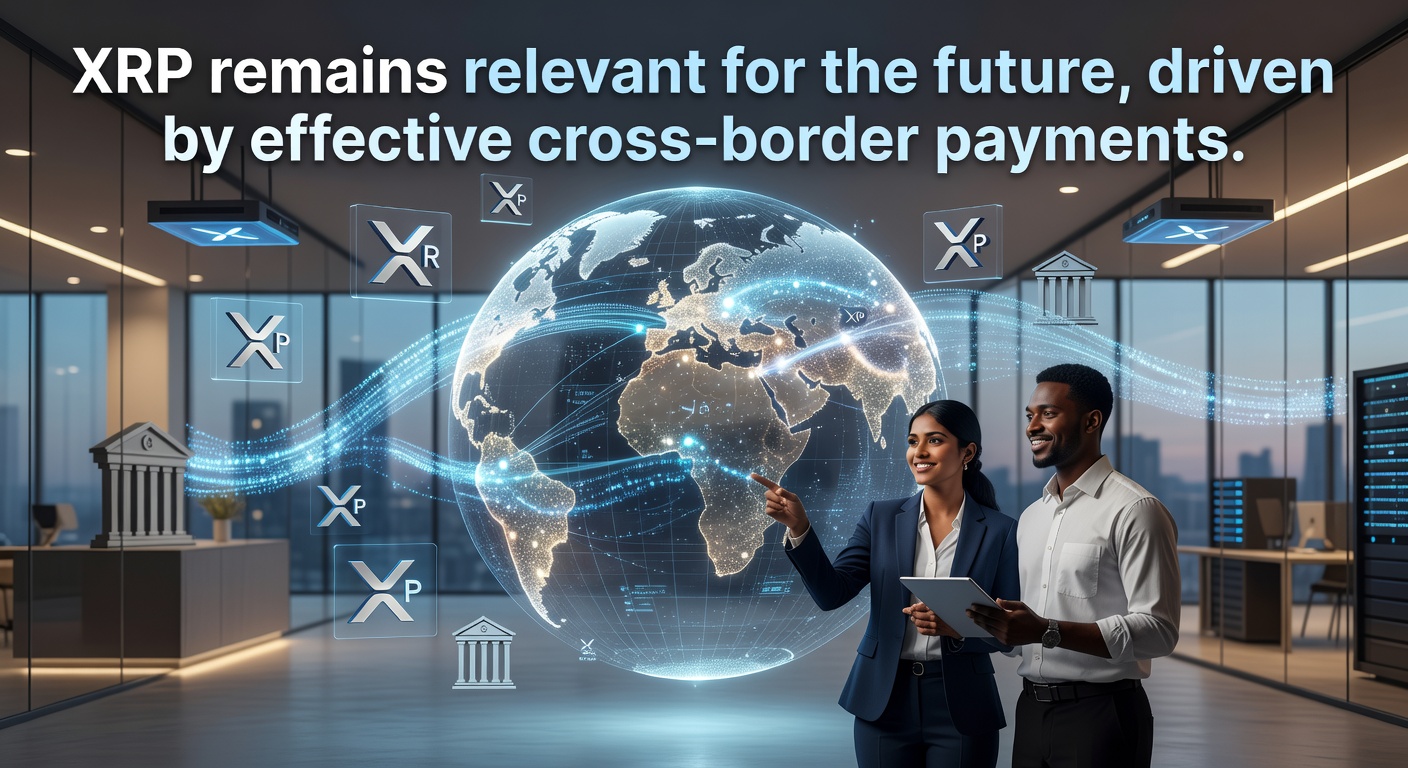
To be able to remain relevant, cryptocurrencies need to increase their use cases with plenty of other applications and have a feature that helps them stand out from the rest. This is among the best ways to remain relevant, and this is also the secret recipe behind the XRP success. What are the attributes you associate with XRP? Many users value XRP particularly because it offers effective cross-border transactions. This means that people can transfer money no matter the borders while escaping the large fees that this process was associated with in fiat money.
XRP brings a long list of advantages to global finance while reducing the disadvantages of both fiat money and the previous cryptocurrencies. XRP is a digital coin that operates under the RippleNet infrastructure, which is offering better solutions to financial institutions. Other than this, XRP can also be a great investment possibility, as it has the chance to appreciate in value. You just need to determine the best moment to buy XRP, and also identify the exit point later on. For long-term potential, check out crypto tokens surviving cycles.
XRP is also constantly looking for ways to improve, and you can discover all these upgrades on the XRP news. In this article, we will focus more on the XRP intricacies and why it is so relevant for cross-border transactions.
Image source: https://unsplash.com/photos/calendar-91bKtpRpBfc
Why is XRP bringing a fresh perspective?
We all know the crypto titans, represented by Bitcoin, the digital gold, and Ethereum, which is the go-to solution for decentralized applications. And even though they also offer the chance of cross-border payments, XRP solves some of their challenges by streamlining several things.
XRP is able to facilitate rapid transactions, which is why it continues to remain relevant. If you wanted to send money internationally with fiat money, you needed to wait longer, which could even take a few days. Not to mention the costs that this transfer also came with. Instead, things are much easier with the help of XRP, where transactions can settle in a few seconds, without an expensive tag in the fees. This proves to be particularly helpful for companies that want to transfer a large amount of money. Because of the solutions offered by XRP, enterprises won’t need to incur exchange rate changes or exorbitant fees.
XRP also offers great solutions to the remittance landscape, so that people will find improved solutions to send their money home. They will only need to go to RippleNet and convert their fiat currencies to XRP. Then they will receive their money back in seconds, and can convert the XRP back to their local currencies. In this way, they receive their money faster and keep a larger amount of their money.
Other great solutions that XRP is integrating are better reliability and scalability. XRP can handle up to 1,500, which is a great advantage, placing it among the top cryptos.
XRP as a bridge currency
XRP does a good job of acting as a bridge currency to offer a better solution for cross-border payments. Plus, the goal of XRP wasn’t to replace the banking system, only to improve it, and it managed to do that.
XRP is the bridge currency of RippleNet, which is why it comes with great liquidity. So, XRP actually does a great job in offering better on-demand liquidity and faces the challenges of traditional banking, while helping them leverage an improved solution.
The relevance of XRP is highlighted by global banks using it
XRP and Ripple solutions are leveraged by plenty of organizations worldwide. Among some of them, we can mention Santander, SBI Holdings, Canadian Imperial Bank of Commerce (CIBC), as well as PNC Bank, which is making XRP be used on an international scale, in countries across North America, Europe, and Asia.
For instance, the SBI Remit is using the services of Ripple Payments to send its funds from Japan to Southeast Asian countries. In this way, it benefits from a better processing time and reduced costs. The journey of SBI with Ripple started back in 2017, and it also made headlines, as it was the first Japanese solution to use the on-demand liquidity present on Ripple.
There is also the PNC Financial Services, which also made important moves, as it was among the first big and important banks from the US that joined RippleNet. The PNC Financial Services used the Ripple blockchain for international payment settlements. The result is that commercial clients were able to leverage cross-border transactions in seconds, and not wait several days for this.
What are the other applications that XRP can be used for?
XRP comes with plenty of other amazing applications, which also maintain its relevance. So, besides doing a great job at cross-border payments, XRP is amazing in trading and arbitrage, for instance. Because it comes with high liquidity and speed, XRP proves to be a great solution for worldwide traders. Also, the price of XRP has appreciated greatly over the years, and it also has the power to bring profits in the future. Learn to analyze market news like professionals.
Additionally, the XRP Ledger also supports better token issuance, which comes together with smart contracts and NFT. XRP is also paving the way for better financial inclusion, especially in countries with unstable local currencies, where access to financial services is limited. But with XRP, you will only need internet access, and you can send money internationally without the need for a traditional bank account.
Conclusion
XRP has had a fantastic evolution, and it has managed to maintain its relevance for several years. This is why XRP is now among the most essential digital coins by market cap. Plus, Ripple has big plans for XRP, which is why it is helping it to develop constantly and take advantage of even more innovations.
With the unique perks that XRP is bringing, such as great security, speed, and institutional support, the journey of XRP to growth is paved for success. So, XRP can actually redefine global finance.
What’s your opinion? Do you want to be an active participant in XRP evolution, or just a witness?