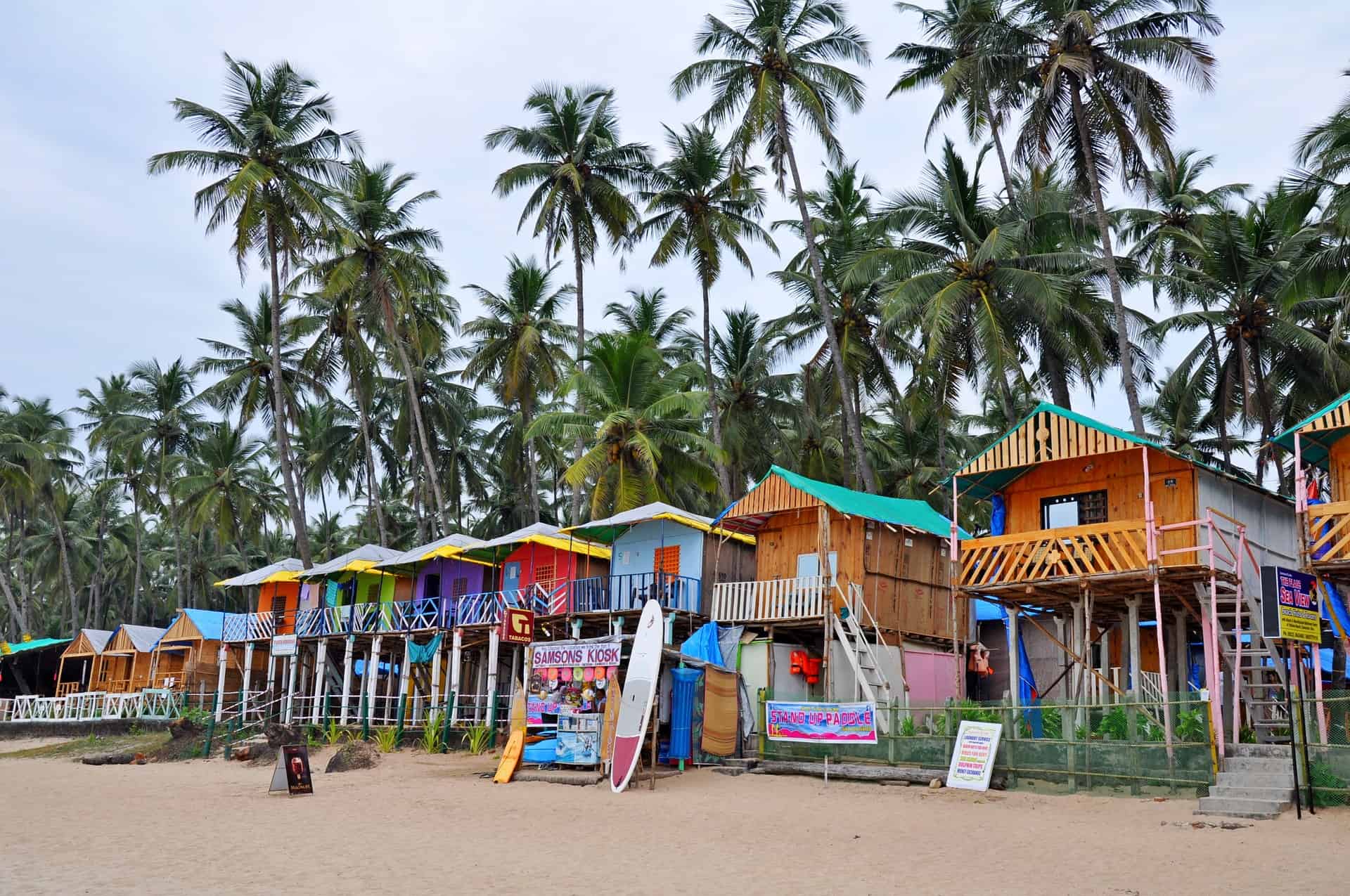
Goa packs an unusual amount of variety into India’s smallest state: Portuguese-era churches and forts, one of the country’s tallest waterfalls, wildlife-rich forest, and a coastline that runs from packed party beaches to near-empty stretches of sand. Four and a half centuries of Portuguese colonial rule (1510–1961) left a visible mark on the architecture and culture that sets Goa apart from the rest of India, and that history sits right alongside the beach-holiday reputation most visitors already know. Here are 11 attractions worth building an itinerary around.
1. Basilica of Bom Jesus
Located in Old Goa, the Basilica of Bom Jesus is part of a UNESCO World Heritage Site and one of the most visited religious landmarks in the country. It houses the mortal remains of St. Francis Xavier, a 16th-century Jesuit missionary, in a silver casket. The building’s baroque architecture is striking even from the outside, and the interior draws both religious pilgrims and visitors interested in colonial-era history. The remains are put on public display roughly once a decade during a major exposition; check current dates before planning a visit around this specifically.
2. Se Cathedral
Standing directly across from the Basilica in Old Goa, Se Cathedral is one of the largest churches in Asia and a centerpiece of Goa’s Portuguese architectural legacy. It’s known for its Golden Bell, considered one of the best-toned bells in Goa, and its Portuguese-Gothic facade. The two landmarks are close enough to visit together in a single stop, and Old Goa as a whole rewards a slower half-day exploring its churches and convents rather than a rushed drive-through.
3. Fort Aguada
Built by the Portuguese in the early 17th century on a headland near Candolim and Sinquerim, Fort Aguada was constructed to defend against Dutch and Maratha naval attacks and to guard the entrance to the Mandovi River. It includes a lighthouse still visible from much of the surrounding coast, and the fort’s elevated position gives sweeping views over the Arabian Sea. It’s one of the better-preserved forts in Goa, with substantial sections of the original structure still intact.
4. Chapora Fort
Perched on a hill near Vagator Beach, Chapora Fort was rebuilt by the Portuguese in 1617 on the site of an earlier structure. It’s now largely in ruins, but that hasn’t hurt its popularity — it gained a second wave of fame after being featured in the Bollywood film Dil Chahta Hai (2001) and is sometimes referred to by that connection. The main draw today is the view: the fort overlooks the point where the Chapora River meets the Arabian Sea, and it’s a popular spot to catch the sunset.
5. Reis Magos Fort
One of the earliest Portuguese forts in Goa, Reis Magos was constructed in 1551 on the northern bank of the Mandovi River, directly across from Panaji. Unlike Chapora, it’s been carefully renovated and converted into a cultural center, with galleries and exhibitions covering Goa’s colonial history housed inside the fort walls. Its elevated position also offers strong river and coastal views, making it a good combined history-and-photography stop.
6. Dudhsagar Falls
Dudhsagar — literally “Sea of Milk,” named for the frothy white appearance of the water as it falls — is a four-tiered waterfall on the Mandovi River, roughly 310 meters (1,017 feet) high, making it one of India’s tallest waterfalls. It sits inside the Bhagwan Mahaveer Wildlife Sanctuary and Mollem National Park on the Goa-Karnataka border. The falls are most dramatic during monsoon season (roughly June to September) when water volume is highest, and are typically reached by jeep safari or trek through the surrounding forest; a section of the Belagavi–Vasco da Gama rail route also passes close enough for a scenic view from the train.
7. Bhagwan Mahaveer Wildlife Sanctuary and Mollem National Park
The forest surrounding Dudhsagar Falls is worth treating as its own destination. Covering roughly 240 square kilometers of the Western Ghats along the Goa-Karnataka border, it’s Goa’s largest protected wildlife area and includes the Tambdi Surla Temple — a well-preserved 12th-century Kadamba-era stone temple — along with additional trekking routes through deciduous forest. It’s a useful stop for visitors who want to see a side of Goa that has nothing to do with beaches.
8. Baga Beach
Baga is one of the most recognizable beach names in North Goa, known for its water sports (parasailing and jet skiing among them), beachside shacks, and lively nightlife that continues well after sunset. It sits along the same continuous stretch of coastline as Calangute and Candolim, so it’s easy to combine with a beach-hopping day rather than visiting in isolation. It’s a good pick for travelers specifically looking for Goa’s more energetic, social side.
9. Calangute Beach
Often called the “Queen of Beaches,” Calangute is the largest beach in North Goa and one of the most photographed. It was reportedly discovered by hippie travelers in the 1960s and has been a fixture of Goa tourism ever since. The beach itself is wide with soft sand, though the sea here tends to be rougher than at some neighboring beaches, so it’s worth checking conditions before swimming. Sunrise and sunset are both considered strong reasons to visit even for travelers not planning to spend the day there.
10. Palolem Beach
For a different pace, Palolem in South Goa offers a crescent-shaped bay with calmer water and a noticeably quieter atmosphere than the North Goa beach circuit. It’s popular for boat rides to spot dolphins, yoga and wellness retreats, and simply for travelers who want a beach day without the crowds or nightlife density of Baga or Calangute. It’s a reasonable base if your priority is relaxation over activity.
11. Anjuna Flea Market
Started by hippie travelers in the 1960s, the Anjuna Flea Market runs every Wednesday at the southern end of Anjuna Beach, typically from mid-morning to early evening. It’s grown into one of the largest markets of its kind in the region, with several hundred stalls selling handicrafts, clothing, jewelry, and goods from across India and beyond, alongside food stalls and live music. Because it only operates on Wednesdays, it’s worth building around your schedule specifically rather than treating it as a drop-in stop any day of the week.
Planning Your Trip
A few practical notes that apply across most of this list: the Portuguese-era sites (Old Goa’s churches, Fort Aguada, Chapora, Reis Magos) cluster around North and Central Goa and can reasonably be combined over one or two days. Dudhsagar Falls and Mollem National Park require more planning, since jeep safaris typically need to be booked through licensed operators and the falls are less accessible outside safari or trek routes. The best time to visit Goa overall is generally considered October through March, outside the monsoon season — though monsoon season is precisely when Dudhsagar Falls looks most dramatic, so timing partly depends on which attractions matter most to your specific trip.