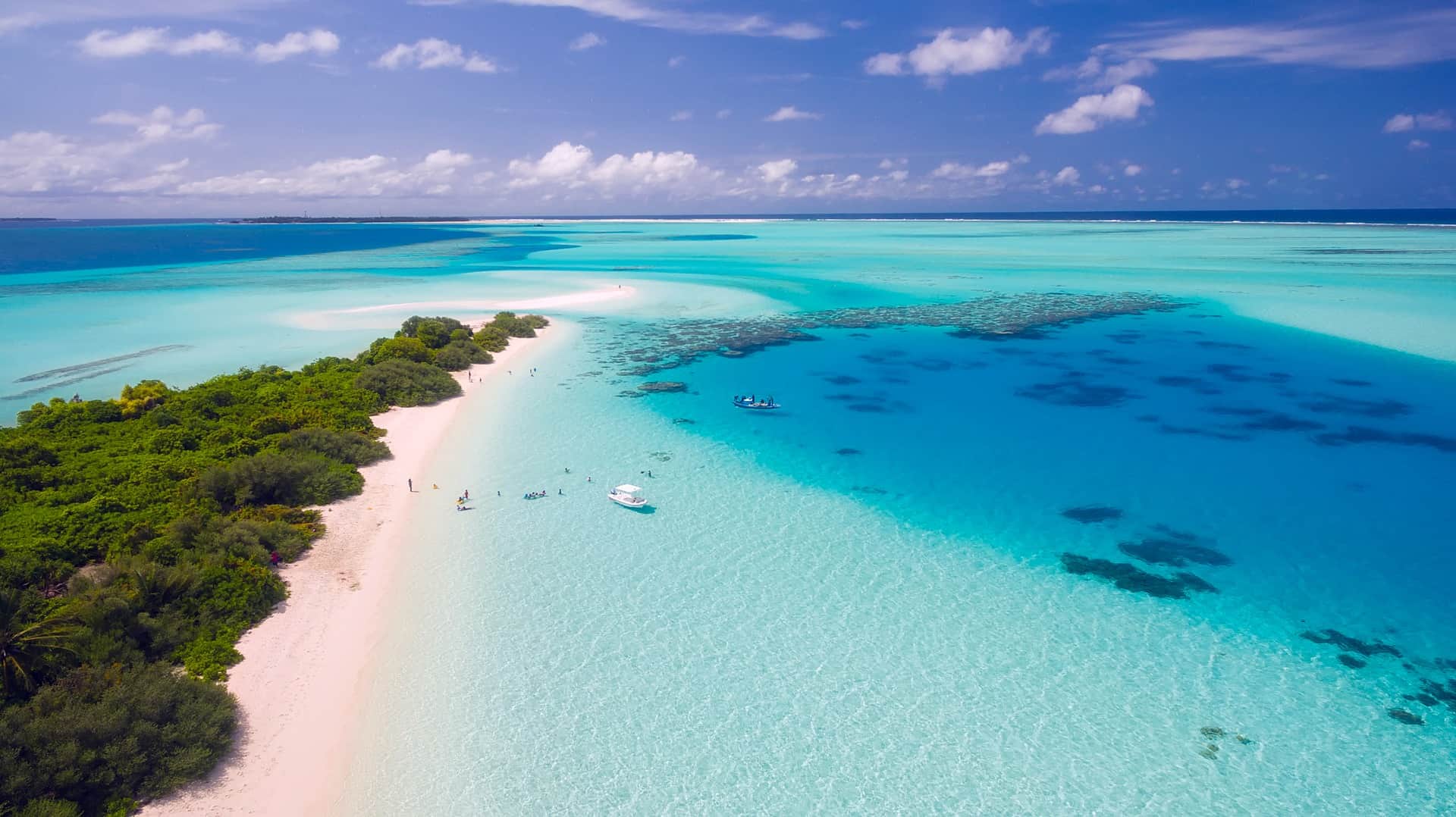
The Maldives is made up of roughly 26 natural atolls scattered across the Indian Ocean, with about 1,200 individual coral islands in total. Most resorts occupy their own private island, which means the honeymoon experience most people picture — stepping off a seaplane onto a private stretch of sand with no other guests in sight — is close to the norm rather than a marketing exaggeration. The challenge isn’t finding a romantic island; it’s narrowing down which of dozens of strong options actually fits your trip. Here are 13 worth serious consideration, spread across different atolls, price points, and styles of luxury.
1. Soneva Fushi (Baa Atoll)
One of the original pioneers of Maldivian barefoot luxury, Soneva Fushi helped define the “castaway chic” style that much of the industry later copied: no shoes required anywhere on the resort, villas built into dense jungle rather than manicured grounds, and a strong sustainability focus. It sits in Baa Atoll, a UNESCO Biosphere Reserve, which also gives easy access to Hanifaru Bay, one of the best manta ray and whale shark snorkeling sites in the country during the right season.
2. Soneva Jani (Noonu Atoll)
Soneva’s second island takes the overwater villa concept further than most competitors, with some of its largest villas featuring retractable roofs for stargazing and private waterslides straight from the deck into the lagoon. It’s one of the more remote and exclusive properties in the country, and its size and design make it a strong pick for couples who want the biggest possible version of the classic overwater fantasy.
3. Conrad Maldives Rangali Island (Ari Atoll)
Conrad Rangali is home to Ithaa, the world’s first all-glass undersea restaurant, opened in 2005 and seated about five meters below the surface with a 180-degree view of the surrounding reef. Seating just 14 guests per service, it’s one of the most-requested honeymoon experiences in the entire country and typically needs to be booked well in advance. The resort itself spans two connected islands, giving a mix of overwater and beach villa options.
4. Hurawalhi Island Resort (Lhaviyani Atoll)
Hurawalhi is an adults-only resort built around its own headline underwater dining experience, the 5.8 Undersea Restaurant, described by the resort as the largest all-glass undersea restaurant in the world. Combined with the adults-only policy, it’s a popular pick specifically for couples who want the undersea-dining novelty without a family-resort atmosphere around them.
5. Velaa Private Island (Noonu Atoll)
Velaa is one of the more understated ultra-luxury options, favoring residence-style villas, an on-site golf academy, and a strong food-and-wine program over overt flashiness. It’s a solid choice for honeymooners who want top-tier privacy and service without the more performative extras some competitor resorts lean on.
6. St. Regis Maldives Vommuli Resort (Dhaalu Atoll)
St. Regis brings its signature butler service to a private island in Dhaalu Atoll, with overwater villas built directly over the lagoon and an emphasis on personalized, detail-oriented service — a strong fit for couples who specifically want a globally recognized luxury brand rather than a boutique island identity.
7. Kudadoo Maldives Private Island (Lhaviyani Atoll)
Kudadoo is intentionally small — around 15 villas total — and operates on an all-inclusive model the resort markets as covering essentially everything: spa treatments, diving, water sports, and premium drinks, with no extra charges layered on top. For honeymooners who don’t want to think about a bill during the trip, it’s one of the more genuinely all-inclusive options at the ultra-luxury end of the market.
8. Huvafen Fushi (North Malé Atoll)
Huvafen Fushi is known for design-forward villas and one of the region’s more distinctive spas, which includes treatment rooms built partly underwater. It’s a boutique-sized resort with a reputation for a quieter, more design-conscious atmosphere than some of the larger, more activity-packed islands nearby.
9. Cocoon Maldives (Lhaviyani Atoll)
Cocoon blends Maldivian island style with Italian design influences and sits on an otherwise undeveloped island in Lhaviyani Atoll, roughly a 30-minute seaplane ride from Malé. It’s positioned at a slightly more accessible price point than several islands on this list while still offering overwater villas, making it a reasonable middle-ground pick.
10. Veligandu Private Island (Rasdhoo Atoll)
Veligandu is regularly cited as one of the better value all-inclusive overwater villa resorts in the Maldives — a genuine five-star islands-and-lagoon experience without the price tag of the very top-tier private islands. It’s about 20 minutes from Malé by seaplane, making transfer logistics simpler than some of the more remote options on this list.
11. Lily Beach Resort & Spa (South Ari Atoll)
Lily Beach is an all-inclusive resort with a strong reputation for including a genuinely wide range of food, drink, and water sports in its base rate, rather than treating “all-inclusive” as a marketing label with heavy fine print. Its overwater villas include glass floor panels for viewing marine life directly beneath the room, and South Ari Atoll is also one of the more reliable spots in the country for whale shark encounters.
12. Baros Maldives (North Malé Atoll)
Baros is one of the longer-established resorts in North Malé Atoll and helped popularize the now-standard overwater villa format decades ago. It leans toward a classic, understated version of Maldivian luxury rather than newer, more design-heavy competitors, which appeals to honeymooners who want the original version of the experience rather than the latest trend.
13. Vakkaru Maldives (Baa Atoll)
Vakkaru sits in the same UNESCO Biosphere Reserve atoll as Soneva Fushi and is known for romantic overwater villas with private terraces and hammocks positioned for sunset views. It’s a strong pick for couples prioritizing quiet, scenery-focused romance over high-activity resort programming.
Planning Notes
A few practical points that apply across most of this list: peak honeymoon season (roughly December through April) books out six to twelve months in advance at the most popular resorts, so early booking matters more than almost any other single decision. Nearly every nationality, including Indian citizens, receives a free 30-day visa on arrival in the Maldives — no advance visa application is required, just a valid passport, return ticket, and confirmed accommodation. Most resorts also offer complimentary honeymoon perks (room decoration, a bottle of sparkling wine, occasionally a spa credit) when you mention the occasion at booking, so it’s worth asking directly rather than assuming it’s automatic.
Transfer method is also worth factoring into your choice: some of the resorts on this list are reachable by speedboat in under an hour, while the more remote ones (Soneva Jani, Velaa, Kudadoo among them) require a scenic but pricier seaplane transfer, which is worth budgeting for separately from the room rate
Also Read If you are interested in visit to Gua 11 Top Attractions in the Goa Region