Traditional routers cover a small apartment fine but tend to leave dead zones in larger homes — a weak signal in the back bedroom, no coverage in the garage, a laptop that drops connection halfway down the hallway. Mesh Wi-Fi systems like eero were built specifically to solve that, using multiple small units spread through the house instead of a single router trying to broadcast everywhere from one spot. Eero, now owned by Amazon, was one of the first mesh systems to bring this approach to home users, and it remains one of the simpler ones to set up correctly — provided you know it works differently from a traditional router in one important way covered below.
Eero Setup Requires the App — There’s No Browser Login
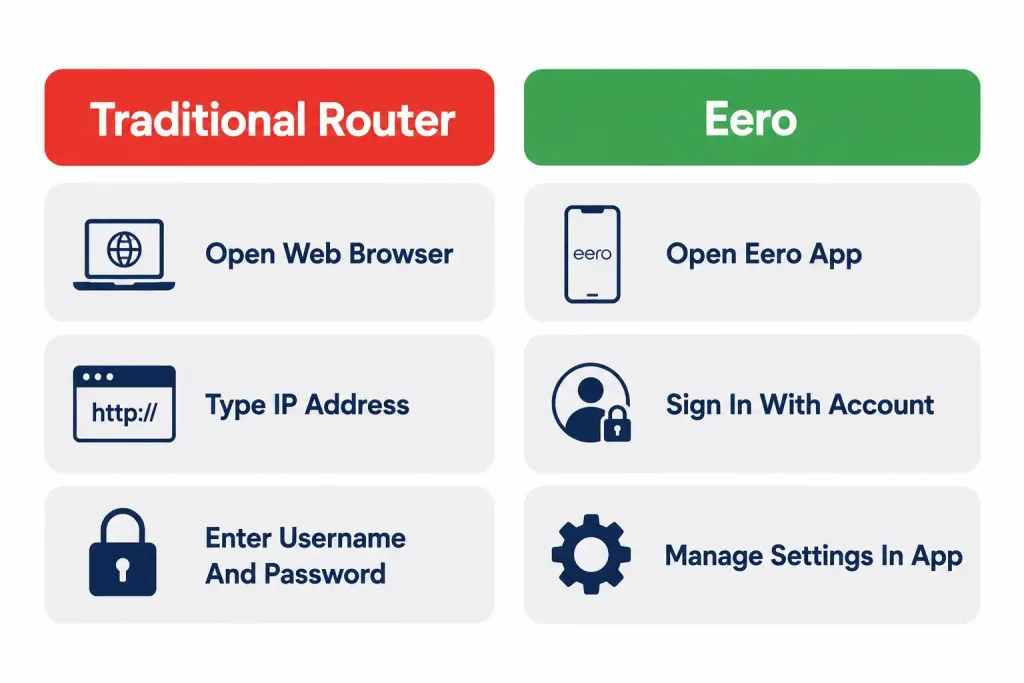
This is the detail that trips up the most people coming from a traditional router background: eero has no local web-based admin page. You cannot type an IP address into a browser and reach a login screen with a username and password, the way you might with an older Netgear, Linksys, or TP-Link router. Eero units do use a local IP address on the network (typically 192.168.4.1), but visiting it in a browser will not load a settings page — eero may simply block the request.
Instead, eero is managed entirely through the eero mobile app, using either an eero account (email or phone number) or an Amazon account, since eero is an Amazon-owned product. All setup, all Wi-Fi password changes, and all day-to-day management happen there. This is a genuine design choice, not a missing feature — it’s part of why eero has a reputation for being simpler to configure than traditional router admin panels, once you know to look in the app rather than a browser.
Setting Up Your Eero System
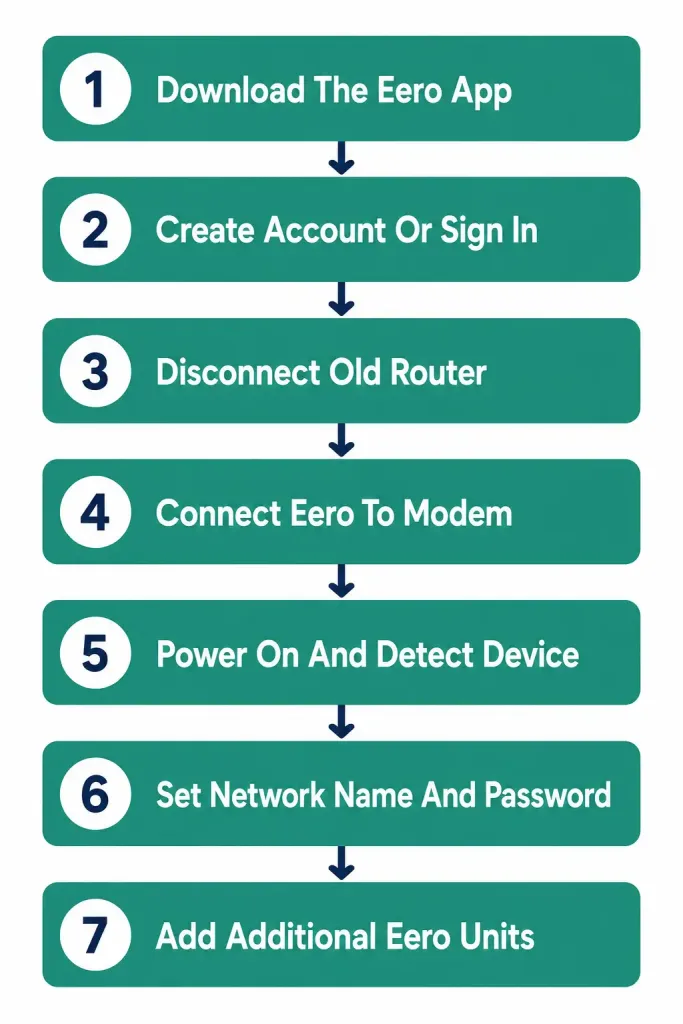
- Download the eero app from the Apple App Store, Google Play Store, or Amazon Appstore onto a phone or tablet. Setup cannot be completed from a desktop browser.
- Create an eero account or sign in with Amazon. If creating a new account, you’ll enter an email address and phone number, and a verification code will be sent to confirm it.
- Disconnect your existing modem and any old router before starting. If you have a combined modem-router unit from your ISP, you can typically plug the eero gateway into one of its Ethernet ports without powering it off.
- Connect the eero gateway to your modem with the included Ethernet cable, then plug the eero into power and power the modem back on.
- Let the app find your device. The gateway eero’s LED will flash and then turn solid once the app detects it. You’ll be prompted to name its location (useful once you have more than one eero unit).
- Set your network name (SSID) and password. Once this is set, your other devices will find and can join the new network the same way they’d join any Wi-Fi network — search for the SSID, enter the password, connect.
- Add additional eero units if you have more than one, placing them throughout the house to extend coverage. The app will guide you through pairing each one to the same network.
Where to Actually Place Your Eero Units
Signal strength depends heavily on placement. A few practical guidelines:
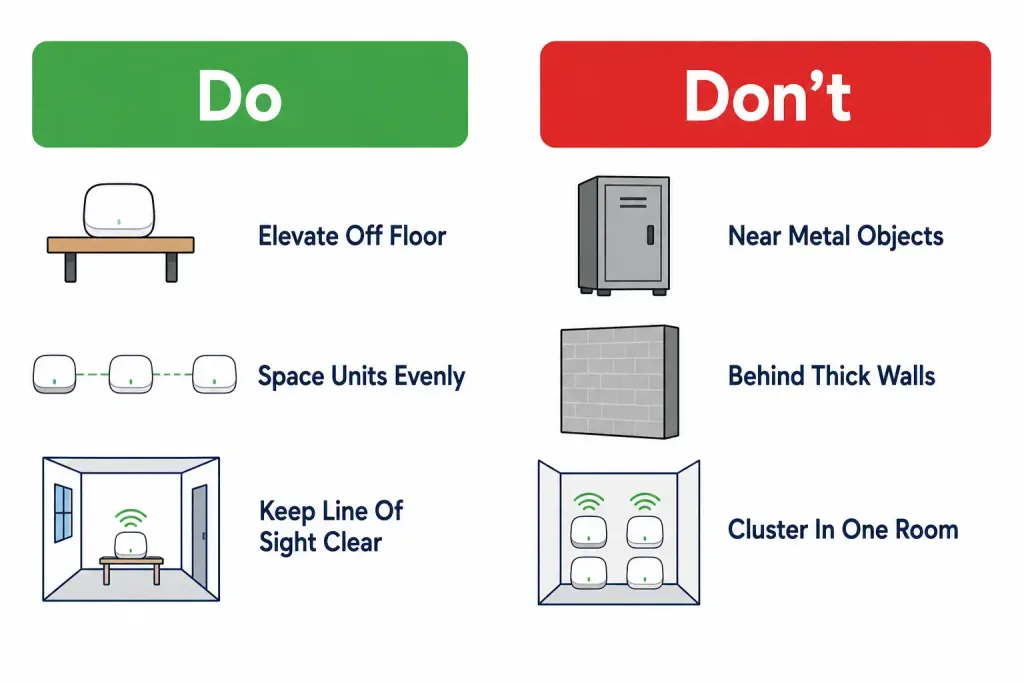
- Keep units away from large metal objects, thick walls, and other electronics, all of which can interfere with or block the Wi-Fi signal.
- Elevate units off the floor where practical — a shelf or table works better than a spot behind furniture.
- Space multiple units so each is within range of at least one other, rather than clustering them all in one room, which defeats the purpose of a mesh system.
Changing Your Wi-Fi Password and Checking Network Settings
Once your network is set up, day-to-day management happens in the eero app, not a browser:
- Open the app, go to your network settings, and select the Wi-Fi password option to view or change it.
- Password changes apply across your entire eero network at once — every eero unit updates together, and connected devices will need to rejoin using the new password.
- eero Plus subscribers get a limited web dashboard at account.eero.com for certain account-level tasks, but core network settings — including the Wi-Fi password — still require the app. There’s no full web interface equivalent to a traditional router’s admin panel.
Troubleshooting a Connection That Won’t Complete
If setup stalls or a unit won’t connect, a few steps generally resolve it before you need to contact support:
- Power-cycle the modem and eero gateway together — unplug both, wait about 30 seconds, then plug the modem back in first and let it fully reconnect before powering the eero unit back on.
- Confirm the Ethernet connection between modem and gateway eero is secure; a loose cable is one of the more common causes of setup getting stuck at the device-detection step.
- Check for an “Unauthorized eero” message in the app if you’re setting up through an ISP-provided eero plan — this typically means the device needs to be associated with your specific ISP account before it will complete setup.
- Use a hard reset only as a last resort. Holding the reset button on the back of the unit for about 10 seconds restores factory settings, which means starting the setup process over from the app.
What to Expect Day to Day
Once set up, an eero network typically requires little ongoing attention. It handles multiple simultaneous device connections well — six or seven devices connected at once is a normal, unremarkable load for a household network, not something that strains the system. Coverage should extend evenly through most of a typical home once units are reasonably placed, and reconnecting after a power outage or brief internet interruption generally happens automatically without needing to redo setup.
Eero systems typically include a limited warranty on hardware, and support is available through eero’s own help center and app if you run into an issue that power-cycling and the app’s troubleshooting steps don’t resolve.