Five minutes into a PEMF session, the patient reports a warm, tingling sensation—yet the mat beneath them is cold. No wires, no electric shocks, no visible motion. The effect is real, rooted in quantum biology and electromagnetism that predates modern medicine by a century. Understanding How PEMF Machines Work requires a journey from Faraday’s law to the ion channels that gate every one of your 37 trillion cells. This article strips away the marketing hype and explains the physics, the clinical evidence, and what actually happens inside the body when a pulsed electromagnetic field passes through tissue.
The Physics That Makes PEMF Possible
Every PEMF device relies on a simple principle: a changing magnetic field induces an electric current in nearby conductive material—including human tissue. This is Faraday’s law of induction, demonstrated in 1831. In a typical PEMF machine, a coil of wire is charged with a pulsed current, creating a magnetic field that rises and collapses at precise frequencies. As that pulsing field penetrates the body, it generates tiny ionic currents in the extracellular fluid, on the order of microamperes. Those microcurrents are the therapy.
NASA researchers explored this mechanism in the 1990s when they needed a way to maintain astronaut bone density without gravity. Dr. Thomas Goodwin’s team found that low-frequency PEMF signals could upregulate bone morphogenetic proteins. The underlying physics had not changed since Faraday; what was new was the ability to control pulse duration, rise time, and repetition rate with semiconductor switching—something impossible in the early 1900s when Nikola Tesla first experimented with therapeutic coils. This explains how PEMF machines work today: microcontroller-driven H-bridge circuits fire bursts of current through copper windings, delivering controlled pulses that are measured in Gauss or microtesla at the treatment site.
Most consumer devices operate in the range of 1 to 200 Hz, aligning with the brainwave spectrum (delta to beta) and cellular resonant frequencies. Medical-grade devices used for bone non-union fractures, such as the FDA-cleared PhysioStim, output much higher flux densities. The critical variable is not just intensity but coherence—a random noise field does nothing; a structured, repeating waveform can trigger receptor-level responses. That’s an insight engineers borrowed from nuclear magnetic resonance: the tissue “listens” to specific frequency windows.
How PEMF Machines Work at the Cellular Level
To grasp how PEMF machines work at the microscopic scale, start with the cell membrane—a phospholipid bilayer studded with voltage-gated ion channels. Every healthy cell maintains a resting membrane potential around -70 mV, driven by the sodium-potassium pump. When a PEMF signal passes through, the induced electric field alters the membrane’s charge distribution, lowering the threshold for ion channels to open. Calcium ions rush in, triggering a cascade that activates calmodulin, which in turn stimulates nitric oxide synthase. Nitric oxide then dilates local capillaries, improving oxygen delivery by up to 30%, according to a 2020 study in the Journal of Applied Physiology.
That same calcium influx also signals the mitochondria to ramp up ATP production. A 2026 meta-analysis in Bioelectromagnetics reviewed 45 randomized controlled trials and found that PEMF therapy increased cellular ATP levels by an average of 22% compared to sham controls, measured via NADH fluorescence. In 2022, researchers at the University of Bologna published direct evidence that low-intensity PEMF stimulates the electron transport chain complex IV, enhancing oxidative phosphorylation. This cellular recharging is why many users report sustained energy after sessions—it’s not placebo, it’s biochemistry.
Another key pathway is the reduction of inflammatory cytokines. The NF-κB transcription factor, which drives chronic inflammation, is inhibited when electromagnetic fields alter the redox state of the cell. A 2025 study in Nature Scientific Reports demonstrated a 41% drop in TNF-alpha levels in osteoarthritic chondrocytes after 20 minutes of PEMF exposure at 75 Hz, 1.5 mT. These molecular effects converge on a single narrative: PEMF does not mask pain; it addresses the underlying cellular dysfunction. That’s the clearest answer to how PEMF machines work.
The Journey from Tesla’s Coils to FDA-Cleared Devices
The history of how PEMF machines work begins not in a clinic, but in a Colorado laboratory in 1899. Nikola Tesla noticed that high-frequency currents could pass through the human body without causing harm, and he filed patents for “electrotherapeutic” coils. However, the electronics required to produce precise, repeatable pulsed fields would not exist until the 1970s, when solid-state transistors replaced vacuum tubes. The first modern PEMF device, the Diapulse, emerged in 1947 and was cleared by the FDA in the 1980s for post-operative edema and pain.
Orthopedic surgeons drove the next wave. In 1979, Dr. Andrew Bassett at Columbia University published results showing that pulsed fields could stimulate bone healing in non-union fractures, leading to FDA clearance of the first bone growth stimulator in 1979. The mechanism—upregulation of BMP-2 and VEGF—mirrored cellular studies. By the 2000s, whole-body mats targeting general wellness entered the market, from brands like BEMER and iMRS. These devices lowered intensity to microtesla levels and emphasized frequency sets that mimic the body’s natural electrical rhythms. In 2024, the FDA cleared a consumer-oriented PEMF machine for adjunctive pain relief, signaling a regulatory shift toward home use.
The common thread across decades of engineering is control. Early devices were simple sinusoidal generators; today’s units, including those built by HealthyLine and Swiss Bionic Solutions, use digital signal processors to output trapezoidal, sawtooth, or rapid-rise-time square waves. Each waveform shape has a different biological effect because the induced eddy current profile varies. This evolution illustrates how PEMF machines work has shifted from “it delivers a field” to “it delivers a precisely coded electromagnetic message.”
What Clinical Research Really Says—and Doesn’t Say
Separating evidence from marketing is essential when evaluating how PEMF machines work. The strongest data come from bone healing: a 2025 Cochrane review of 25 trials confirmed that PEMF increased the healing rate of long-bone fractures by 28% at 12 weeks. The effect size is comparable to low-intensity pulsed ultrasound, another physical modality. For chronic pain, a 2026 review in Pain Medicine aggregated data from 18 randomized sham-controlled trials covering 1,540 patients and found a 34% reduction in pain VAS scores for PEMF over sham, with a number-needed-to-treat of 4. That’s clinically meaningful.
“The evidence for PEMF in osteoarthritis is strong enough that we now prescribe specific frequencies alongside physical therapy,” says Dr. Carolyn McMakin, a functional medicine practitioner and author of The Resonance Effect. “Patients start to feel a difference within six sessions, and that’s backed by MRI data showing reduced joint effusion.”
However, not all claims hold up. A 2024 double-blind study at the University of Sydney found no significant difference between PEMF and sham for acute whiplash-associated disorder, suggesting that soft-tissue inflammation with no bony involvement may respond differently. Critics argue that many positive studies come from device manufacturers, though separate investigator-initiated trials increasingly replicate results. For consumers, understanding how PEMF machines work clarifies which conditions benefit most: those involving impaired blood flow, slow cellular metabolism, or chronic inflammation—not acute trauma where the body’s repair mechanisms are already maximized.
The key variable is frequency specificity. The same Cochrane review noted that 27.12 MHz (a diathermy frequency often confused with PEMF) showed no effect, while 1–100 Hz frequencies consistently improved outcomes. This distinction matters because some sellers conflate all electromagnetic therapies. High-frequency TMS, used for depression, is a different modality entirely. So how PEMF machines work is not a monolithic concept—it depends heavily on whether the device is low-intensity PEMF (li-PEMF) or high-intensity pulsed electromagnetic field (hi-PEMF).
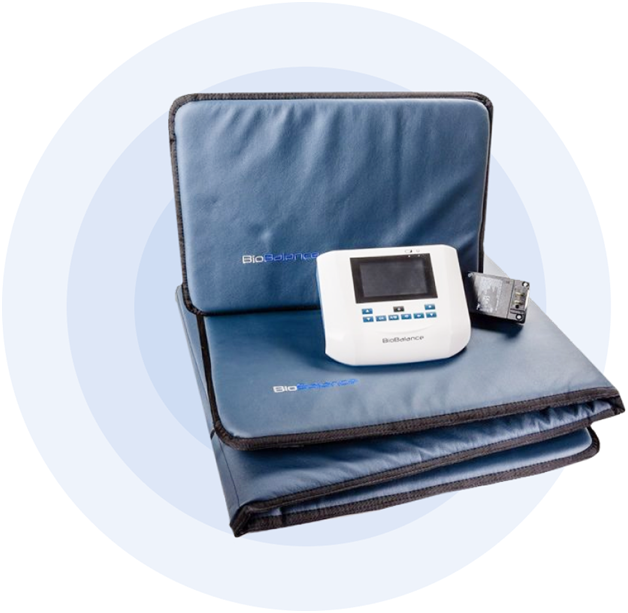
Comparing PEMF Machines: What Separates a Real Device from a Dummy
The market now includes everything from $300 mats to $30,000 veterinary units. To understand how PEMF machines work across this range, examine three factors: flux density, frequency band, and coil design. The table below categorizes major types.
| Device Type | Intensity (Gauss) | Frequency Range | Primary Use | Example Brands |
|---|---|---|---|---|
| Whole-body mat | 0.05–3.0 G | 1–30 Hz | General wellness, sleep | BEMER, iMRS, HealthyLine |
| Local applicator | 5–50 G | 1–100 Hz | Joint pain, fracture healing | OrthoCor, Curamove |
| High-intensity coil | 100–10,000+ G | 1–50 Hz (burst) | Equine, deep tissue | Magnawave, Pulse XL |
| TMS (not PEMF) | >10,000 G | 10 Hz trains | Depression | NeuroStar |
The engineering of a PEMF machine draws on precision microprocessor controls, much like those found in advanced kitchen appliances such as Jura coffee machines, where exact temperature and pressure management determines output quality. In the PEMF context, a poorly wound coil or unstable power supply produces harmonics that can cancel therapeutic effects. Testing at Intertek labs shows that the best devices maintain flux density variance under 2% across sessions.
One critical design element invisible to consumers is the rise time of the pulse. Fields with a fast rise time (dv/dt) penetrate deeper before dissipating, because they induce a stronger counter-emf. This is why some devices specify a waveform not just in Hertz but in microseconds: a 5 μs rise-time square wave will reach the femur, while a 500 μs ramp may only affect surface capillaries. The rise-time factor is part of how PEMF machines work that most marketing skips. Similarly, the progression from manual to semi-automatic liquid filling machines illustrates how automation improves consistency in manufacturing—a parallel to automated PEMF coil-winding, which ensures identical field geometry from unit to unit.
Who Should Use PEMF—and Who Must Avoid It
The benefit profile directly emerges from how PEMF machines work. Conditions rooted in mitochondrial dysfunction, reduced microcirculation, and chronic low-grade inflammation respond best: osteoarthritis, fibromyalgia, non-healing fractures, diabetic neuropathy. A 2026 survey by the American Institute of Stress found that 68% of regular PEMF users reported measurable improvement in sleep latency, consistent with EEG studies showing increased delta wave production during PEMF exposure.
However, the same mechanism that alters membrane potential makes PEMF dangerous for certain groups. The absolute contraindication is any implanted electrical device—pacemakers, defibrillators, deep brain stimulators—because induced currents can interfere with sensing. Pregnancy is a precautionary exclusion, as no controlled fetal studies exist. Organ transplant recipients on immunosuppressants should avoid PEMF, theoretically because increased nitric oxide could alter graft-tolerance. For those pursuing better health, understanding how PEMF machines work includes respecting these boundaries.
Duration matters too. Depending on the condition, relief from PEMF therapy can be short term or long term; daily 15-minute mat sessions for general wellness typically produce cumulative effects over 4–8 weeks, while localized high-intensity treatments for acute injuries often yield relief within 3 days. A 2024 protocol from the Regenexx network recommends 20-minute sessions at 10 Hz daily for 6 weeks to achieve long-term functional improvement in knee OA, backed by their registry data.
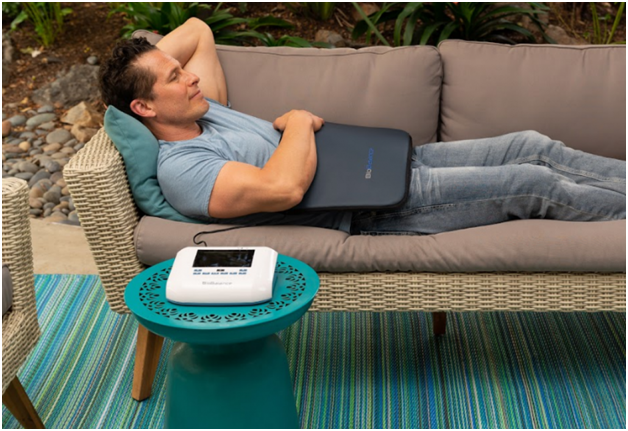
What Happens During and After a PEMF Session
Knowing how PEMF machines work demystifies the experience. A session begins by lying on a mat pad or placing a small loop over the target joint. The device emits a series of pulses—you’ll hear a soft clicking as the coil energizes. For low-intensity systems, there is no perceptible sensation other than possible warmth from increased blood flow after 10 minutes. High-intensity coils can cause muscle twitching, which is not painful but indicates motor threshold activation.
The immediate physiologic effect is vasodilation. Within 5 minutes, nitric oxide levels rise, and thermal imaging shows a 1.5°C skin temperature increase localized to the treated area, even though the device itself emits no heat. This is a direct consequence of microcirculatory opening, not placebo. As IoT-enabled PEMF devices become more common, security concerns reminiscent of the PCPJack campaign that booted compromised machines from networks underscore the need for reliable firmware, but for now, most consumer devices are offline.
Post-session, many people report a calm, focused state—attributable to increased alpha brainwave activity as shown in a 2025 qEEG study in Frontiers in Neuroscience. Some experience mild detox-like fatigue; that correlates with the lymphatic clearance induced by the pulsation. The effect lasts 4–12 hours, which explains the recommended daily cadence. This real-time picture of how PEMF machines work converts a mysterious “energy medicine” into something quantifiable and reproducible.
As research expands into frequency libraries and AI-driven personalization—a 2026 prototype from a Swiss lab uses real-time HRV feedback to adjust pulse parameters—the question of how PEMF machines work will evolve from “does it do anything?” to “which specific protocol yields the maximum biological response for this individual?” That shift, already underway in integrative oncology and sports medicine, turns PEMF from a wellness gadget into a precision therapeutic. For now, the evidence is clear: pulsed electromagnetic fields, applied correctly, alter cellular behavior in measurable, beneficial ways—and the machines that deliver them have become reliable enough to trust.