When domestic demand slows, a surprising number of businesses look inward — cutting costs, trimming headcount, waiting for things to improve. Fewer look outward, toward markets that aren’t experiencing the same slowdown at the same time. Translation and localization are the practical first step in that outward move, and they’re far more approachable than most businesses assume. Here’s what actually works, and what gets confused along the way.
Why International Expansion Is a Genuine Hedge, Not Just an Opportunity
Economic cycles rarely move in perfect sync across countries. When one market is contracting, another is often flat or growing — which means a business selling only domestically is fully exposed to one economy’s timing, while a business with customers in several markets has some natural insulance built in. For a UK business specifically, the European Union remains the obvious first expansion target: the EU accounted for 45.2% of total UK trade in 2025, worth £859.2 billion, according to the UK government’s own trade statistics. That’s not a niche market to test cautiously — it’s the single largest trading relationship the UK has, and most of it runs through languages other than English.
This is where translation stops being a “nice to have” and becomes a genuine growth lever. A product listing, a website, or a support document that only exists in English is, for a huge share of EU customers, simply invisible or untrustworthy by comparison to a competitor’s localized version.
Translation and Localization Are Not the Same Thing
This distinction gets glossed over constantly, and it matters:
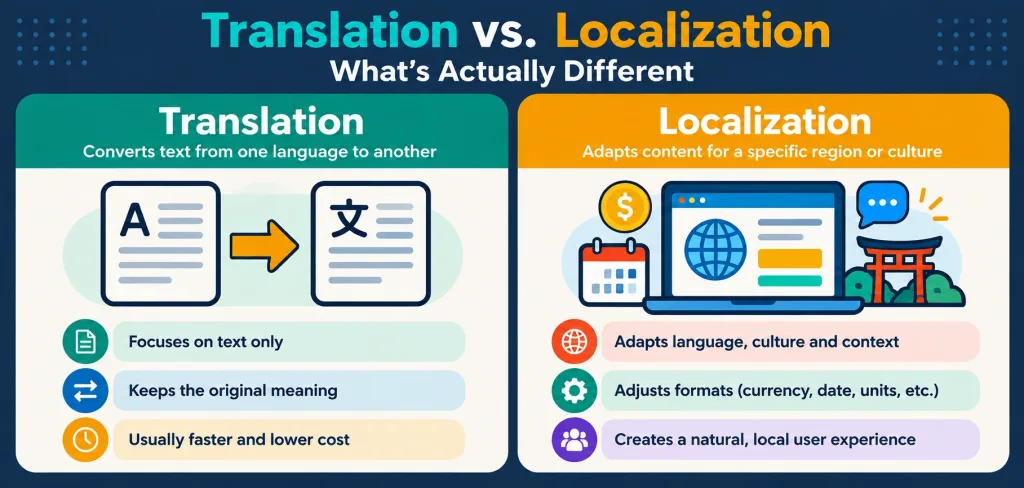
- Translation converts text from one language to another, word for word and sentence for sentence, preserving meaning as directly as possible.
- Localization goes further — adapting currency formats, date conventions, measurement units, cultural references, imagery, and even color choices (which can carry different associations across cultures) to fit the target market, not just the target language.
A product description that’s technically translated correctly but still shows prices in GBP, dates in the wrong format, and imagery clearly styled for a British audience will still read as foreign to a European buyer. Full localization is what actually makes a market feel like it was built for the customer, not retrofitted for them.
Starting With the Languages That Reach the Most Customers
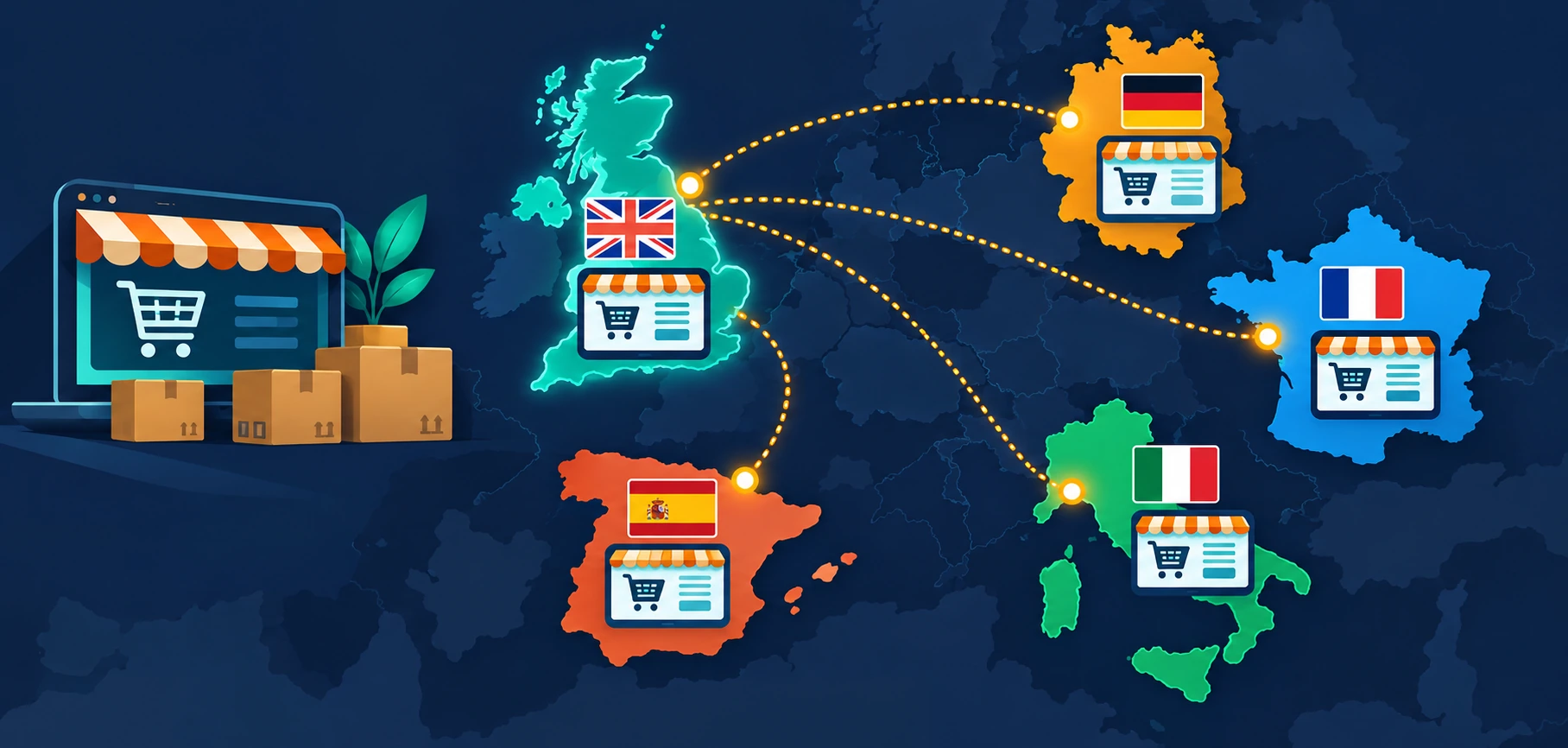
For a UK business expanding into Europe, French, Italian, German, and Spanish — often grouped under the acronym FIGS — cover a large share of the EU’s population and purchasing power in a relatively small number of languages, which makes them a sensible starting point rather than trying to localize into every EU language simultaneously. Expanding further (Dutch, Polish, Portuguese, and others) makes sense once the initial markets show traction, rather than spreading translation budget thin across a dozen languages from day one.
Why Professional Translation Still Matters, Even With AI Tools Improving
Machine translation has genuinely improved, and it has a real role in cutting both cost and turnaround time for straightforward content. But professional human review still matters for anything customer-facing, for a specific reason: machine translation reliably misses cultural nuance, idiom, and brand voice, and it occasionally produces outright errors that read as careless or, worse, offensive in the target market. A mistranslated product name or a tone-deaf marketing line doesn’t just fail to convert — it actively damages trust in a market a business is trying to build credibility in for the first time.
The practical middle ground most businesses land on: machine translation for high-volume, low-stakes content (internal documentation, bulk product data), paired with professional human translation and review for anything customer-facing — marketing copy, product names, legal and compliance text, and anything where a mistake carries real reputational or financial cost.
The global translation services market itself reflects how much demand this creates: it’s estimated at roughly $65 billion in 2026, projected to grow toward $97.65 billion by 2031, according to Mordor Intelligence — a market expanding specifically because more businesses are chasing cross-border growth, not shrinking into their home markets.
What Actually Goes Wrong Without Localization
- Literal translations that miss cultural context can range from mildly awkward to genuinely damaging to a brand’s credibility in a new market.
- Formatting details get overlooked — currency symbols, date formats, measurement units — small details that quietly signal “this wasn’t really built for you” to a local customer even when the language itself is correct.
- Legal and compliance language gets treated like marketing copy, when it actually needs precision specific to the target country’s regulatory language, not just a fluent-sounding translation.
- Customer support goes untranslated even after the marketing and product pages are localized, leaving customers who convert with no way to get help in their own language — a gap that shows up directly in retention and reviews.
A Practical Starting Approach
- Pick one or two target markets first, based on where genuine demand signals already exist (website traffic from a region, existing international inquiries) rather than guessing at the largest market by population alone.
- Localize the highest-impact customer touchpoints first — the product pages and checkout flow that directly drive revenue — before less critical content like blog archives.
- Use professional translators for anything customer-facing, and reserve machine translation for internal or low-stakes content where a rough edge genuinely doesn’t matter.
- Budget for ongoing updates, not a one-time project. A translated site that never gets refreshed as the English version changes quickly becomes inconsistent and outdated in the local market.
- Localize support, not just the storefront. A customer willing to buy in their own language but unable to get help afterward in that same language is a retention risk that undoes much of the original investment.
The Bottom Line
Translation and localization aren’t just a defensive move for slow periods — they’re a genuine hedge against being fully exposed to a single economy’s timing, and the EU alone represents too large a share of UK trade (45.2% as of 2025) to leave untapped by language alone. Getting it right means understanding the real difference between translation and localization, using professional human translation where the stakes are highest, and treating the work as ongoing rather than a one-time project. Done properly, it opens a business to demand that domestic conditions alone were never going to provide.
Frequently Asked Questions
What’s the real difference between translation and localization?
Translation converts text between languages. Localization goes further, adapting currency, date formats, cultural references, and imagery so the content feels built for the target market rather than just translated into its language.
Which languages should a UK business prioritize when expanding into Europe?
French, German, Spanish, and Italian (FIGS) cover a large share of the EU’s population and purchasing power in a manageable number of languages, making them a practical starting point before expanding into additional languages.
Is machine translation good enough for business content now?
It’s genuinely useful for high-volume, low-stakes content, but professional human translation and review still matter for anything customer-facing — marketing copy, product names, legal text — where cultural nuance and accuracy carry real financial and reputational stakes.
How much of UK trade is actually with the EU?
The EU accounted for 45.2% of total UK trade in 2025, worth £859.2 billion, according to the UK government’s own trade statistics — making it the UK’s single largest trading relationship and a logical first target for language-driven market expansion.